San Francisco metro area lags other cities in retail health clinics


Add Axios as your preferred source to
see more of our stories on Google.
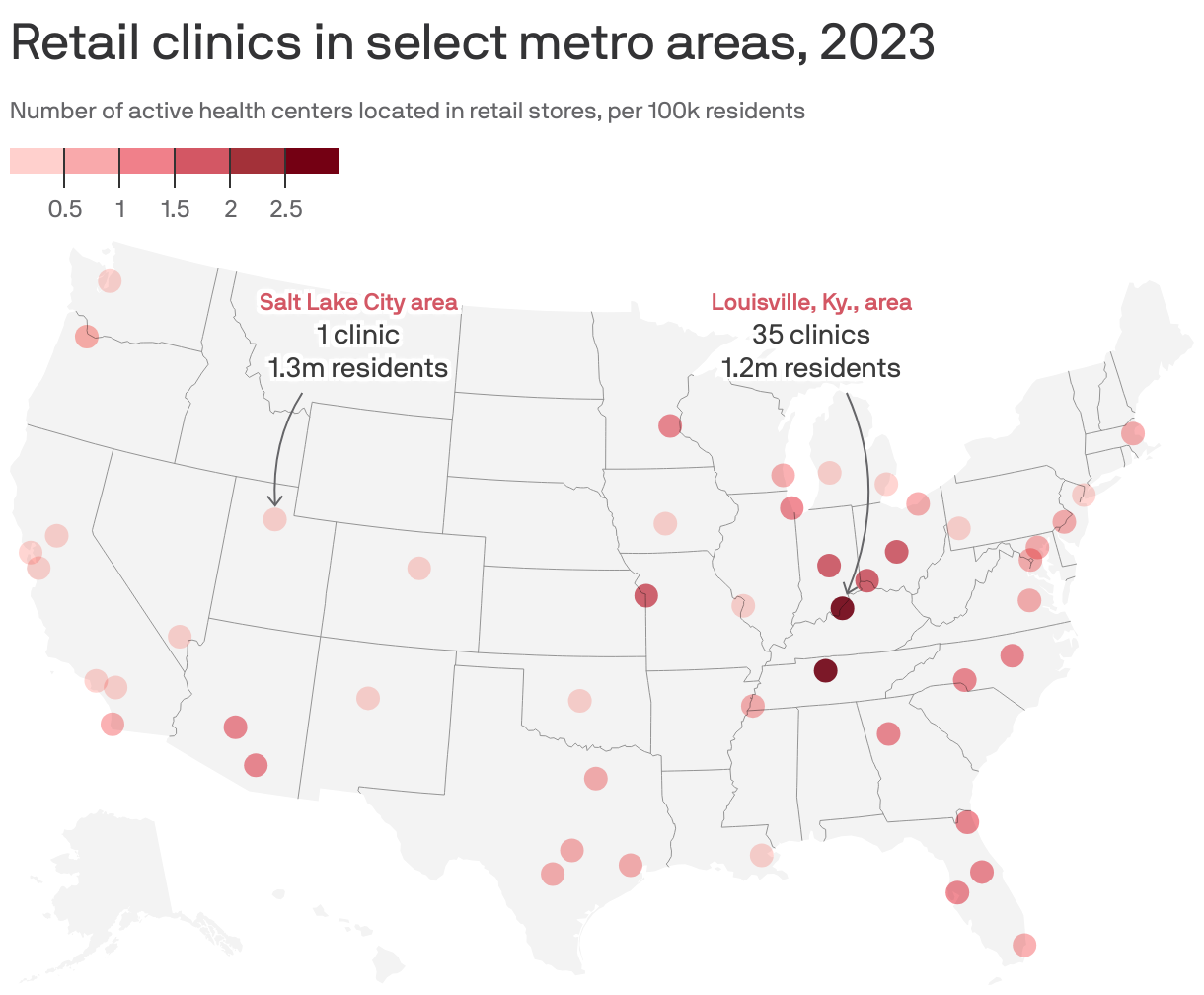
The U.S. has recorded a surge in retail health clinics in the last five years. The West, however, hasn't experienced the same boom, new data suggests.
Why it matters: Retail clinics, which are located inside retail or convenience stores and offer basic health services like vaccinations and minor injury care, are an easy-to-access alternative to emergency rooms, urgent care clinics and primary care providers.
Driving the news: There are six total retail clinics across the San Francisco metro area, significantly lower than several regions in the Midwest and the Southeast. San Francisco has 0.13 retail clinics for every 100,000 residents, per data from health care analytics firm Definitive Healthcare.
The big picture: Major retail chains like CVS and Walmart have increasingly opened clinics at their store locations in part to boost their pharmacy sales.
- Customers using a store's clinic are likely to also shop there for any needed prescriptions.
- They're staffed by nurse practitioners or physician assistants, who are hired by the retailer or the retailer's clinic partner.
By the numbers: "Over the last five years, the use of retail clinics has grown 200% — considerably more than urgent care centers, which grew 70%," per Definitive Healthcare's recent report.
- "Meanwhile, emergency room usage declined by 1% over the same time period, and claims filed by primary care offices declined 13%."
- Patients who use retail clinics typically report satisfaction with their visits, according to HealthLeaders Media.
- They're not yet nearly as common in the West, though Target and Kaiser Permanente have been expanding in the region. Several Bay Area groups have also launched mobile health clinics and other hybrid options involving telemedicine in a bid to close gaps in care.
State of play: Nationally, CVS is the dominant retail clinic provider, with 63% of the locations, per Definitive Healthcare.
- Kroger is second at 12%, and Village Medical (majority-owned by Walgreens) is third at 8%.
- Chicago is home to the greatest number of retail clinics by metro area, at around 113.
Yes, but: Retail clinics are, for now, almost exclusively an urban phenomenon, with just 2% of the locations in rural areas nationally.
- "For the same reasons health care providers often don't locate in these communities, such as workforce challenges due to low populations, retailers are likewise reluctant to open clinics in rural areas," reads the report.
What they're saying: Retail clinics have been getting more popular, in part because people were introduced to them during the COVID-19 pandemic (when many offered testing and vaccinations), says Todd Bellemare, SVP of strategic solutions at Definitive Healthcare and author of the recent report.
- "Both the urgent care clinics and retail clinics are going to continue to grow just because people tried it and they liked it," Bellemare told Axios, noting long-standing ER difficulties like waiting for hours on end.