Population share of young children drops in San Antonio


Add Axios as your preferred source to
see more of our stories on Google.
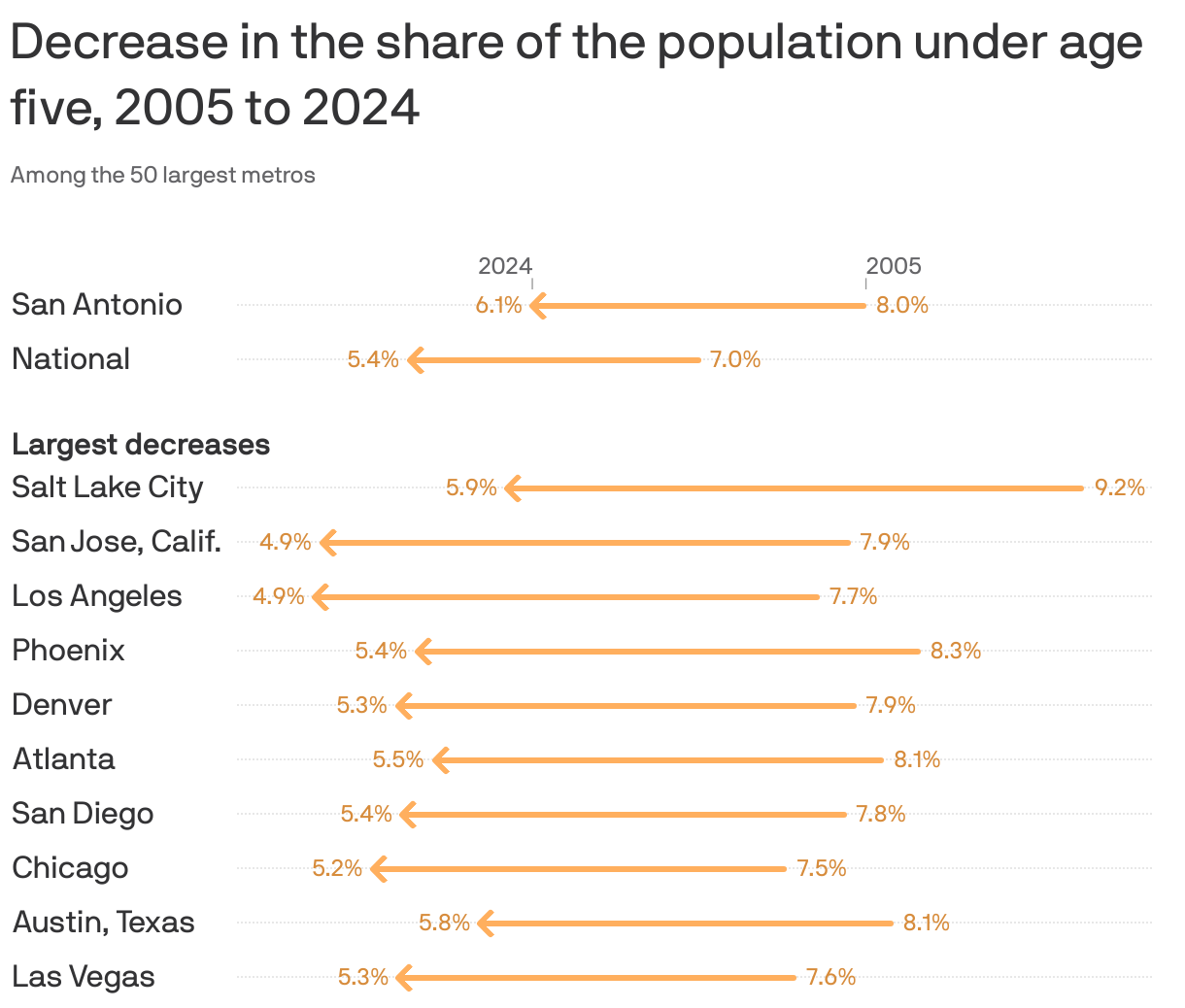
The percentage of San Antonians who are young children has fallen over the past two decades, reflecting national trends, census data shows.
Why it matters: Kids' population trends can reflect cities' ability to attract, retain and support families, but larger nationwide factors like immigration and declining birth rates are also at play.
By the numbers: San Antonio's share of residents under age 5 fell from 8% to 6% between 2005 and 2024, .
Zoom out: Among the 50 biggest U.S. metro areas, Salt Lake City saw the biggest dip in its population of young children (-3.3 percentage points), followed by San Jose (-3) and Los Angeles (-2.8).
Zoom in: Fewer young children today can mean fewer students — and fewer dollars — for schools.
- School districts in the city's core have already been grappling with enrollment declines tied to falling birth rates and fewer families with young children living there, due in part to lack of affordable housing.
Flashback: In 2015, urbanist Richard Florida found that "kids are far more prevalent in metros where immigrants and Latinos make up larger shares of the population."
What we're watching: The Trump administration's efforts to clamp down on and dissuade illegal immigration could affect kids' population shares in unpredictable ways.