Richmond's new Mayo Bridge design revealed after 2 years

Add Axios as your preferred source to
see more of our stories on Google.
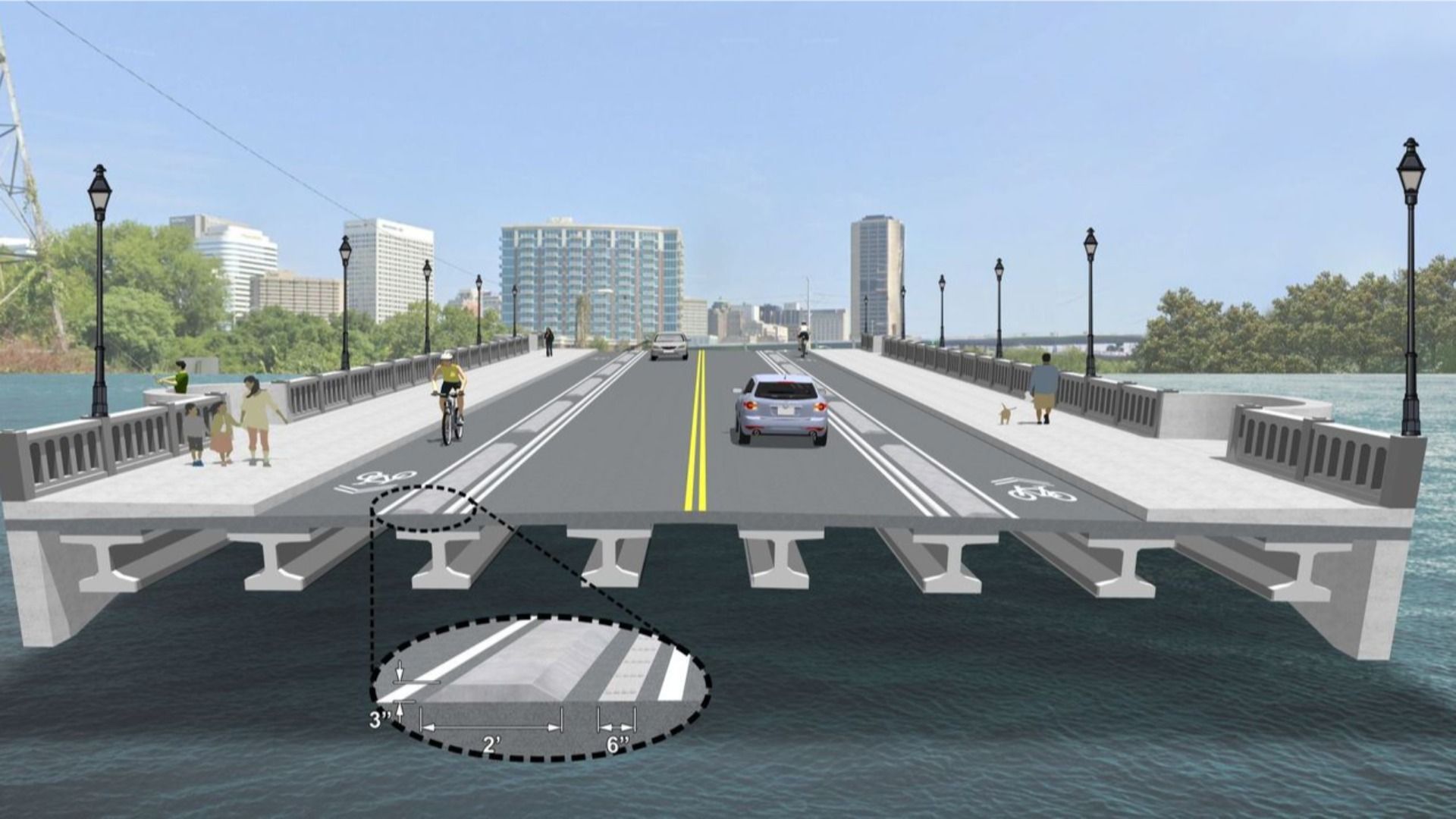
The latest rendering showing the mountable barrier between the bike lane and traffic. Photo: Courtesy of VDOT
Richmonders are getting their clearest look yet at the proposed $190 million replacement for the Mayo Bridge, with protected bike lanes, wider sidewalks and river overlooks.
Why it matters: The latest design reflects years of debate over how to make one of Richmond's oldest river crossings safer for pedestrians and cyclists without worsening traffic.
Driving the news: VDOT unveiled its first updated concepts since 2024 on Wednesday night, proposing to trade four vehicle lanes for two and give pedestrians and cyclists more room to travel between downtown and Manchester.
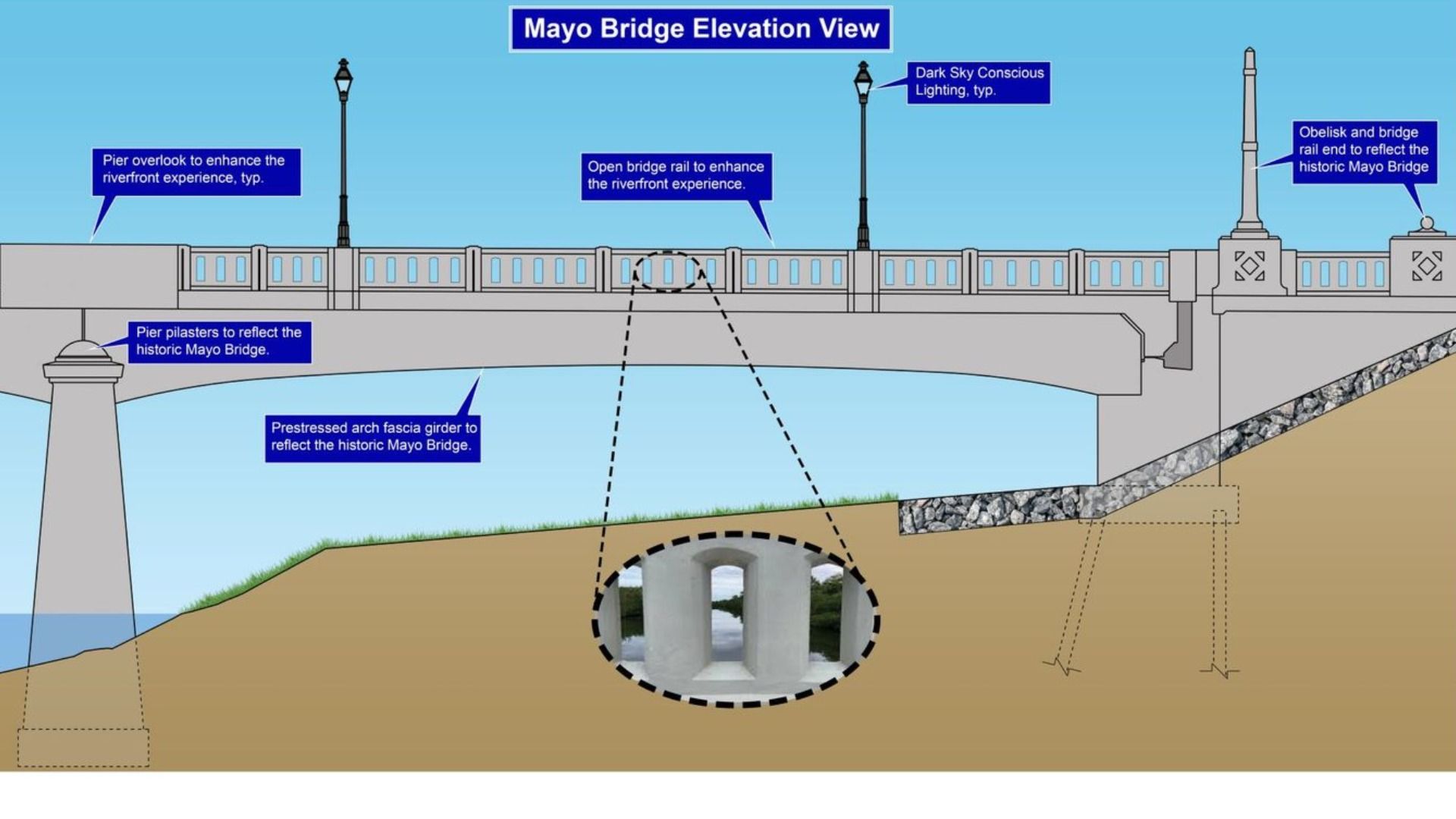
- The 113-year-old bridge's proposed replacement would have 11-foot sidewalks, 6-foot bike lanes, historic-style railings and new pedestrian connections to the future Mayo Island park.
- It'd also drop the speed limit from 35mph to 25.
Friction point: Bike lanes and sidewalks were among the major points of contention, with residents pushing for safer crossings while engineers weighed traffic flow, emergency access and the bridge's historic character, VDOT Richmond District engineer Dale Totten tells Axios.
Zoom in: One of the biggest changes from earlier designs is a raised 3-inch barrier separating cyclists from traffic.
- The barrier would be low enough for emergency vehicles to cross into the bike lanes if a crash blocked traffic, Totten says.
Catch up quick: Earlier concepts included both a two-lane bridge with shared walking and biking areas and four-lane designs with different pedestrian and cycling options.
- Richmond also restriped the existing bridge from four lanes to two this month as part of a resurfacing project, launching a traffic test that could help shape the replacement's final design.
The intrigue: Richmonders won't have to go years without the bridge during construction, which The Richmonder reports could start August 2028 and end in 2033.
- VDOT plans to build the replacement alongside the existing bridge, keeping it open for much of the project.
- Totten says closures will be necessary to connect the new bridge to the roadway, but the timing and duration are still being worked out.
What's next: VDOT expects to seek Planning Commission approval in 2027, Totten says, followed by additional environmental work, another public hearing and eventually construction procurement.
- Residents can comment on the latest designs through Nov. 1.