Richmond weighs hiring freeze as $17M budget deficit looms

Add Axios as your preferred source to
see more of our stories on Google.
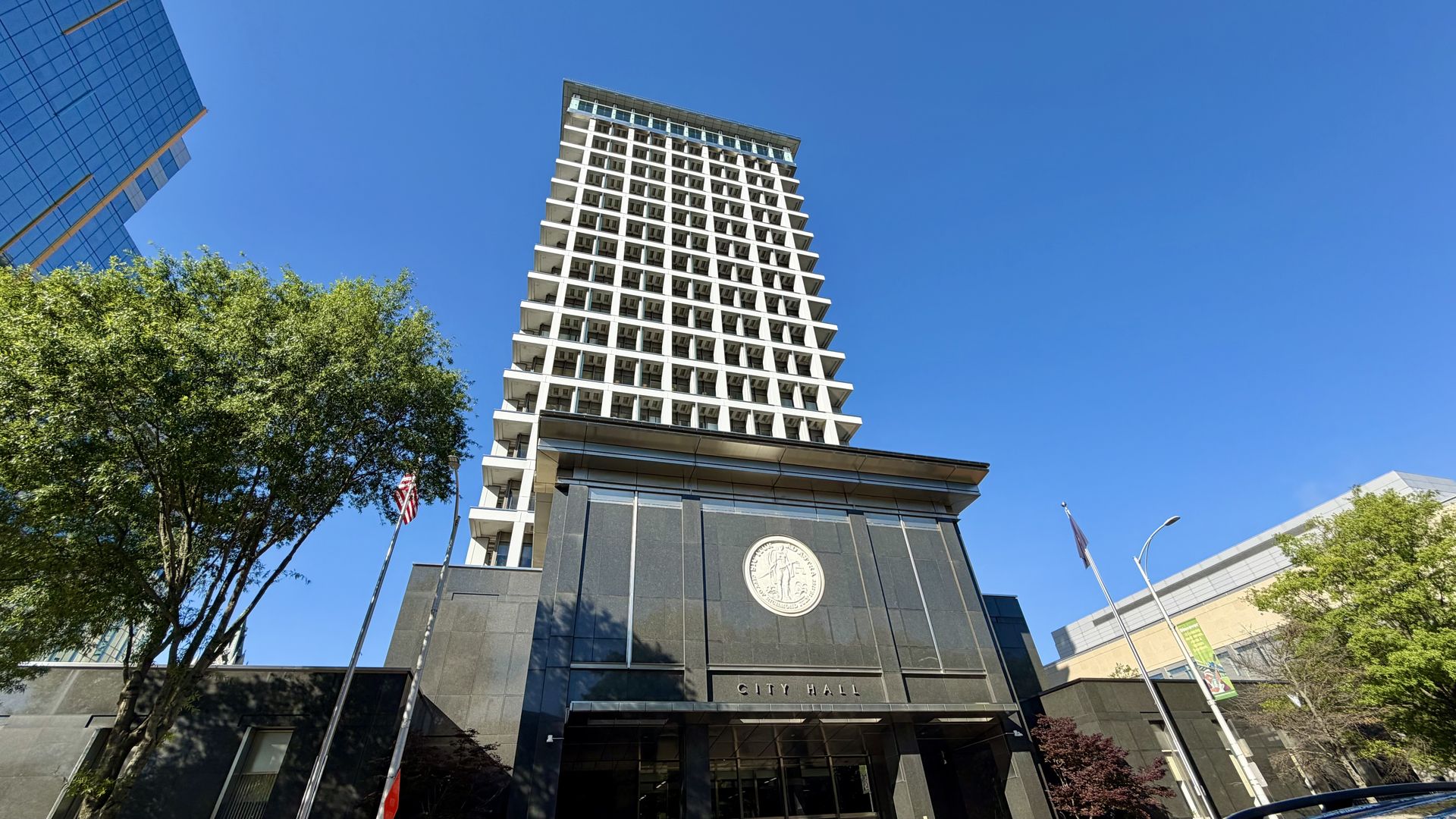
Richmond City Hall. Photo: Sabrina Moreno/Axios
Richmond is considering a temporary hiring freeze as slowing revenue growth threatens to push City Hall into the red and complicate Mayor Avula's plans to cut taxes next year.
Why it matters: City leaders are heading into the next budget cycle with less financial breathing room, potentially forcing tougher choices on taxes, employee raises and services.
By the numbers: A new five-year forecast presented to City Council this week projects a $17.3 million deficit in fiscal 2028 if Richmond keeps its real estate tax rate unchanged.
- Cutting the rate by one cent — as Avula has proposed, if the city's 1% sales tax referendum passes — would widen the gap to nearly $22 million.
- A four-cent cut, per some council members' suggestions, would widen it to $35.6 million.
Reality check: City consultants stressed the forecast is a baseline projection, not a prediction.
- It assumes the city doesn't close the projected gaps and doesn't account for most future salary increases from upcoming union negotiations, which could change the outlook.
Between the lines: Richmond's spending obligations are growing faster than its revenue, city officials say, as costs for personnel, pensions, schools and debt rise.
- Meanwhile, property assessment growth is slowing, personal-property revenue is under pressure as car values normalize and pandemic-era federal aid has expired.
- CAO Odie Donald II also pointed to the Iran war, high interest rates and rising gas prices as economic headwinds.
What they're saying: "You still got Kool-Aid, just no sugar," Donald said of the city's slower growth.
Threat level: Avula said he'd still "like to be true to" his plan to propose real estate and meals tax rate cuts, but the new fiscal picture could change where his budget lands in March.
- Donald said officials are considering a temporary hiring freeze and pausing some noncritical vacancies as they try to control costs and raises without resorting to layoffs.
Friction point: Council members questioned whether the city's revenue forecast is too conservative, whether Richmond can still afford tax cuts, and how rising debt could affect future budgets.
- Councilors also pressed the administration on whether delays in the Diamond District could add to those pressures. Officials disputed parts of that characterization and said they'd return with more information.
What's next: Avula is due to propose his budget in March. Until then, the city must refine its revenue forecast, negotiate union contracts and decide what — if anything — to cut for tax relief.