Richmond nonprofit teams up with NASA on organ delivery drones


Add Axios as your preferred source to
see more of our stories on Google.
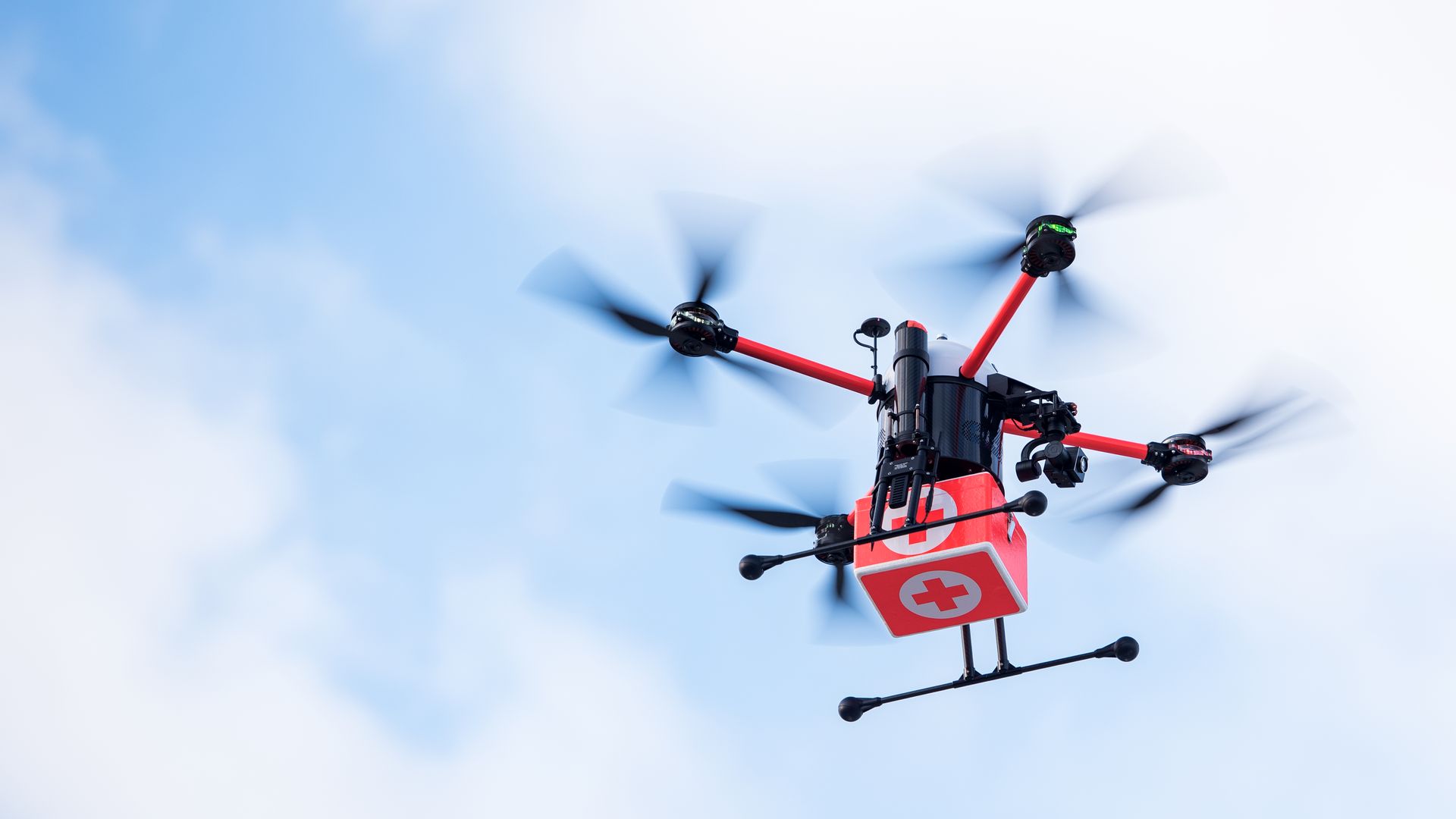
Note: This is not the same drone that NASA and UNOS will use in their tests. Photo: Daniel Bockwoldt via Getty Images
Richmond-based United Network for Organ Sharing is teaming up with NASA on a new kind of mission: delivering human organs by drone.
Why it matters: UNOS, headquartered in Jackson Ward, oversees the U.S. transplant system and has faced scrutiny over lost organs, delays and quality concerns — issues the groups say drones could help reduce.
Driving the news: This week in Richmond, the nonprofit announced a partnership with NASA's Langley Research Center in Hampton Roads to study whether unmanned drones can safely deliver organs and other sensitive materials.
- Researchers will first test if drones can navigate obstacles and fly beyond the line of sight of ground-based spotters.
- Then they'll see if a human test organ can remain viable for transplant despite risks like temperature changes and lack of blood flow.
Between the lines: Some organs, like hearts and lungs, often have mere hours to reach a recipient, while kidneys can be preserved for up to 36 hours, per UNOS' site.
- A 2019 transplant in Maryland showed the concept is possible when doctors and researchers successfully delivered a kidney by drone.
Zoom in: The initial flight tests are scheduled to begin this week at Langley, and it's too soon to tell if, or when, these drones might fly near Richmond, NASA Langley spokesperson Kimiko Booker told Axios.
Zoom out: Richmond's experiment comes as UNOS has lost key responsibilities under a reworked federal contract, leading to a third round of layoffs reported in the past year.
- It's also part of a broader push, as pharmacies and hospitals nationwide test drones to deliver medications and lab samples.
- Like UNOS and NASA's plan, those tests are still in the early stages.
- And drone delivery in general faces some pushback from residents over noise and privacy concerns.
Booker told Axios that considerations about community impact "would come into play in later phases if the research proves successful."
What's next: If the early tests work, UNOS and NASA will see if the technology could be expanded for real-world use in urgent medical deliveries — potentially reshaping organ transport with Richmond at the center.
Go deeper: Richmond's UNOS hit by shutdown: 90+ workers furloughed with no back pay
Editor's note: The story has been updated to reflect NASA's change in the description of the testing and that a human (not animal) organ is being used.