NASA to test drone delivery of donor organs

Add Axios as your preferred source to
see more of our stories on Google.
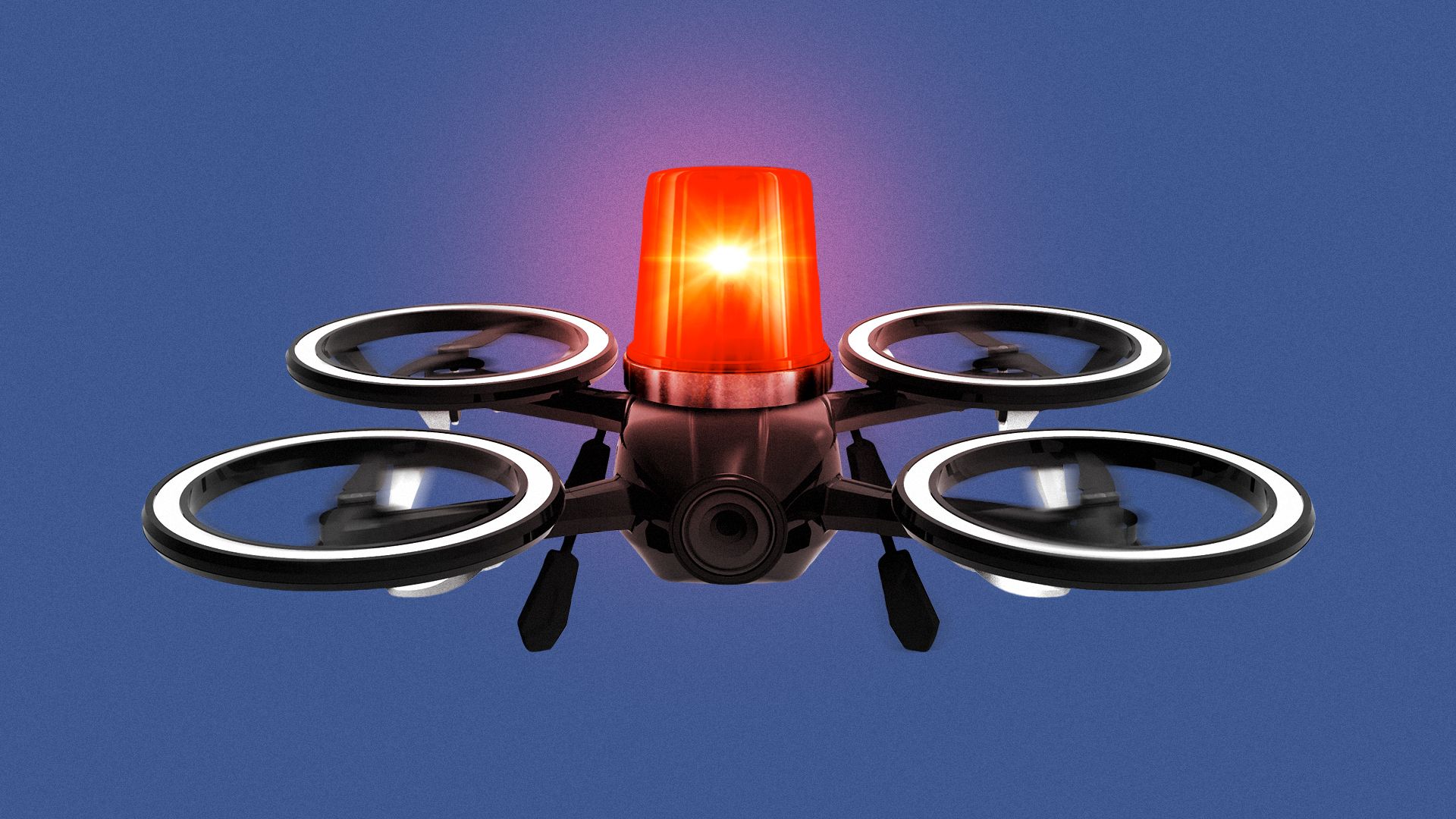
Illustration: Lindsey Bailey/Axios
The nation's troubled organ transplant system may be about to get some help from above.
- NASA is researching whether unmanned drones could help solve reliability issues that have cost patients life-saving organs and left donor tissue lost in transit or unusable.
Why it matters: The transplant system has faced heightened scrutiny in recent years over reports of unsafe practices and poor quality control — including difficulties getting organs from one hospital to another.
- That's led thousands of people to remove themselves from organ donor registries.
Driving the news: The nonprofit that operates most of the transplant system announced on Tuesday that it's teaming up with NASA's Langley Research Center to study how advanced modeling, flight planning, and sensing technologies could improve medical transplant deliveries.
- Academic researchers have already started testing drone delivery for organs, and the new partnership could supercharge the field.
- The collaboration will first test if drones can carry sensitive biological materials around obstacles and beyond the visual line of sight without the need for ground-based spotters.
- The work will then evaluate if a human test organ can remain viable for transplant in the face of unstable temperatures and potential tissue damage caused by a lack of blood flow.
Drones have the potential to cut costs and transport times, as well as add flexibilities, the nonprofit United Network for Organ Sharing said.
- NASA has done similar testing of self-flying air taxis.
What's ahead: If early testing is successful, researchers will test whether systems can be scaled up to become viable for time-critical medical deliveries.
Editor's note: The story has been updated to reflect NASA's change in the description of the testing and that a human (not animal) organ is being used.
