Shockoe Institute opens, confronting Richmond's role in slavery

Add Axios as your preferred source to
see more of our stories on Google.
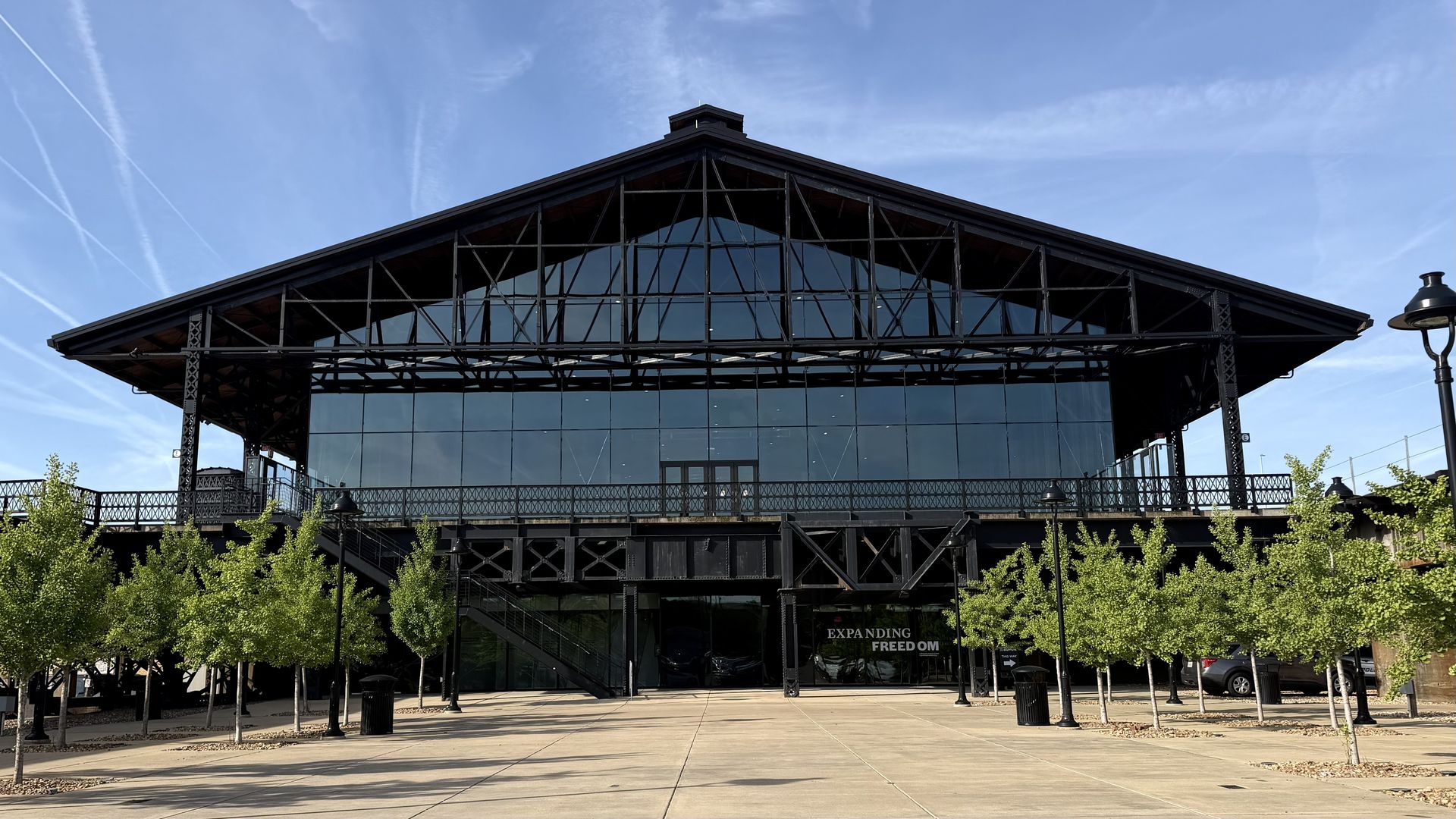
The front of the "Expanding Freedom" exhibit at Main Street Station. Photo: Sabrina Moreno/Axios
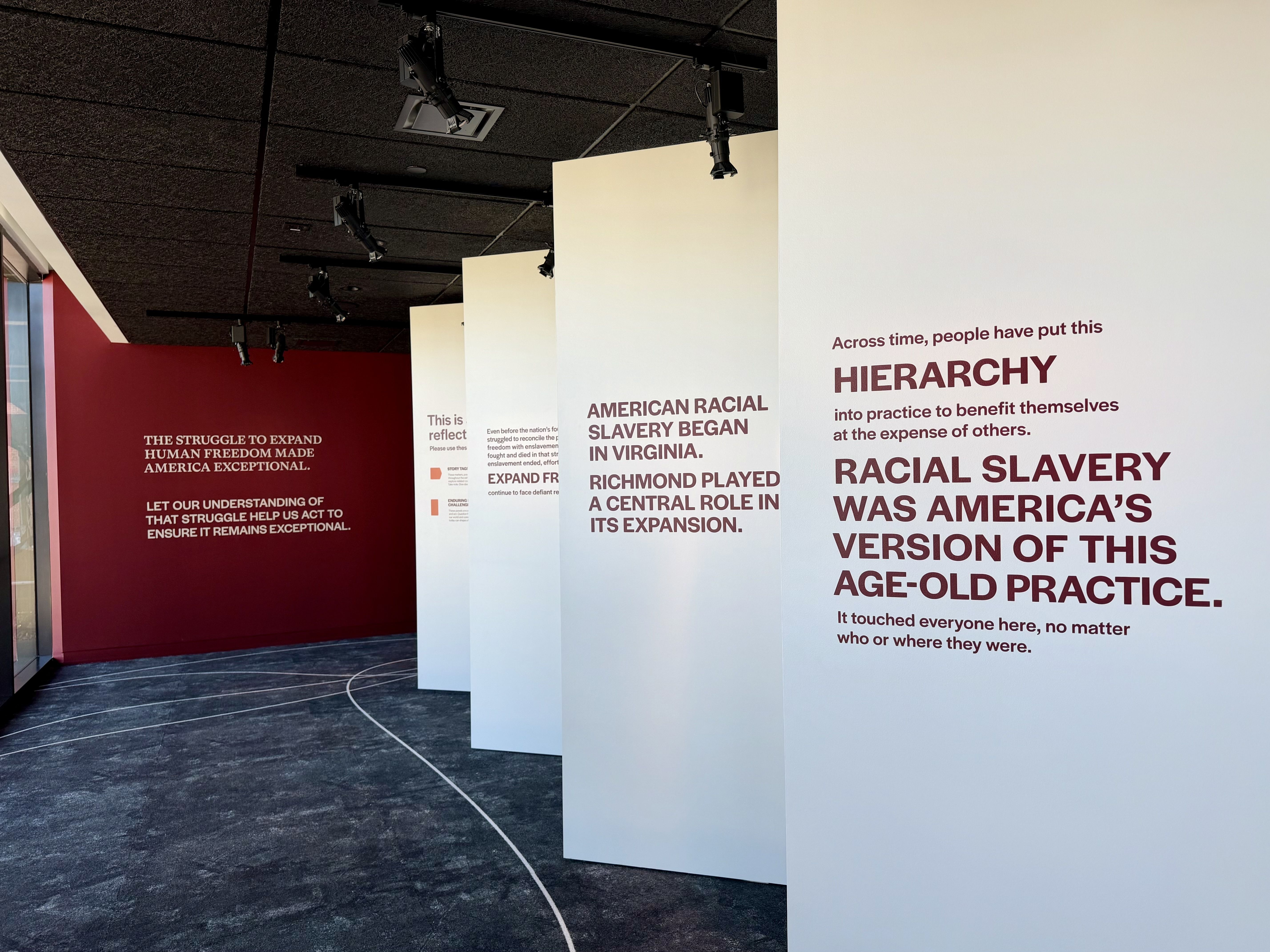
One of the first messages visitors will see inside the Shockoe Institute is a blunt, unflinching introduction to a history the city has long struggled to confront:
- "American racial slavery began in Virginia. Richmond played a central role in its expansion."
State of play: The 12,000-square-foot institute, housed within Main Street Station, is the first major piece of Richmond's $265 million Shockoe Project — a sweeping, decades-in-the-making plan to memorialize the city's part in the slave trade.
- Axios got a preview on Thursday, along with elected officials, historians and RPS students, before the institute's public opening on Sunday.
- The event — which included Gov. Spanberger, Mayor Avula, Sen. Tim Kaine and Rep. Jennifer McClellan — was emotional, as speakers framed the institute as a reckoning and a turning point.
- And Avula noted the scale of Richmond's impact: The city was so central to American slavery that an estimated 1 in 4 Black Americans can trace some ancestry back to the area.
Yes, but: It was Marland Buckner, the institute's CEO, who brought the room to tears, as he turned to Samaya, the daughter of project leader Todd Waldo, and said, "[Todd] wasn't doing it for us. He wasn't even doing it for the ancestors."
- "Samaya, your daddy built this place for you."
The comment was part of a repeated theme on Thursday: This privately funded portion of the project is as much about the next generation as it is about the past.
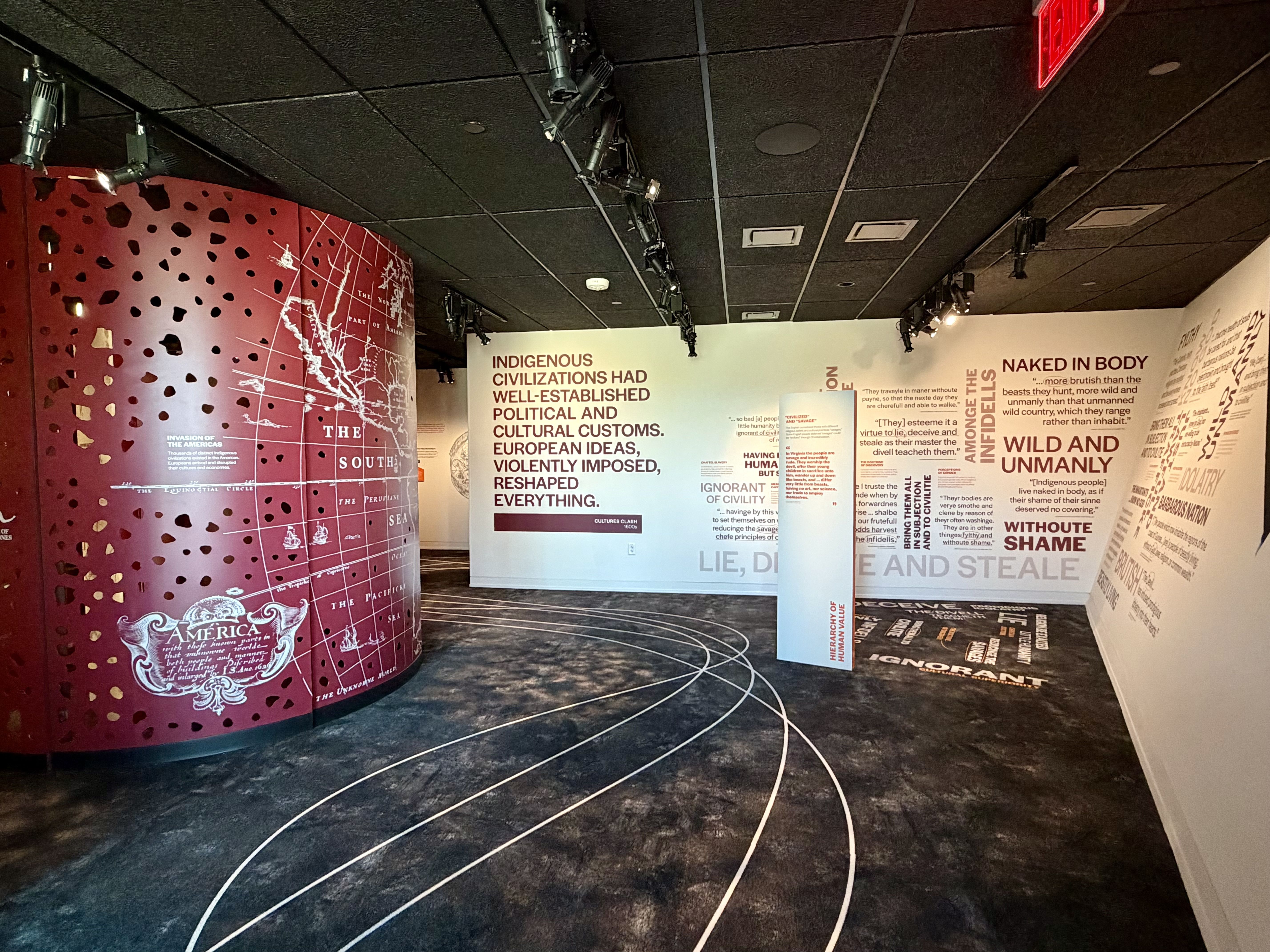
Zoom in: Inside, the "Expanding Freedom" exhibit traces the forced migration of enslaved people, starting with the colonization of Indigenous people in the 1600s.
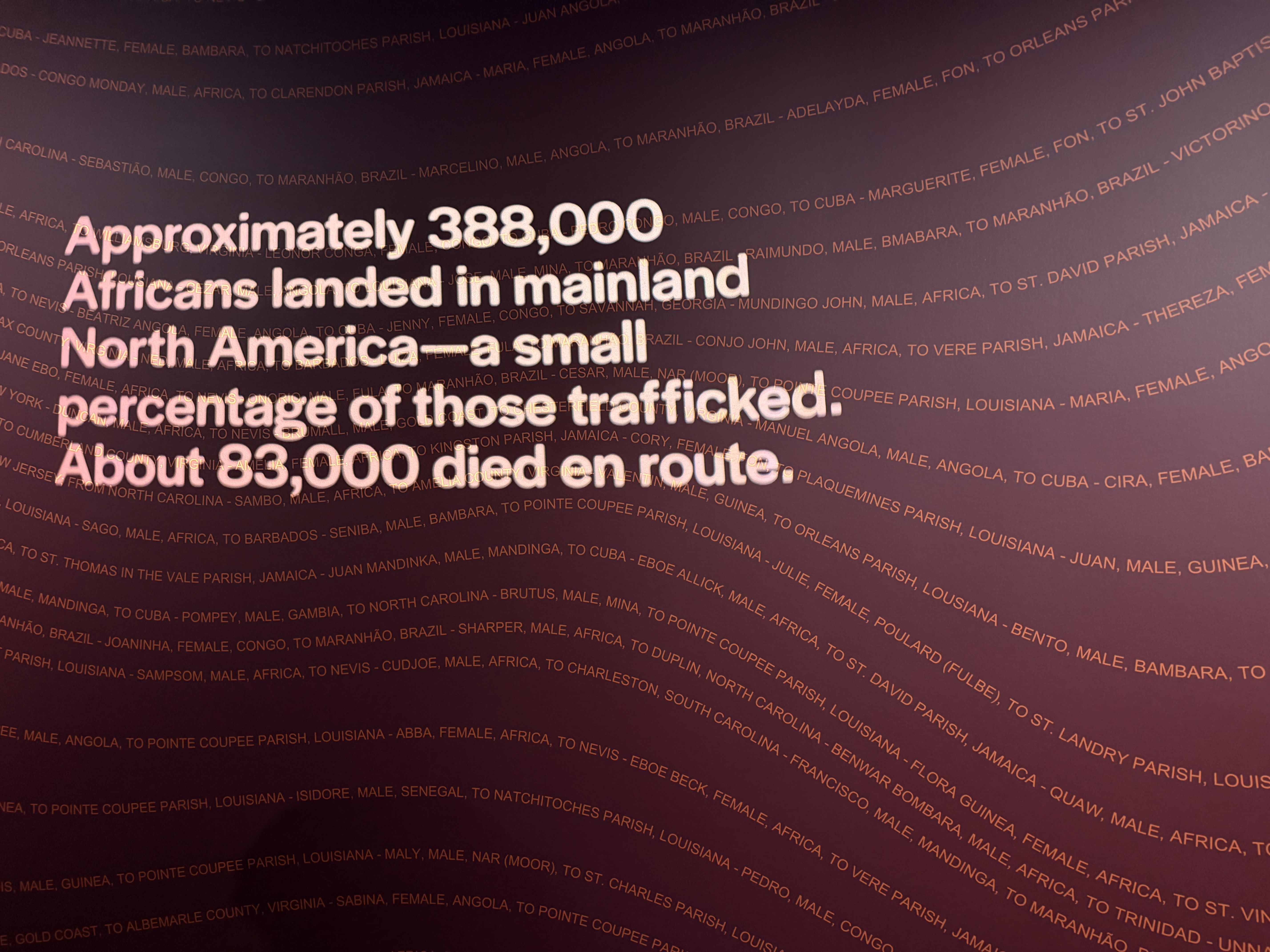
- One section reconstructs the names and identities of enslaved people from fragmented historical records, in an attempt to restore humanity to people long reduced to numbers, Richmond historian Gregg Kimball told Axios.
- Another places visitors physically on top of a Richmond map that plots the locations enslaved people were sold in Shockoe Valley.
- Questions are posted throughout to ignite conversation, such as "What do you think it means to put economic value on human life?"
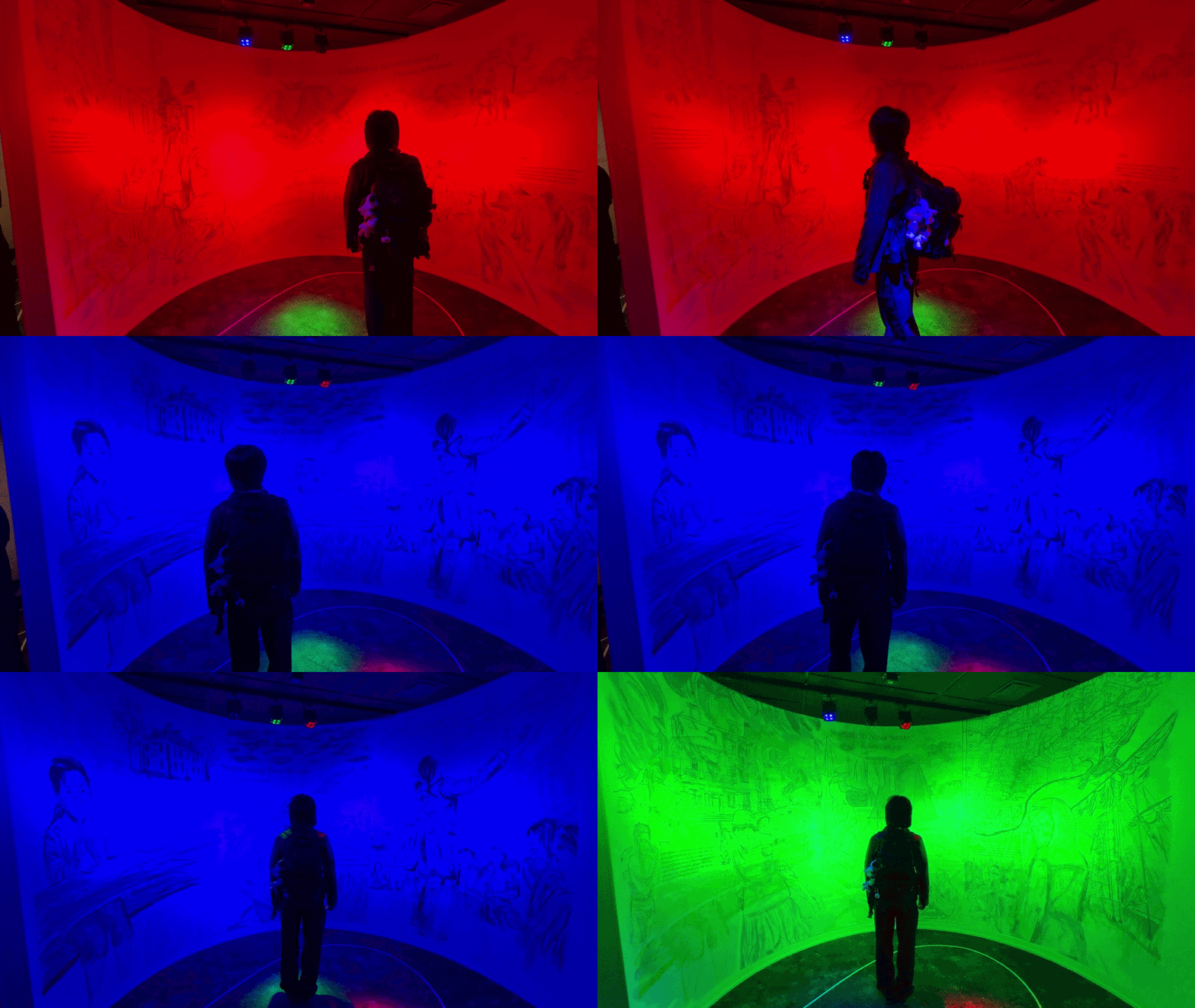
Plus: There's "The Lab," which has touch screens with a digital library of the extensive records used to put the exhibit together.
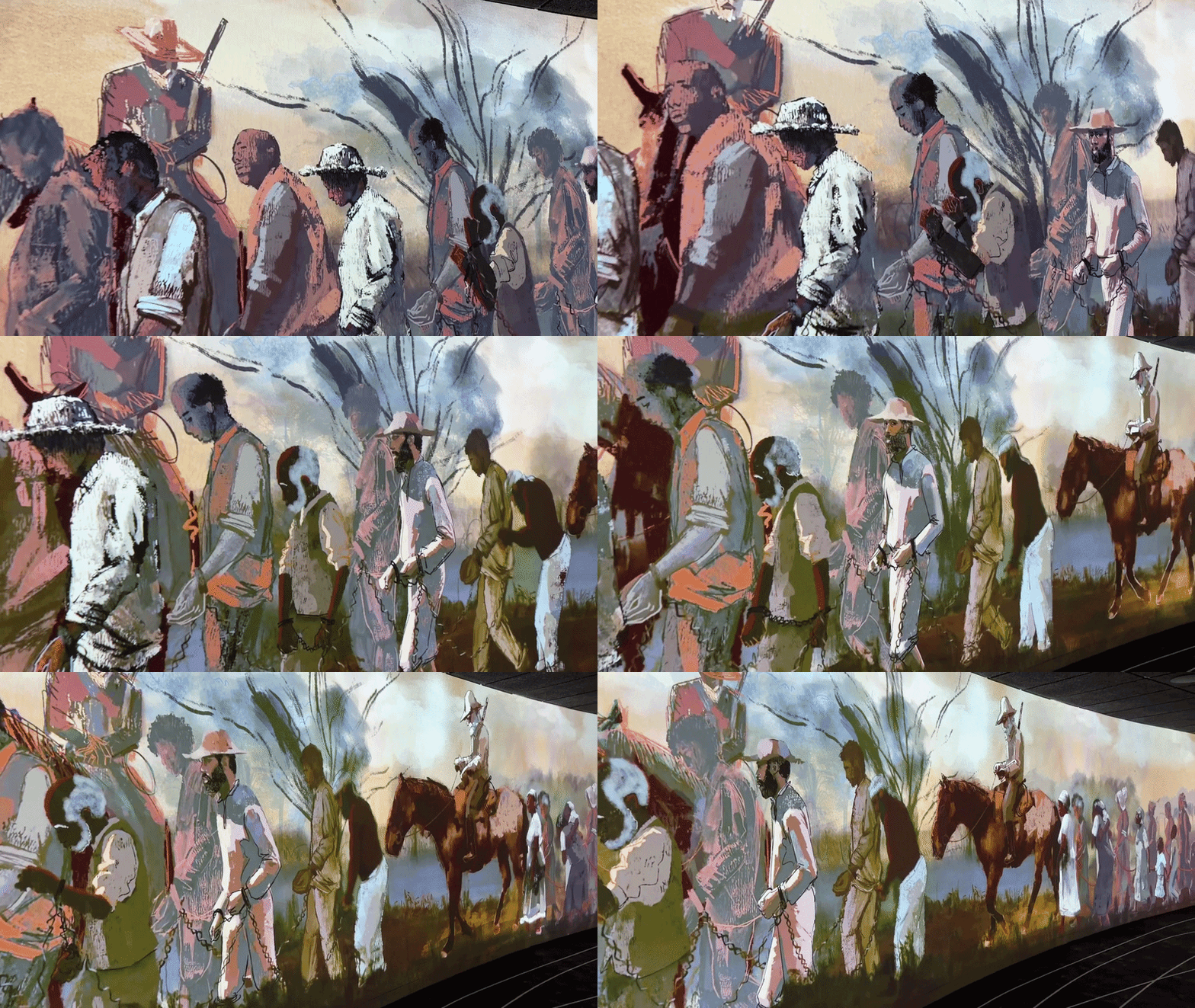
Among the more emotional segments: An animated illustration depicting enslaved men, women and children in chains walking from Richmond to other southern cities — some as far as Natchez, Mississippi, a thousand miles away.
- At one point, a little boy turns and looks directly at you.
What's next: Tickets are already available online for opening week, April 12-15. They're free, but require a reserved time slot.
Go deeper: