What Virginians should know about the FDA's kratom crackdown


Add Axios as your preferred source to
see more of our stories on Google.
The FDA is cracking down on a potent compound in kratom supplements that can be found across Richmond.
Why it matters: Products with 7-hydroxymitragynine, or 7-OH — which acts like an opioid and has been dubbed "legal morphine" by researchers — have surged in popularity.
The big picture: Last week, the FDA recommended more regulation of 7-OH products and warned consumers about their risks.
- The agency said it's specifically targeting the concentrated byproduct of the kratom plant, adding that some forms, like "fruit-flavored gummies and ice cream cones," have become especially appealing to children.
- Those products have also become readily available nationwide in gas stations, corner stores and vape shops, which the FDA noted have proliferated in recent years.
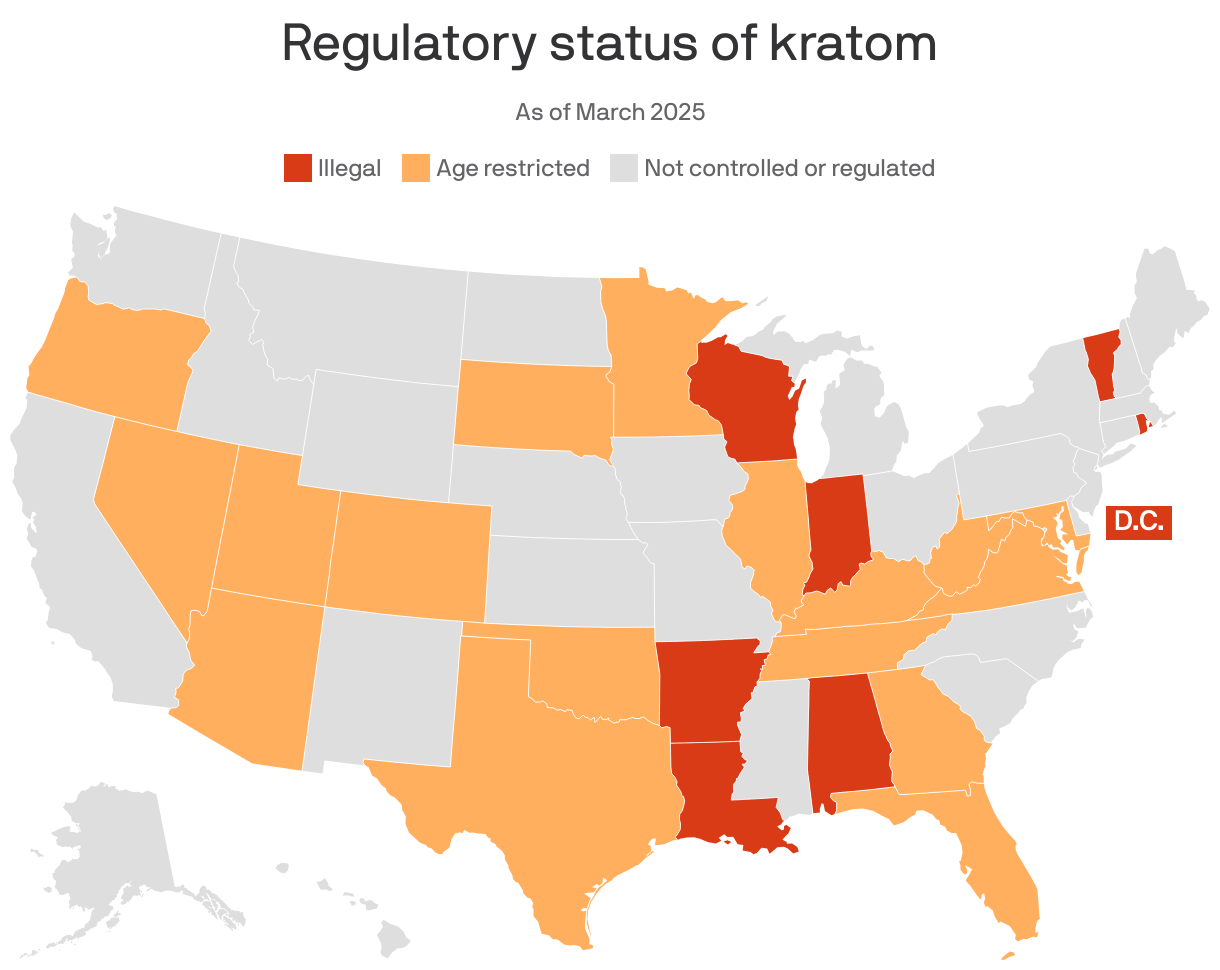
Zoom in: Virginia is one of a handful of states that have tried to restrict kratom.
- The state adopted regulations for the product in 2023, prohibiting its sale to anyone under 21 and requiring manufacturers to add a warning label.
Yes, but: For Virginians 21 and older, kratom remains readily available in the commonwealth and is often clearly advertised in neon in store windows.
State of play: Last week, the Richmond City Council passed an ordinance banning the opening of new vape shops in most parts of the city, joining Chesterfield and Henrico as the latest local government trying to rein in the shops.
- Hanover County is expected to vote on a similar policy this month, per VPM.
- But such legislation doesn't apply to the hundreds of existing stores that have opened in recent years, nor does it cover products sold in gas stations, where kratom can be easily found.
- And illegal, synthetic, druglike substances bought in these places are increasingly showing up in Virginia schools, as Axios Richmond has reported.
By the numbers: Federal survey data from 2021 suggests that roughly 0.7% of Americans 12 and older use kratom products.
- But recent estimates from the American Kratom Association and Journal of Psychoactive Drugs put usage at 9.1% — or over 20 million people.