How a VCU professor's "Free Naloxone" bike is saving lives

Add Axios as your preferred source to
see more of our stories on Google.
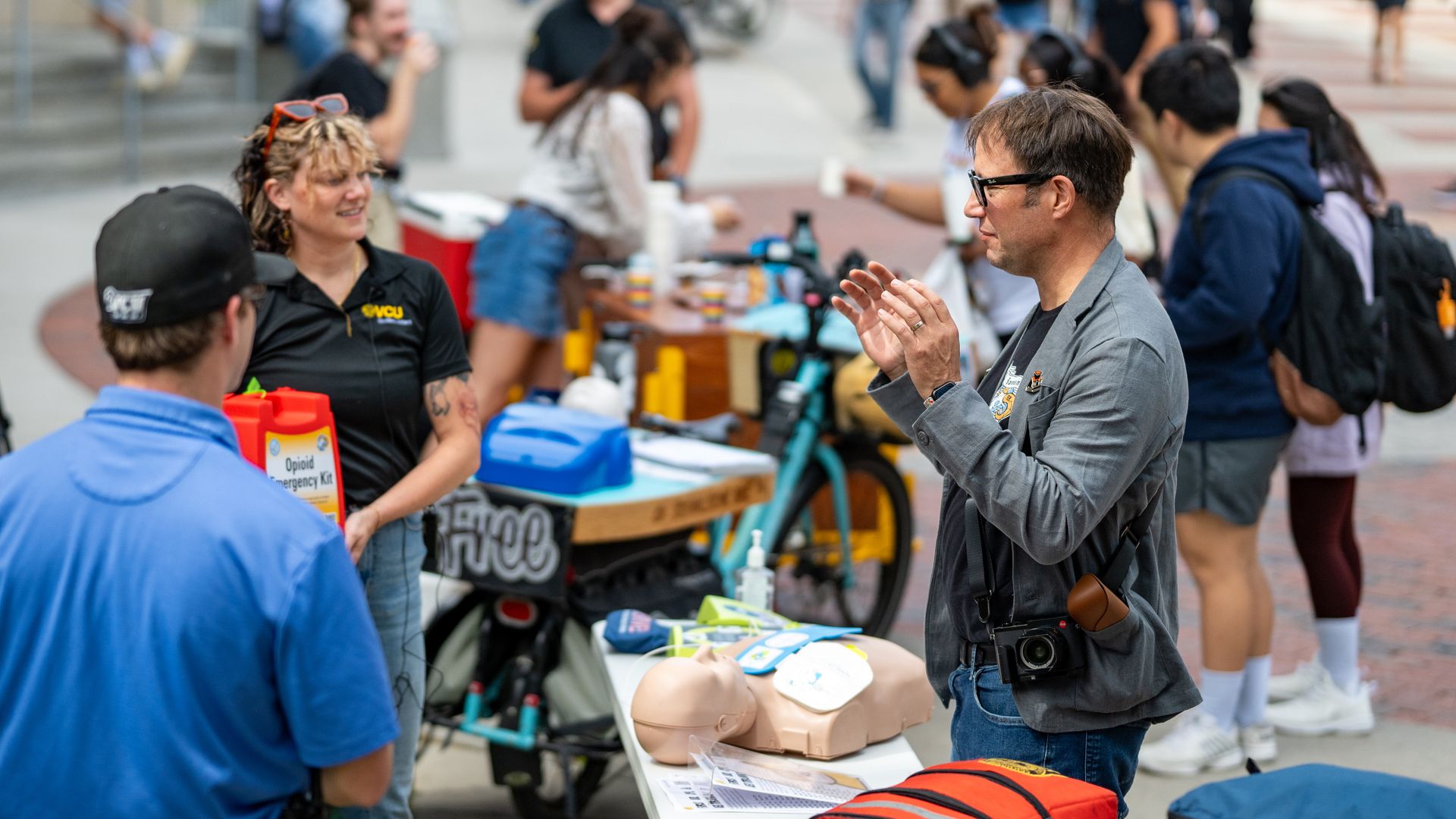
John Freyer has spent nearly a decade asking Richmonders "Is anybody interested in being trained on Narcan? It's the life-saving opioid reversal drug. Come on in."
It started in 2016 when the VCU professor created the "Free Hot Coffee" bike, which people in Rams in Recovery — a program for students recovering from addiction — rode around campus.
- The concept: Have one-on-one conversations with people about their connections to recovery in the 3-5 minutes it takes to brew a local roast.
- On-campus naloxone training started a year later.
Then it evolved in 2019, when someone whose family was impacted by addiction and recovery donated the money needed to buy what's now known as the bright blue "Free Naloxone" bike.
- It has an attached wooden crate carrying doses of naloxone in the front and a wooden table in the back.
- That's where Freyer puts an inflatable CPR dummy named Manny Fresh to train others on how to administer naloxone and recognize signs of an overdose.
What they found: "Students want to be ready and they want to be available to people," Freyer told Axios. "When someone overdoses in a dorm or someone overdoses on campus, they want to be ready to help that person."
The big picture: Richmond had one of the highest opioid overdose death rates in the state in 2023, per Virginia Department of Health data, though overall drug deaths statewide keep declining.
- That decline has been partially attributed to more people carrying the overdose reversal spray and its name brand Narcan becoming available over the counter.
- Why? Naloxone acts five times quicker than the approximately 13-minute average arrival time for EMS technicians, per a federal overdose tracker.
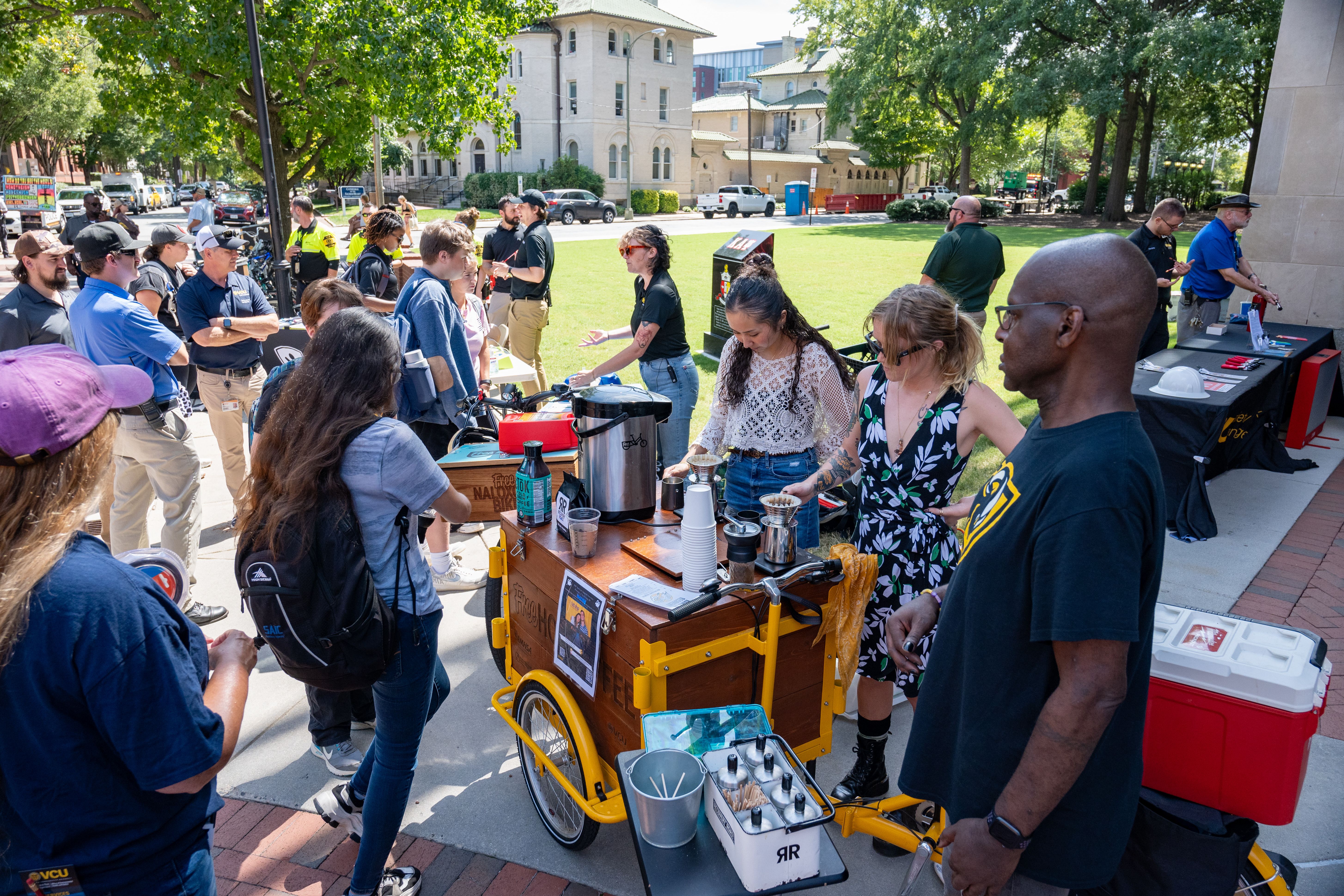
By the numbers: Since launching the naloxone bike in February 2020, Rams in Recovery's program coordinator Tom Bannard told Axios they have trained 4,700 people and distributed 3,100 boxes of naloxone.
- That includes staff at Richmond's bars and restaurants and — as of last week — the state legislature.
- But with naloxone becoming more widely available, they now only distribute it to "higher risk individuals," Bannard said.
- VDH defines that as people who use drugs, their family or friends or those who work directly with them.
The bottom line: "Naloxone allows people to start to take care of themselves and take care of the people around them," Freyer told Axios.
- Those changes could lead to recovery, Freyer added, but "at the very least, it leads to a survival."