Trump's Virginia voter base relies on spending Musk's team might cut


Add Axios as your preferred source to
see more of our stories on Google.
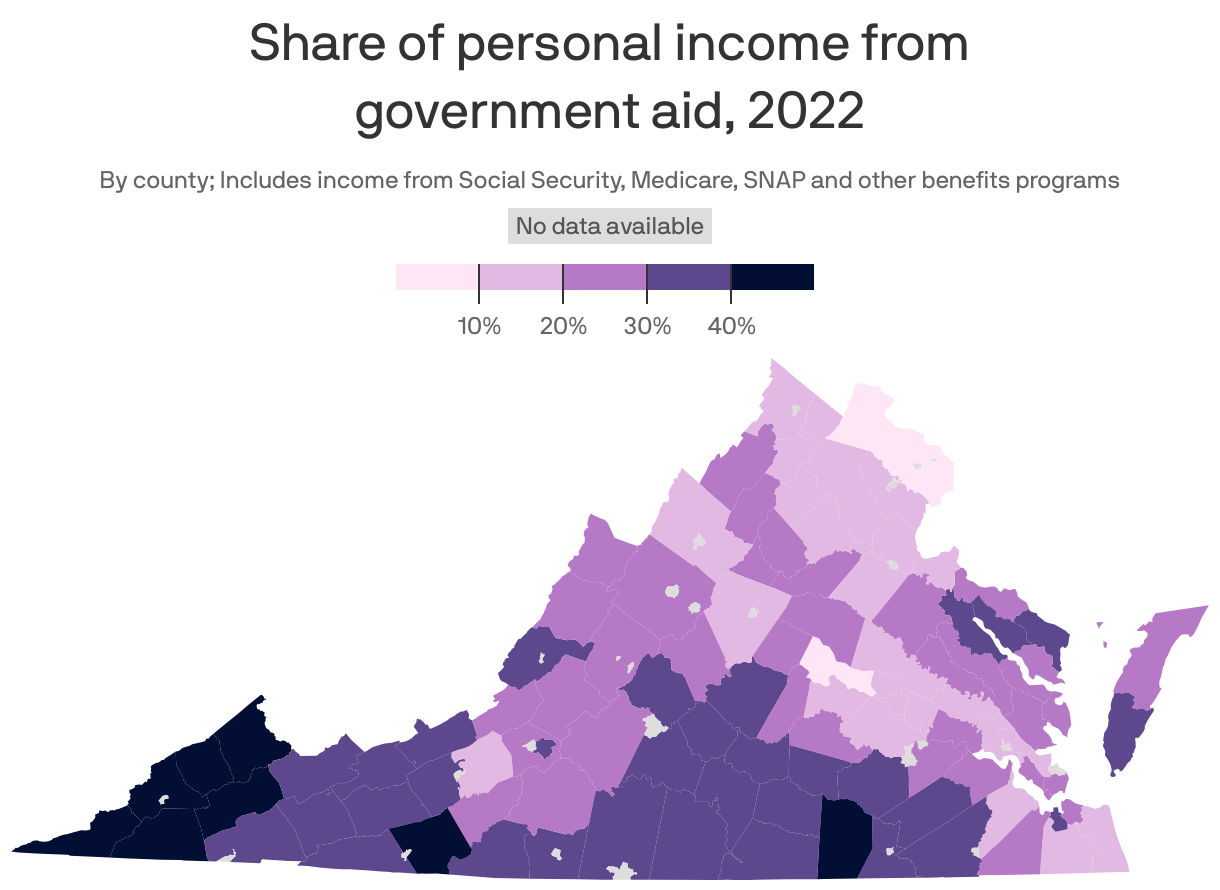
Virginians living in some of the same areas that voted for President-elect Trump could pay the price if his administration slashes federal spending.
Why it matters: The Elon Musk/Vivek Ramaswamy-led Department of Government Efficiency has proposed $2 trillion in annual federal cost savings. To reach that goal — or near it — would require cuts to transfer programs like Social Security, Medicare and Medicaid.
Driving the news: Researchers at the Economic Innovation Group analyzed county-level data on how much personal income was driven by those federal transfer programs in 2022 as opposed to wages and investments.
Zoom in: In Virginia, counties closer to central and northern Virginia saw the lowest reliance on transfer payments while those in the southwestern parts of the state and counties bordering North Carolina reported higher amounts.
By the numbers: The counties most reliant on those payments were Dickenson, where 49% of income was from government transfers, followed by Lee (47%), Wise (45%), Buchanan (45%), Russell (43%) and Scott (42%).
- All of those counties overwhelmingly voted for Trump and are in Southwest Virginia.
- Per the Census, they also have higher percentages of people who are 65 or older or in poverty and a lower median household income compared to Virginia's overall numbers.
- One slight exception to this pattern is Brunswick, where 41% of income came from transfer payments and the majority voted for Vice President Harris.
Meanwhile, the least reliant were Arlington (5%), Loudoun (6%), Alexandria (7%), Fairfax (7%) and Goochland (10%).
- All but Goochland voted for Harris, but Goochland also has a higher median household income ($105,600) and lower poverty rate (4.2%) than Virginia overall, census data shows.
In the Richmond area, the city has the highest share of personal income from government aid at about 17%, followed by Chesterfield (16%), Hanover (14%), and Henrico (13.5%).
Go deeper: Economic distress fuels growing reliance on government aid