Fall allergy season arrives in Richmond


Add Axios as your preferred source to
see more of our stories on Google.
If you're feeling stuffed up, you're not alone — Richmond is in the throes of fall allergy season.
Why it matters: Climate change is making allergy seasons longer and more intense. This fall is a prime example.
The big picture: Richmond is one of the worst cities in the nation for seasonal allergies, according to the Asthma and Allergy Foundation of America.
- Ragweed is the main culprit behind fall allergies and Richmond's worst ranking. Each tall green weed can release 1 billion pollen grains and the plant grows extremely well in Virginia.
- Ragweed thrives in warm, humid weather and, thanks to climate change, it does so longer in Richmond.
- Fall allergy season starts in August and runs through the first frost, which typically hits Richmond on Halloween, according to the Farmer's Almanac.
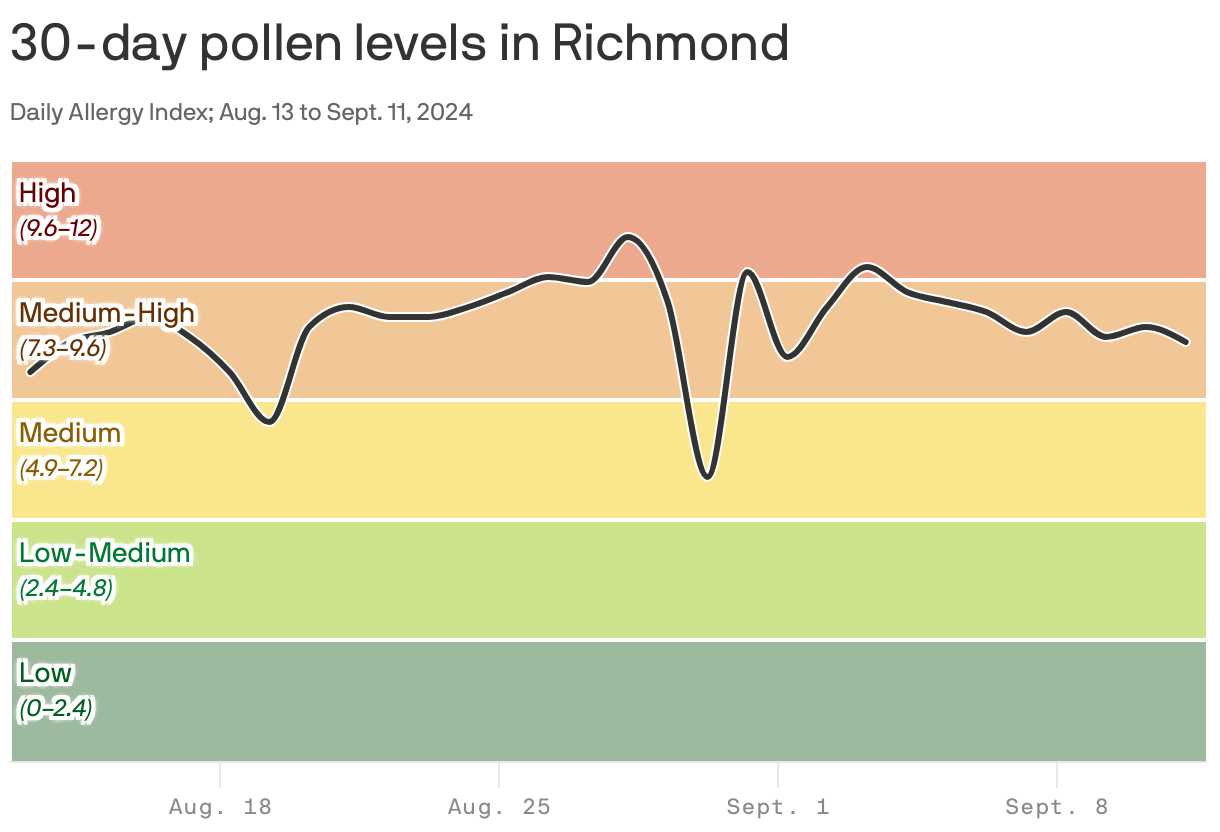
Zoom in: Ragweed pollen counts have been elevated in Richmond since fall allergy season started, hovering between medium high and high, according to Pollen.com.
- Symptoms usually include the usual suspects — runny nose, watery eyes, sneezing and itchy face — but can also affect sleep and mood, according to the allergy and asthma foundation.
The intrigue: For the estimated 1 in 5 people allergic to ragweed, certain foods can exacerbate symptoms. Those include:
- Bananas
- Cantaloupe
- Cucumber
- White potato
- Sunflower seeds
Pro tips: Newer antihistamines like Claritin, Allegra and Zyrtec offer allergy relief without the drowsiness associated with older antihistamines like Benadryl. They can be combined with nasal steroid sprays like Flonase.
Yes, but: Drug-free relief is coming. This week's forecasted rain will give locals a brief reprieve from the worst of the seasonal ragweed before it hits us again for the rest of fall.
What we're watching: Worsening allergy seasons are a concern nationwide. NOAA researchers are developing a new pollen forecasting model, the first of its kind for a federal agency.