What to know about Richmond's hyped-up immersive Van Gogh exhibit

Add Axios as your preferred source to
see more of our stories on Google.

The wall you'll see when starting the walk through the exhibit. Photo: Sabrina Moreno/Axios
Spending more than an hour watching moving projections of Vincent Van Gogh's paintings might actually be worth your time.
Why it matters: As someone who is not an art person, I was prepared to be a hater.
The big picture: The "Van Gogh Exhibit: The Immersive Experience" opened Thursday in the now-closed Short Pump Lidl and Axios got an early look.
- It's open Thursday-Monday through October.
Here are five things to know if you've seen the Instagram ads and are thinking about going:
It's not just projections.
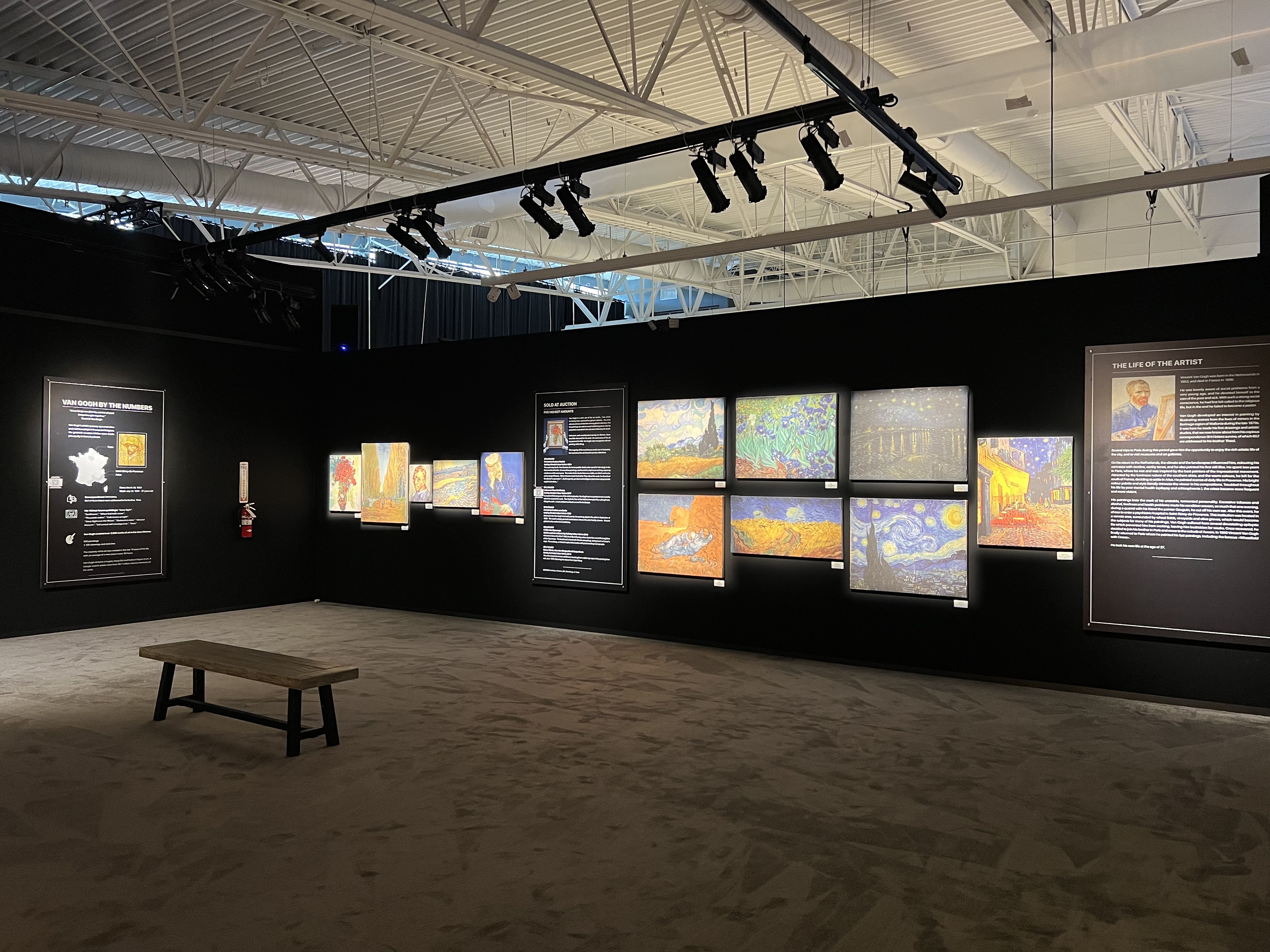
Instead, it's divided into three parts:
- A makeshift museum that includes a giant bust of Van Gogh's head, a timeline of his life — including the famous ear incident — and a series of his paintings recreated in their original size with input from historians.
- Life-sized reproductions of his paintings, like "The Bedroom," that people can physically step into and take pictures in.
- And yes, the projections.
I'd pay the $30 ticket even if it were.
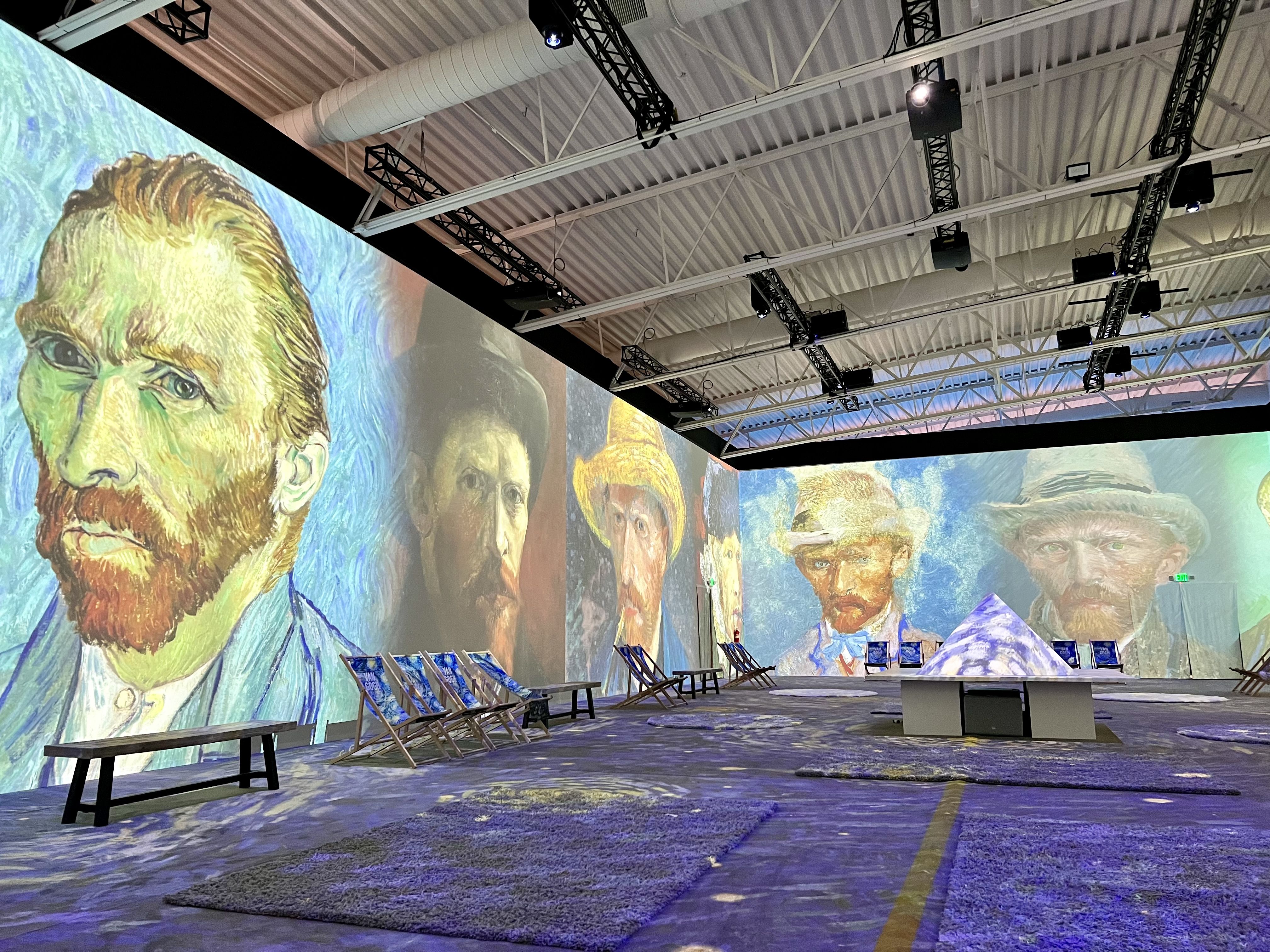
The projections don't just flash through his paintings — they tell the story about his descent into madness, his loneliness and his fascination with nature.
- Quotes from him flash onto the two-story walls and separate the different eras of his art, like "Vincent and his trains" and the "Sunflower series."
- The projections felt textured, the way a painting would. The colors pulsate, the stars whirl and the waves crash from the floor to the ceiling while you hear passages from Van Gogh's letters.
It might calm you down.
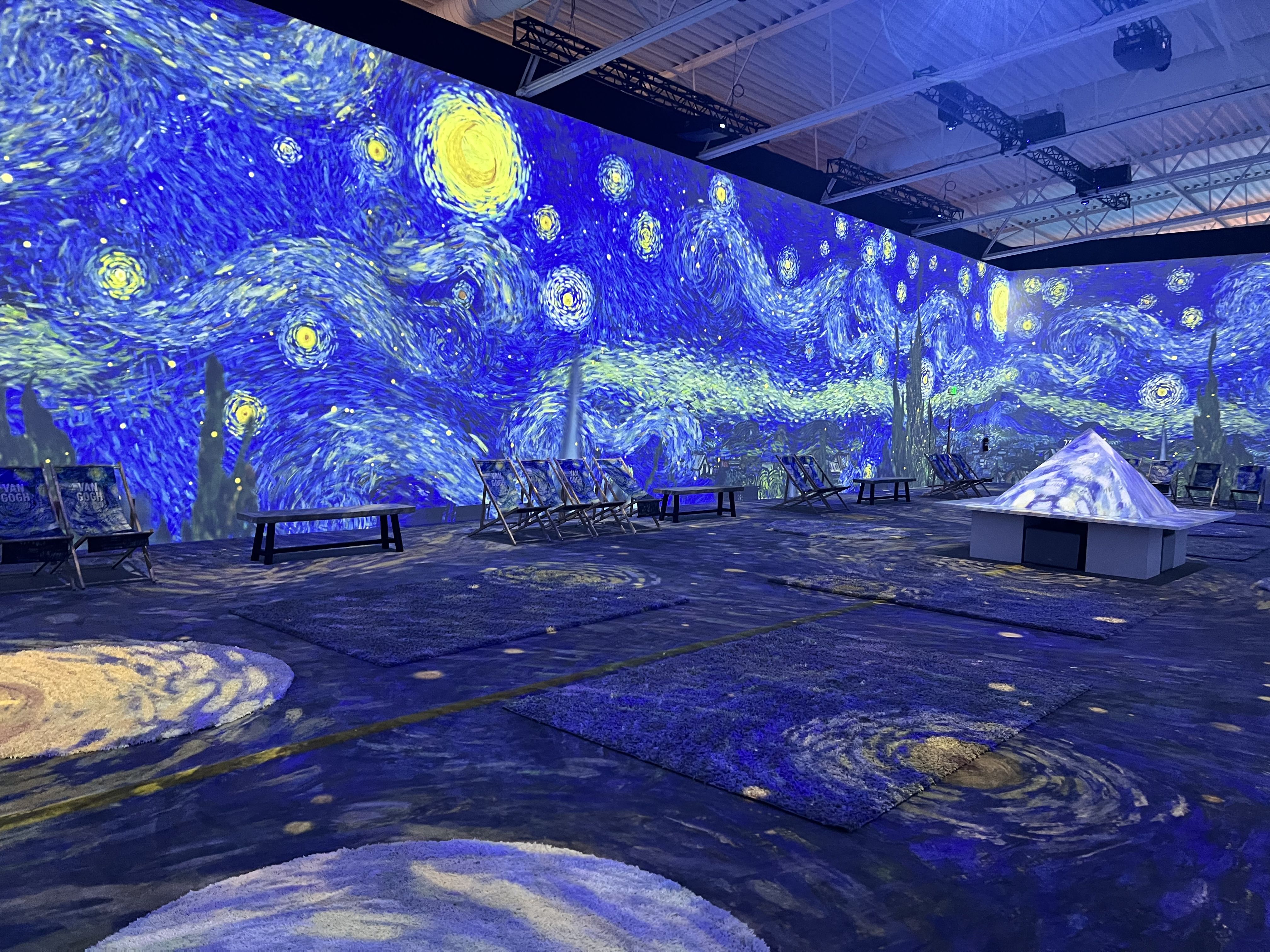
John Zaller, the exhibit's executive producer, told me that whether or not you're a fan of Van Gogh's art, the projections are "a great escape" that can relieve stress and reduce anxiety.
- I can confirm, considering I entered annoyed and left soothed.
- The custom music that plays over it, which sounds similar to Bridgerton's soundtrack, also helps.
The best seats in the house.
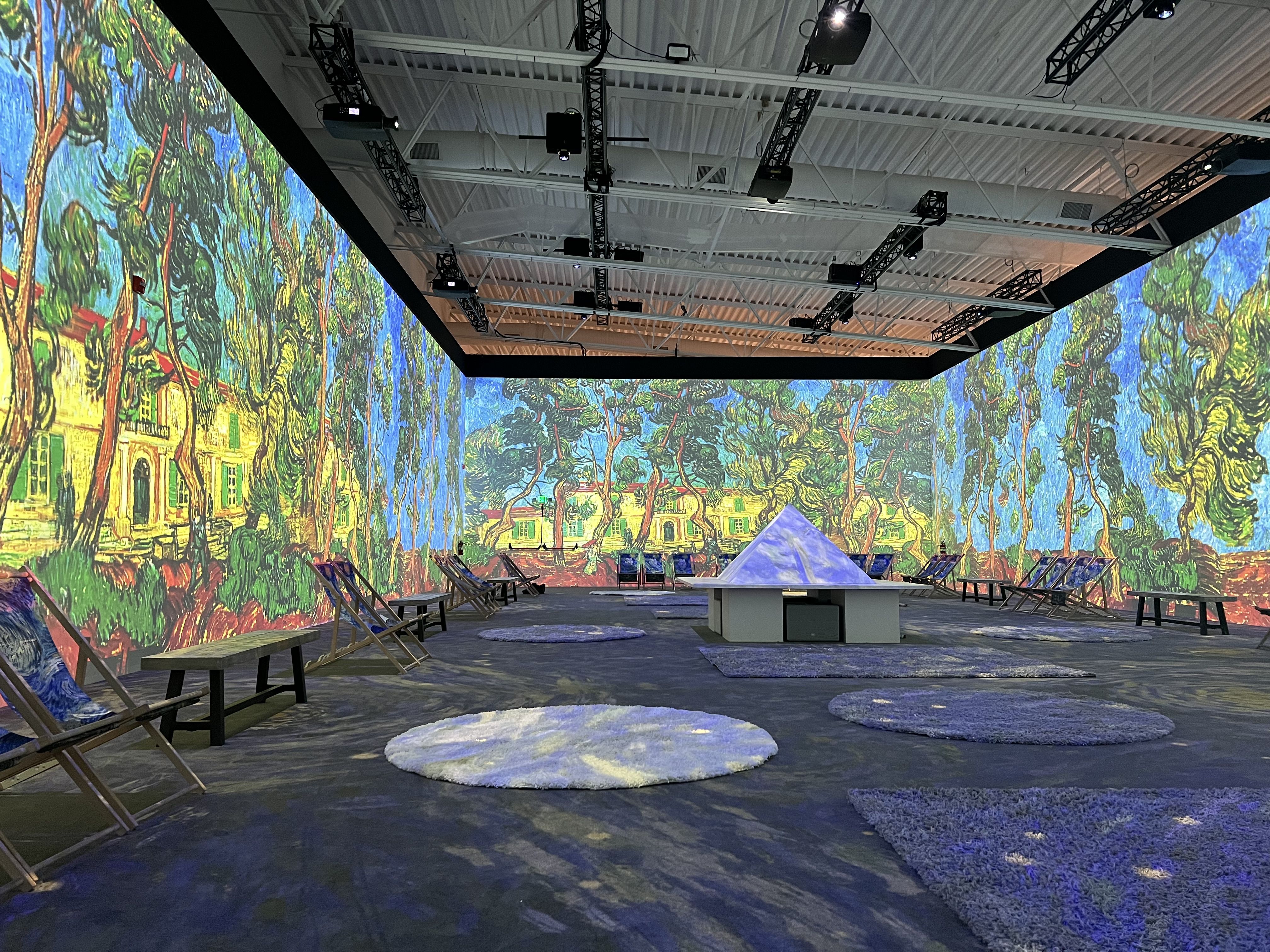
The room is meant to offer 360-degree views of the 35-minute show wherever you sit. I sat in every possible spot, which is about 40 chairs, a few benches and more than 10 rugs, to make sure.
My recommendations:
- The seven-seat row you see when you walk in, ideally the chair at the end.
- The rectangular gray mat in front of that row.
- The seat all the way in the back right corner.
Go when it's not peak times.
My guess is the emptier the room, the more impactful the show might be. Unless you're an extrovert, which I am not.
Honorable mentions: There's an option to pay $5 and walk through his paintings via virtual reality, but I'd skip if you're prone to getting dizzy.
The bottom line: "This is an entirely new way of experiencing art that you're not going to get by looking at in a book or online," Zaller said.