N.C. regulators approve Duke Energy rate increase

Add Axios as your preferred source to
see more of our stories on Google.
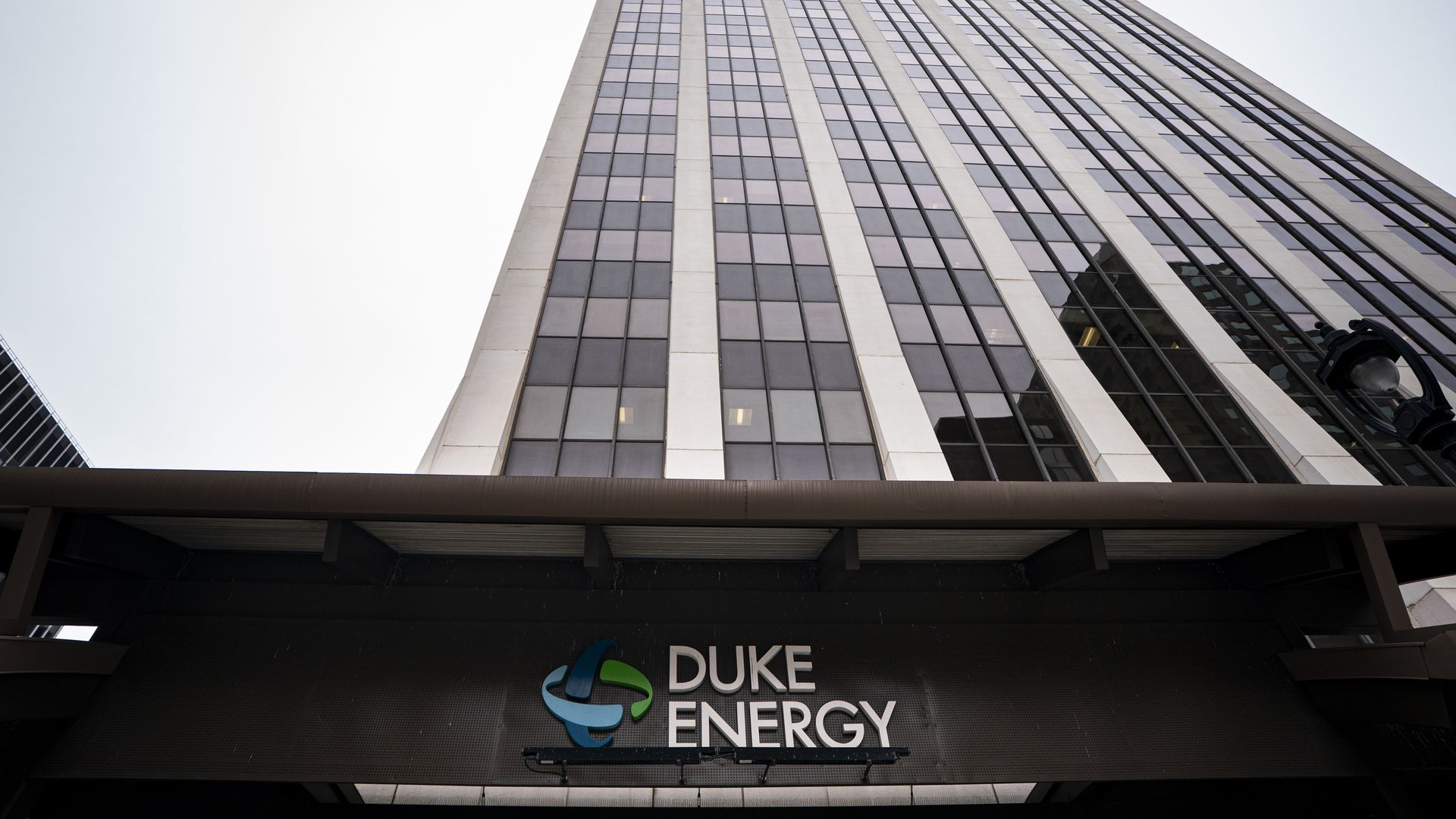
Duke Energy's tower in downtown Raleigh. Photo: Al Drago/Getty Images
The N.C. Utilities Commission, the state's regulatory body that oversees utilities in the state, has approved Duke Energy's request to raise rates for customers.
Why it matters: The approval comes after months of debates over rising prices in North Carolina that led to larger discussions about how data centers should pay for the costly infrastructure needed to power them.
- Rate request hearings, which Duke had to hold throughout the state, were typically packed with customers objecting to a large rate increase on electricity prices.
Driving the news: On Tuesday, the utilities commission ruled that Duke Energy can raise rates by an average annual increase of around 4.7% for residential users over the next two years.
- That is in line with an earlier settlement that Duke Energy made with the state to drop its rate request from around 18% over two years to around 9.5%.
- Duke Energy has argued the rate increases are needed to fund the infrastructure required to keep up with the state's surging population and growing demand from businesses, like manufacturers and data centers.
By the numbers: Duke Energy said that for a typical residential customer using 1,000 kwh of power per month, the rate increases would translate to a $6.53 increase to monthly bills in 2027 and $4.66 in 2028 for Duke Energy Carolinas customers.
- For Duke Energy Progress customers — which includes most of eastern North Carolina — the increases would look like $9.62 per month in 2027 and $5.89 in 2028.
- The two entities are set to combine next year, but will continue to have separate rates until it applies for additional rate requests in the future.
Zoom in: Tuesday's decision also included other orders from the utilities commission.
- In it, Duke must establish a new rate schedule for data center customers with loads above 50 megawatts and other upfront payments for infrastructure upgrades.
- It must also refund money to customers, with interest, if Duke Energy does not complete planned infrastructure upgrades on time and it sets aside $20 million in new funding to help customers in need.
The big picture: This week, the utilities commission also approved Duke Energy's most recent carbon plan — required by the N.C. General Assembly to file — showing how it plans to get to carbon neutrality by 2050.
- It is also the first plan approved since lawmakers nixed an initial goal of reducing emissions by 70% by 2030.
In the carbon plan, regulators approved a request by Duke Energy to delay some coal plant retirements until 2040 and green lit an additional 3,841 megwatts of new natural gas generation between 2030 and 2033.
- It gives Duke the go ahead to purse 2,300 megawatts of new solar generation between 2032 and 2034 and to develop up to 2,700 megawatts of additional battery storage.
- It approves $440 million in advanced nuclear development costs through 2028 and preserves options to build new nuclear in the coming years.
Environmental groups have expressed disappointment with large parts of the carbon plan, including the Southern Environmental Law Center and the N.C. Sustainable Energy Association.
- The groups have objected to the continued investments into coal and natural gas and not enough emphasis on renewable energy sources.