Duke Energy strikes deal with data center giants

Add Axios as your preferred source to
see more of our stories on Google.
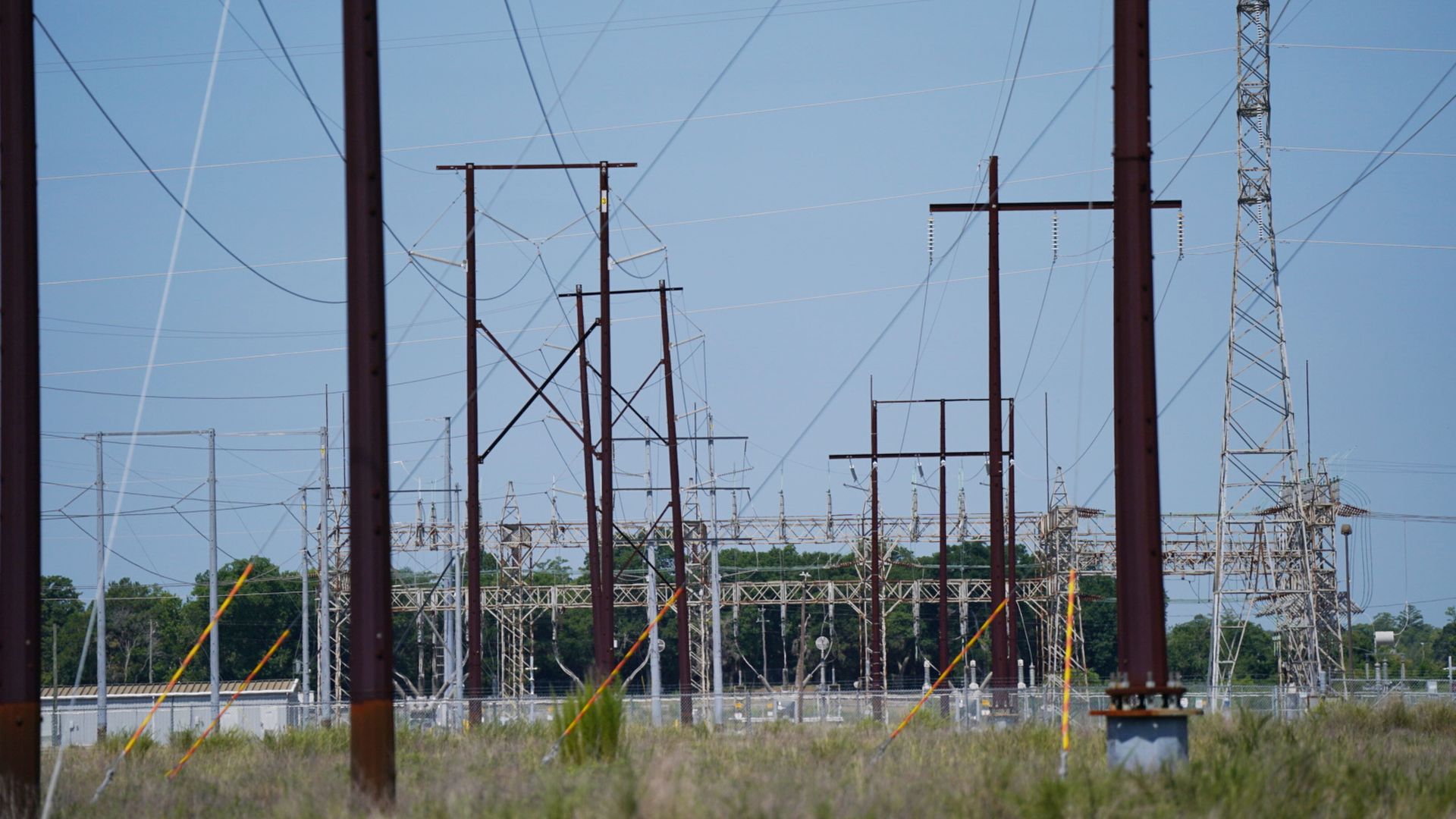
Transmission lines leaving a Duke Energy plant in Wilmington. Photo: Allison Joyce/Bloomberg via Getty Images
Duke Energy and some of the world's biggest companies have reached an agreement over a new large load tariff in North Carolina for data centers and other high-demand energy users.
Why it matters: The creation of the tariff — essentially rules that high-use customers have to follow to gain access to electricity — comes as residents increasingly push back against the construction of new data centers in the state.
- Duke Energy is also still in the process of getting its proposal to raise electricity rates in the state approved.
Driving the news: The proposed settlement on the tariff was submitted to the N.C. Utilities Commission on Tuesday. The News & Observer first reported its submission.
- The settlement was made with the North Carolina Public Staff, an independent state agency that represents utility consumers. It was supported by Amazon, Microsoft, Google and Meta, all of which operate data centers in the state or are planning new ones.
- Leading Democrats in the state, like Gov. Josh Stein, have been pushing for Duke Energy to create a large load tariff.
Between the lines: The new rules don't specifically name data centers as their aim.
- They are written to apply to energy customers whose demand is greater than 50 megawatts and consistently operate near peak capacity or any customer whose total demand is more than 150 megawatts.
- Those thresholds make it so that the rules will likely only apply to the largest of data centers, since most industrial users do not hit 150 megawatts in demand and typically ramp down energy usage at night and on weekends.
Zoom in: The proposed rules, which are meant to prevent costs from being passed on to households, include:
- An up-front deposit for any electrical infrastructure built specifically for a new project. The settlement calls for the Utilities Commission to approve a methodology for determining what portion of network upgrades are directly assigned to a high-use project.
- A minimum monthly payment of at least 75% of their projected electricity demand, even if using less.
- A requirement to pay damages if a high-use customer terminates its contract with Duke Energy or reduces contract demand.
The proposed rules do not, however, call for users to procure clean energy for the high-demand projects.
What they're saying: "It's simple — data centers will pay upfront for all costs to connect to the grid," Kendal Bowman, Duke Energy's North Carolina president, said in a statement. "We're shielding other customers from these costs in a way that protects reliability and ensures everyone benefits from the economic growth coming to North Carolina."
The other side: Matt Abele, director of the N.C. Sustainable Energy Association, told Axios that he did not think the tariff goes far enough, especially in regard to clean energy. No clean energy groups signed onto the agreement.
- "These facilities should be required to pay their own way and increasingly supply more of their own demand with clean, low-cost, and reliable resources," he said in a statement. "This agreement falls well short of what North Carolinians need to mitigate rising electricity costs at a time when utility bills have consistently been on the rise."
What's next: The Utilities Commission will ultimately have to approve the proposed settlement. The five-member commission could weigh in next month.