How HB2's legacy reshaped N.C. and modern culture fights

Add Axios as your preferred source to
see more of our stories on Google.
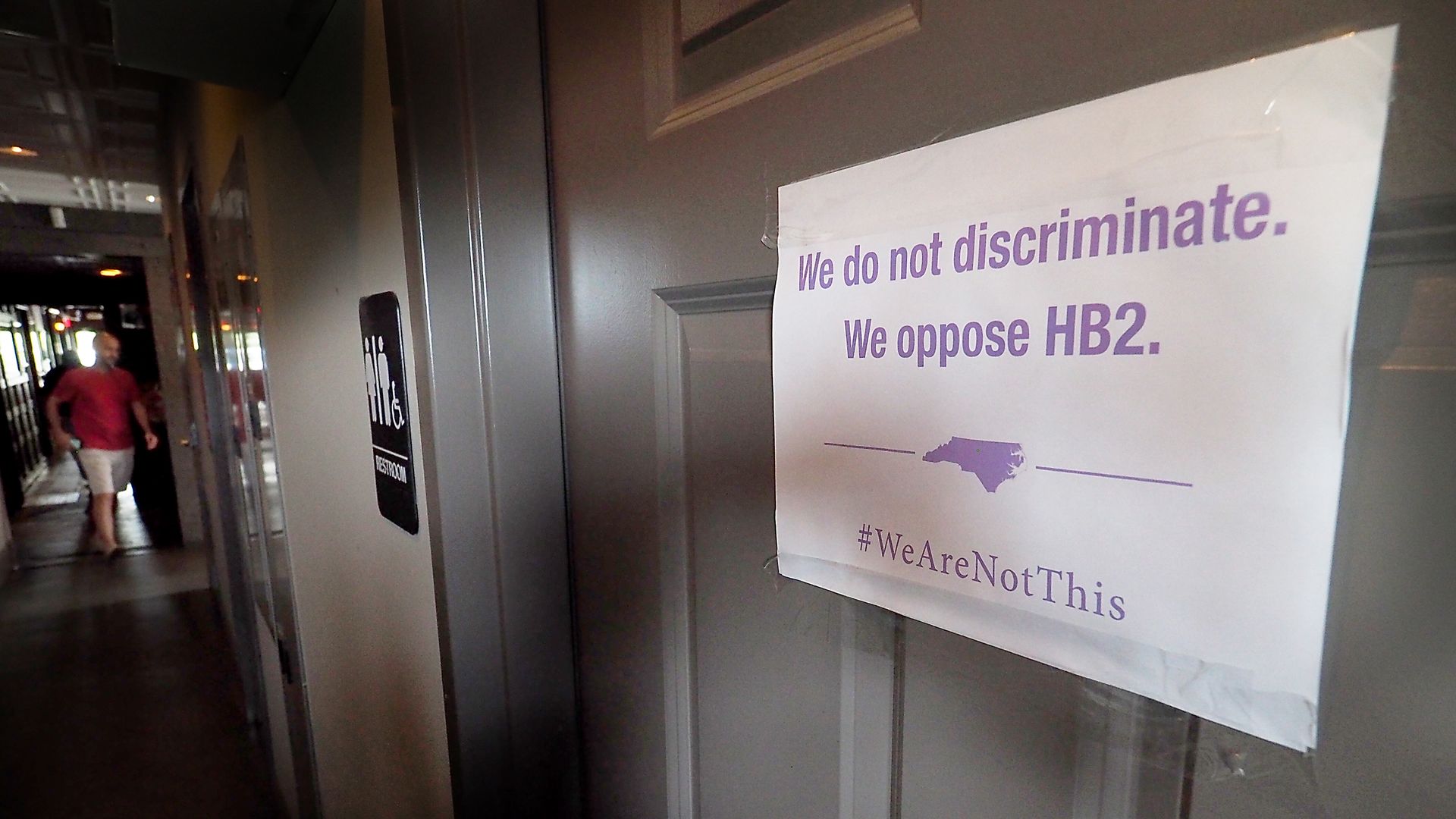
A unisex sign and the "We Are Not This" slogan outside a bathroom at Bull McCabe's Irish Pub on May 10, 2016, in Durham. Photo: Sara D. Davis/Getty Images
Ten years ago, House Bill 2 — the "bathroom bill" — became law, setting off years of political and economic shifts in North Carolina.
Why it matters: The fallout from the now-repealed measure was marked by widespread corporate pressure and boycotts.
- HB2, which rankled the power balance between North Carolina's GOP-controlled state legislature and a large Democratic-run city, was also a blueprint for modern culture fights.
Flashback: The bill, signed as Donald Trump's 2016 presidential campaign was underway, was a response to a Charlotte nondiscrimination ordinance approved in February 2016 that expanded protections for LGBTQ+ people and allowed transgender people to use restrooms corresponding with their gender identity.
- About a month later, Republican Gov. Pat McCrory signed HB2 into law, which limited LGBTQ+ rights and required transgender people to use the bathroom that matches the gender on their birth certificate.
Zoom in: The measure drew a swift corporate and cultural response, with business leaders and entire communities condemning it as discriminatory.
- PayPal canceled a 400-job expansion in Charlotte because of HB2. The NBA moved its 2017 All-Star Game from Charlotte, and the NCAA relocated certain games from North Carolina over its HB2 opposition.
- Bruce Springsteen and Maroon 5 were among musicians who canceled North Carolina shows, and states such as California forbade publicly funded travel to the state.
- All told, the bathroom bill is estimated to have cost North Carolina $3.76 billion in lost business over 12 years, the AP reported.
- Roy Cooper, a Democrat, defeated McCrory in the 2016 gubernatorial election and repealed the measure in 2017.
The big picture: In the years since, transgender rights have emerged as a major social issue in politics, Chris Cooper, a political science professor at Western Carolina University with no relation to Roy Cooper, tells Axios.
- "HB2 is what made transgender rights a salient issue," Cooper says, but adds that the nature of the bills has changed.
- It's no longer just about transgender rights and bathrooms, but narrower issues such as transgender athletes participating in organized sports, as well as medical care for transgender minors.
- More than half of states have passed laws or policies limiting youth access to gender-affirming care, per KFF. Compared with HB2, the corporate response to such measures is considerably more muted, Cooper noted.
- "The conservative wing of the conservative party has found a slightly different take on this that works for them politically," Cooper says.
What we're watching: President Trump is currently pushing legislation aimed largely at restricting voting rights, but the measure also would ban transgender athletes from women's sports and restrict gender-affirming care for minors.
- There is "a real belief that (restricting transgender rights) is a political winner," Cooper says.