Thune tackles biggest test yet as Senate launches SAVE Act debate

Add Axios as your preferred source to
see more of our stories on Google.
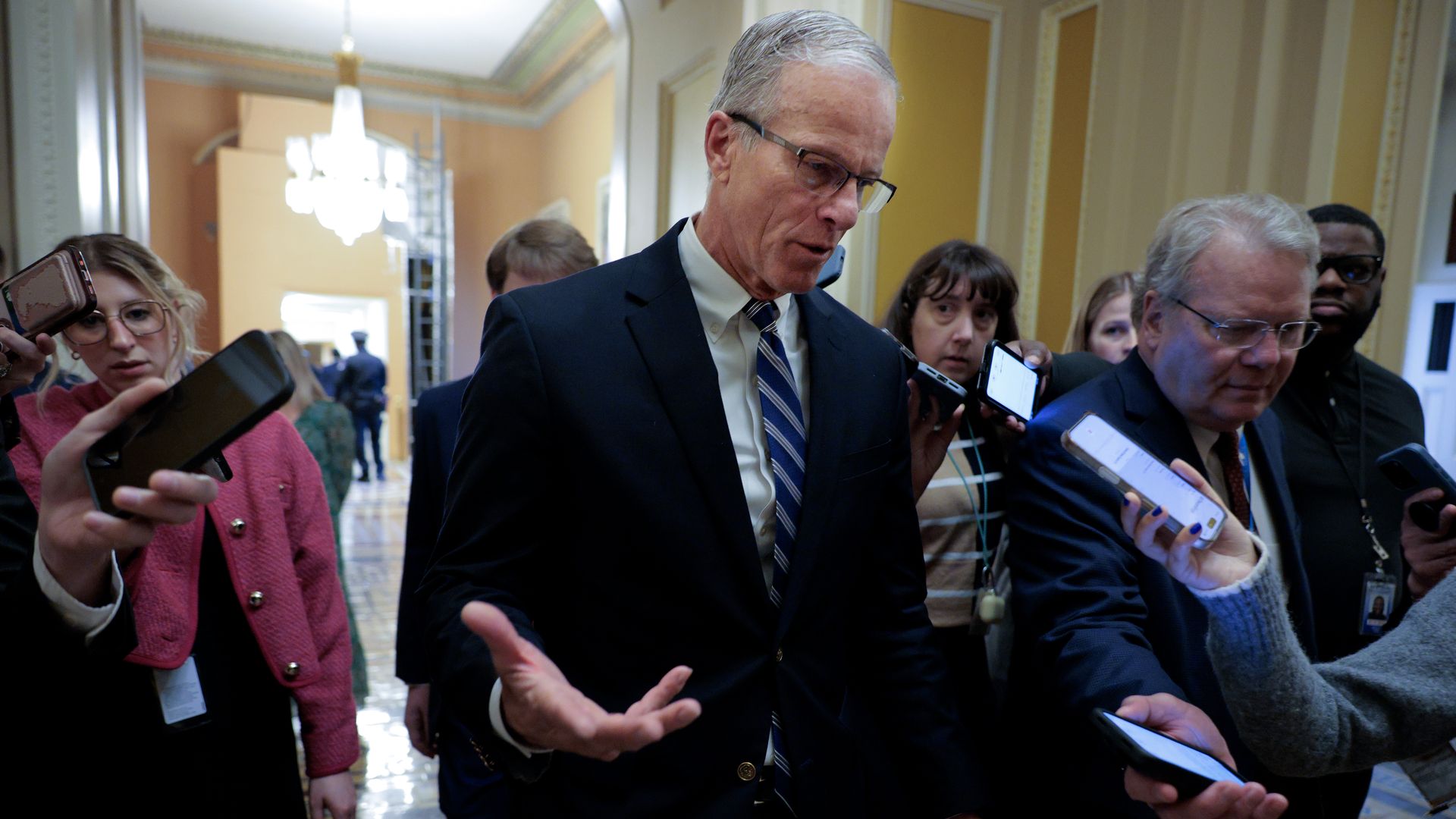
Senate Majority Leader John Thune talks with reporters at the U.S. Capitol on March 12. Photo: Chip Somodevilla/Getty Images
Senate Republicans opened debate Tuesday on the SAVE America Act. While discussions continue over whether the bill will be further modified, the outcome isn't in doubt: the legislation will not pass.
Why it matters: GOP leaders insist the open-ended debate will allow them to spotlight election fraud and draw attention to President Trump's proposed solutions.
- But on day one, their internal divisions were already on display.
- At their weekly lunch, several senators took aim at one of Trump's key changes to the House-passed bill — new restrictions on mail-in ballots.
- Still, senators made progress on that issue and said they would work with the White House to address senators' concerns.
"I feel very comfortable where things are at, but always willing to work with people," Sen. Eric Schmitt (R-Mo.) told Axios.
- "We have to clamp down on this mass mail-in balloting scam."
Driving the news: The process began Tuesday afternoon when the Senate voted 51-48 to advance the SAVE America Act past a procedural hurdle.
- Democrats, as expected, voted against it. They were joined by Sen. Lisa Murkowski (R-Alaska).
- In addition to restrictions on mail-in ballots, the legislation would require proof of citizenship and photo ID to vote, and would ban transition surgeries for transgender minors.
- To end debate, Majority Leader John Thune (R-S.D.) will need 60 votes — a threshold he has acknowledged he will not reach.
Zoom out: Democrats framed the effort as voter suppression, arguing Trump and Thune were collaborating to restrict access to the ballot.
- "Twenty million — maybe more — people will be told when they show up to vote, 'You're off the rolls,'" Senate Minority Leader Chuck Schumer (D-N.Y.) said. "That's the problem with the bill."
- More than 9% of American citizens (an estimated 21.3 million people) of voting age don't have proof of citizenship readily available, the nonpartisan Brennan Center for Justice found.
Zoom in: For some Republicans — even staunch opponents of the 60-vote filibuster — simply debating and amending a bill on the floor will be a win.
- But there are potential divisions, including around Trump-backed provisions on banning transgender athletes from women's sports and restricting gender-affirming care for minors.
- "Those were concerns raised," Sen. Ron Johnson (R-Wis.) said following the GOP lunch. "I haven't made up my mind. … Maybe they are too onerous. Let's have that discussion."
The bottom line: Senators were reluctant to put a timeline on how long the debate would last, though most suggested it could stretch to about a week.
