The SAVE Act: What to know about the House-passed bill requiring proof of citizenship to vote

Add Axios as your preferred source to
see more of our stories on Google.
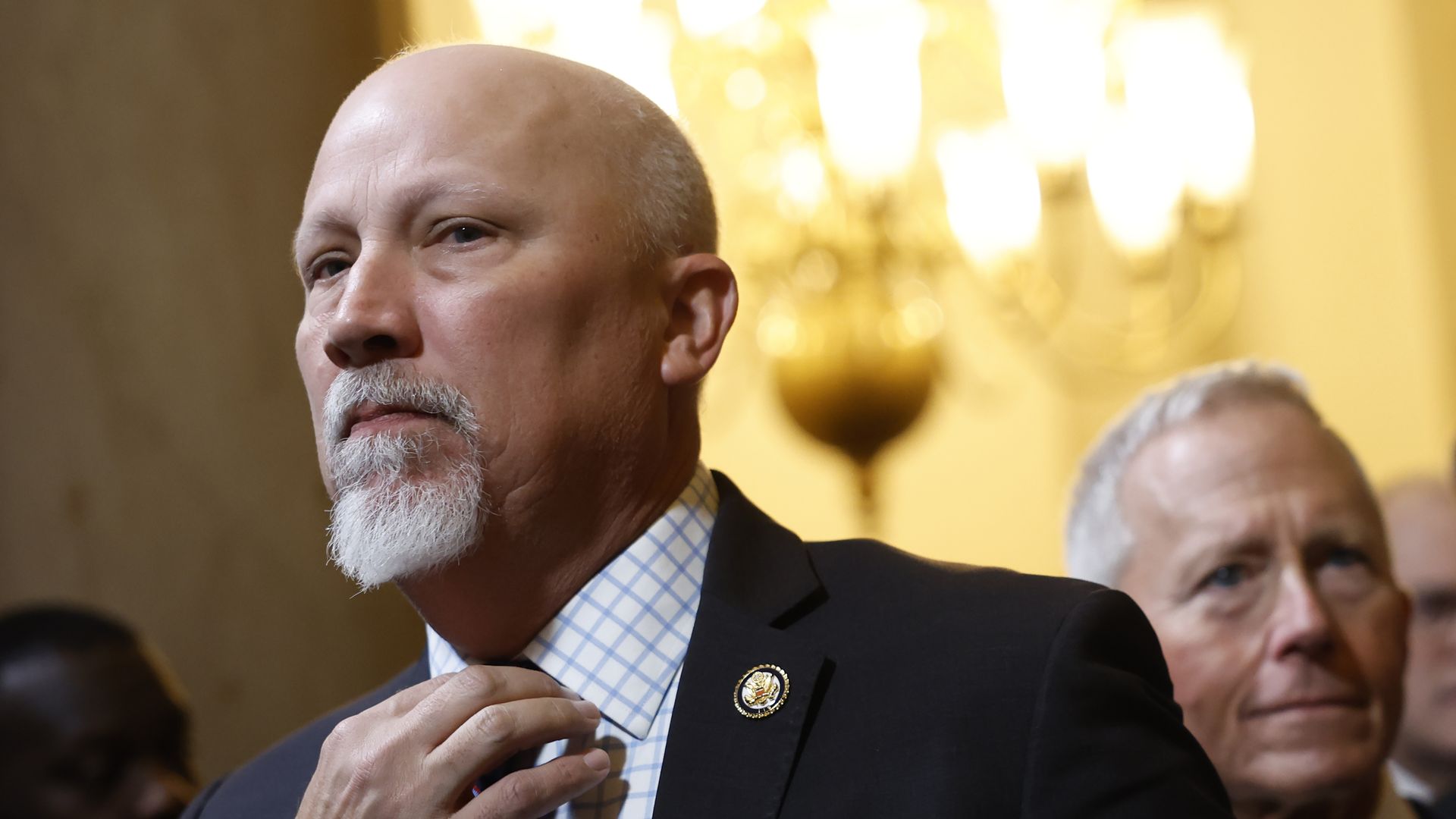
Rep. Chip Roy attends the inauguration of President Trump in the Rotunda of the U.S. Capitol on Jan. 20 in Washington, D.C. Photo: Kevin Dietsch/Getty Images
The House passed a bill Thursday requiring voters to provide documentary proof of citizenship when they register to vote which has triggered alarm bells among voting and civil rights organizations.
The big picture: The Safeguard American Voter Eligibility (SAVE) Act aims to restrict noncitizen voting in federal elections — which is exceptionally rare and illegal. But voting rights advocates warn it could risk disenfranchising U.S. citizens who don't have proof of citizenship easily accessible.
- According to the nonpartisan Brennan Center for Justice, more than 9% of American citizens (21.3 million people) of voting age don't have proof of citizenship readily available.
The latest: The bill, championed by Rep. Chip Roy (R-Texas), was approved by lawmakers in a 220-208 vote.
- Four Democrats joined Republicans in supporting the measure.
- It now heads to the Senate, where it stalled last year despite the House passing the measure in July with the votes of five Democrats and 216 Republicans.
- Seven Democrats would need to back the bill for it to overcome a Senate filibuster.
Catch up quick: Roy, in a statement provided to Axios in February, characterized voting rights groups' concerns as "absurd armchair speculation."
- He added that the "legislation provides a myriad ways for people to prove citizenship and explicitly directs States to establish a process for individuals to register to vote if there are discrepancies in their proof of citizenship documents due to something like a name change."
The other side: Brennan Center CEO Michael Waldman characterized the bill as "one of the worst pieces of voting legislation in American history" in a statement after Thursday's passage, urging the Senate to block it.
Catch up quick: Claims of millions of undocumented immigrants voting began circulating during the 2016 election.
- President Trump, without evidence, contended at the time he lost the popular vote to Hillary Clinton by nearly 2.9 million votes because 3 million (or more) undocumented immigrants voted.
- But a Brennan Center nationwide study of the 2016 election across 42 jurisdictions found that officials referred only an estimated 30 incidents of suspected noncitizen voting for further investigation or prosecution.
What does the SAVE Act do?
The bill, which seeks to amend the National Voter Registration Act of 1993 (NVRA), would require Americans seeking to register or re-register to vote to present a REAL ID-compliant ID that indicates U.S. citizenship, a passport or another citizenship document.
- Other "[v]alid government-issued photo identification" cards that do not indicate birthplace or citizenship must be presented alongside a birth certificate, a naturalization certificate, an adoption decree or other listed forms of documentation demonstrating status or birthplace.
- The Brennan Center writes that the bill would "functionally eliminate mail registration" because it requires people to present documentary proof of citizenship in person.
- As noted by Roy, the bill directs states to establish a process for applicants to provide "additional documentation" to establish that the applicant is a citizen "in the event of a discrepancy with respect to the applicant's documentary proof of United States citizenship."
Reality check: Citizenship is already a requirement to vote.
- The NVRA requires states to use a common voter form, including confirming that the applicant is a citizen under penalty of perjury.
- Noncitizens who register often do so by mistake and very rarely cast a ballot. The stakes of voting as a non-U.S. citizen, even unintentionally, are very high. Punishments include prison time and possible deportation.
What are the concerns about the bill?
Groups like the Brennan Center, the nonpartisan Campaign Legal Center and the left-leaning Center for American Progress have warned the SAVE Act could add significant voting barriers.
- Married women who have changed their last names, young voters and voters of color are more likely to have problems accessing necessary documentation, the Brennan Center says.
- The Bipartisan Policy Center, in a July brief, stated that while the goal of ensuring only citizens register to vote is important, the sweeping changes outlined in the bill would take time and funding for states to implement.
Zoom out: Kansas tried to implement a rule mandating documentary proof of citizenship to vote, but it was struck down in court as a violation of the Constitution and the NVRA.
- Arizona implemented a similar law, but the Supreme Court upheld only partial enforcement. People who can't provide proof of citizenship can register to vote in the state using federal forms and are only permitted to vote in federal races.
Go deeper: Census: Over half of Virginia's immigrants are eligible to vote
Editor's note: This story has been updated with information from the April 10 House vote on the bill.
