A North Carolina 911 experiment sends defibrillators by drone

Add Axios as your preferred source to
see more of our stories on Google.
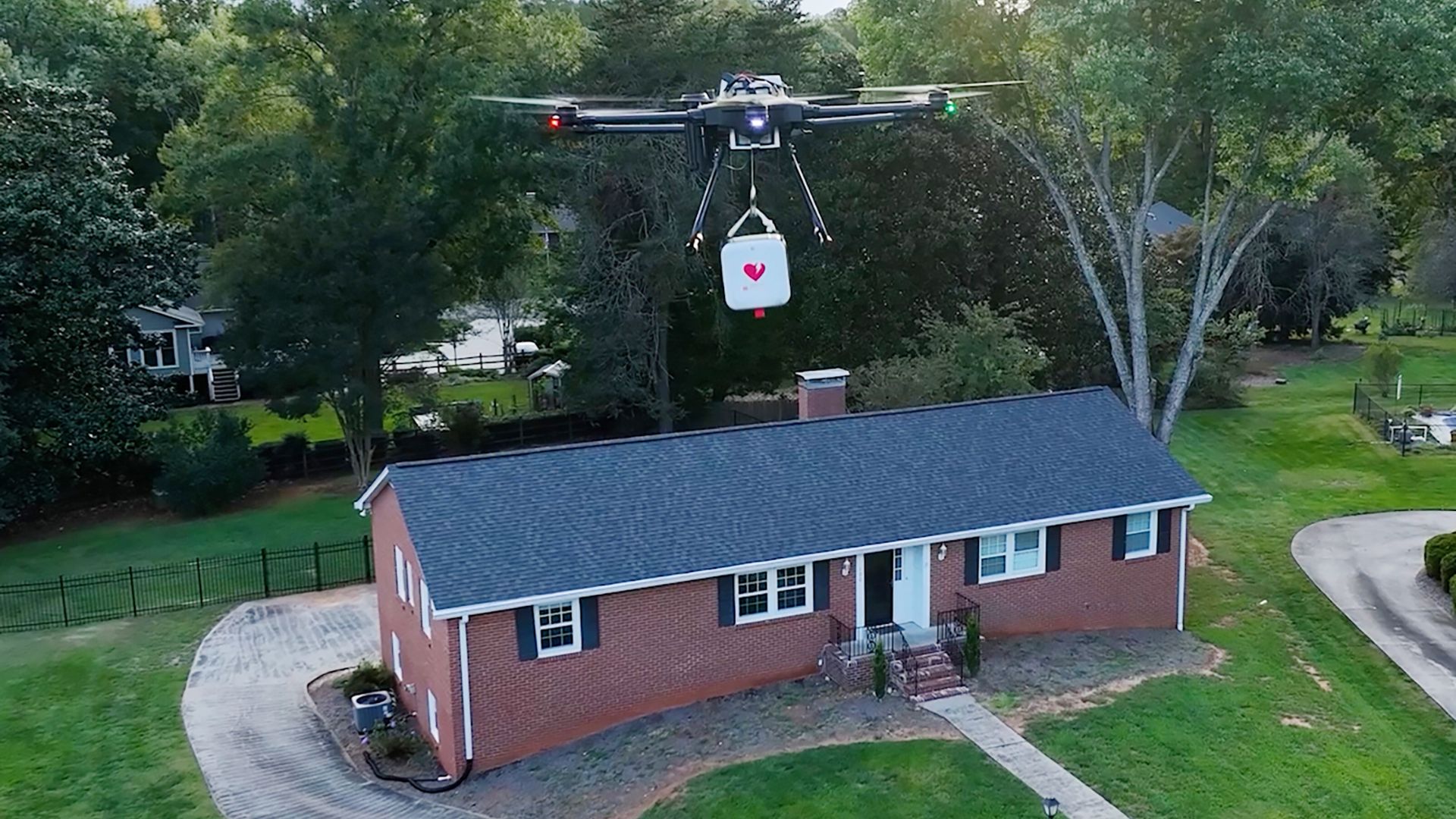
Most cases of cardiac arrest happen at home. First responders are beginning to use drones to deliver life-saving care faster. (Photo provided by Duke)
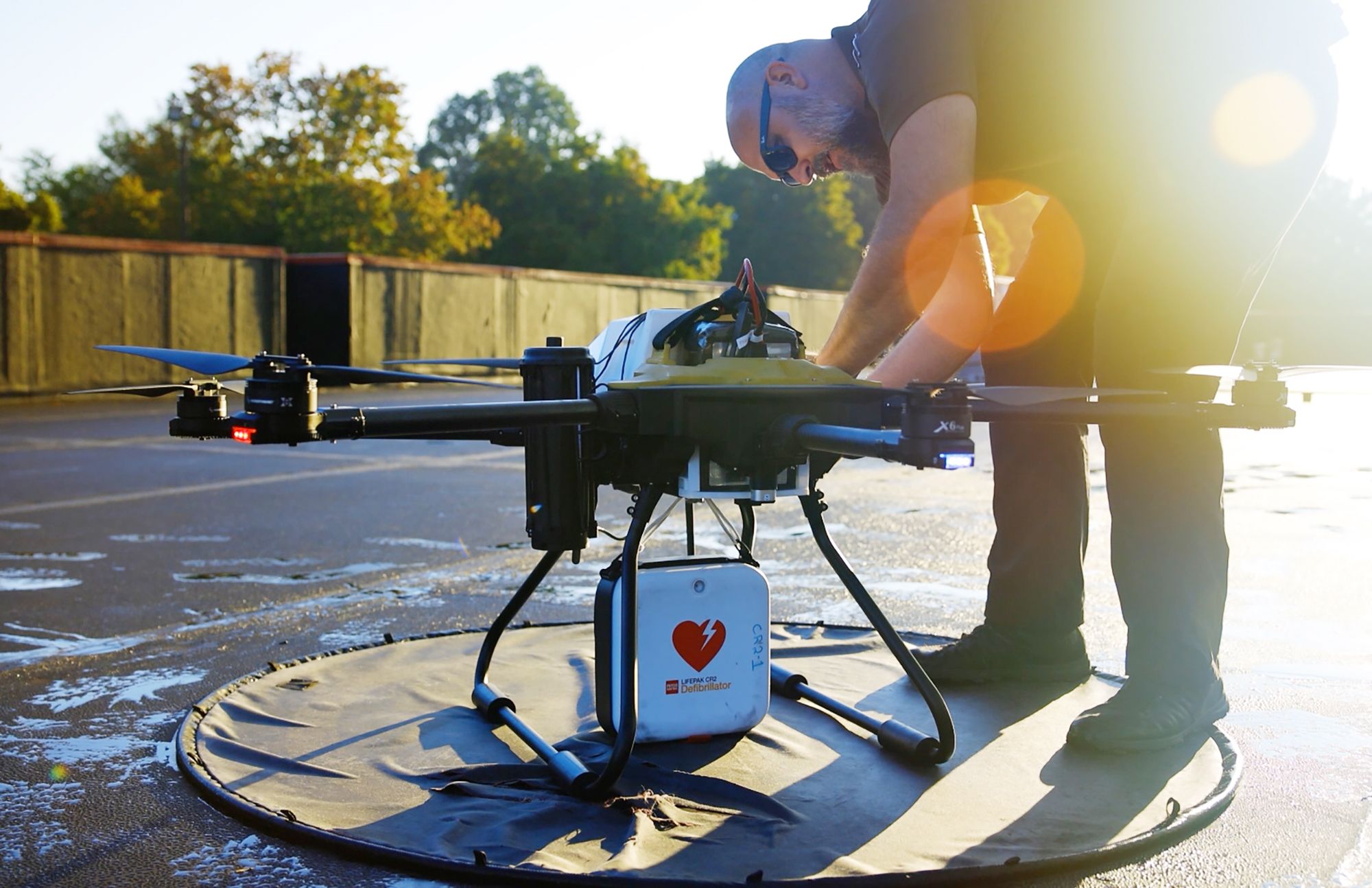
First responders are using drones to drop off defibrillators at the addresses of real 911 calls in North Carolina. The experiment aims to help more people survive cardiac arrest, which can take only minutes to kill a person.
Why it matters: Cardiac arrest strikes 350,000 people in the United States every year, and around 90% of those that take place outside hospitals are fatal, according to the American Red Cross.
State of play: Because most cardiac arrests happen at home, Duke Health researchers launched an experiment to drop off defibrillators by drone. They can make it to 911 callers faster than first responders can drive to them.
- Duke says the study — launched in the Forsyth County village of Clemmons — is a U.S. first. The local sheriff's office had already been using drones in law enforcement.
Zoom in: Cardiac arrest is caused by an abnormal heart rhythm, and Duke University doctor and research professor Monique Starks says there are really only 10 minutes to save someone's life.
- "Survival has really been stuck at 10% and that is because it's incredibly time-sensitive," and reliant on bystanders to recognize the signs and react, Starks explained in a press briefing this week.
- (That's different than a heart attack, caused by an artery blockage, where there are typically hours to get to the hospital, she says.)
By the numbers: Studies show that if a defibrillator is used within 2 or 3 minutes, a patient has a 50 to 70% chance of surviving, according to Duke.
- EMS arrival times hover around 6 minutes in urban and suburban areas, or 13 minutes in rural areas, a nationwide study found in 2017.
How it works: Drone pilots hear 911 calls as they come in and, when needed, dispatch the defibrillators to the address. They're lowered to the ground as the drone hovers 100 feet in the air.
- The 911 call-taker then walks the caller through shocking the patient's heart back into rhythm, before turning the scene over to EMS workers when they arrive.
- "The EMS does not stop because the drone has launched," Forsyth County Sheriff Bobby Kimbrough said in the press briefing. "It's just another layer of health care."
The researchers will study how fast the drones arrive and whether survival rates improve.
- The FAA gave special permission for pilots to fly the 40-mph drones even if they are out of sight, Starks said.
What they're saying: Joseph Ornato, a professor at Virginia Commonwealth University and the co-lead with Starks on the research, says they're "laying the groundwork" for a large randomized clinical trial.
- "Our hope is that the drone consistently beats first responder[s]," Starks said, and that bystanders can "bravely use" the defibrillator when it arrives.
What's next: Starks says another time-sensitive medication, Narcan, which can reverse an opioid overdose, would be "the next, obvious low-hanging fruit" for researchers.