Why tariffs may not save furniture manufacturing in North Carolina


Add Axios as your preferred source to
see more of our stories on Google.
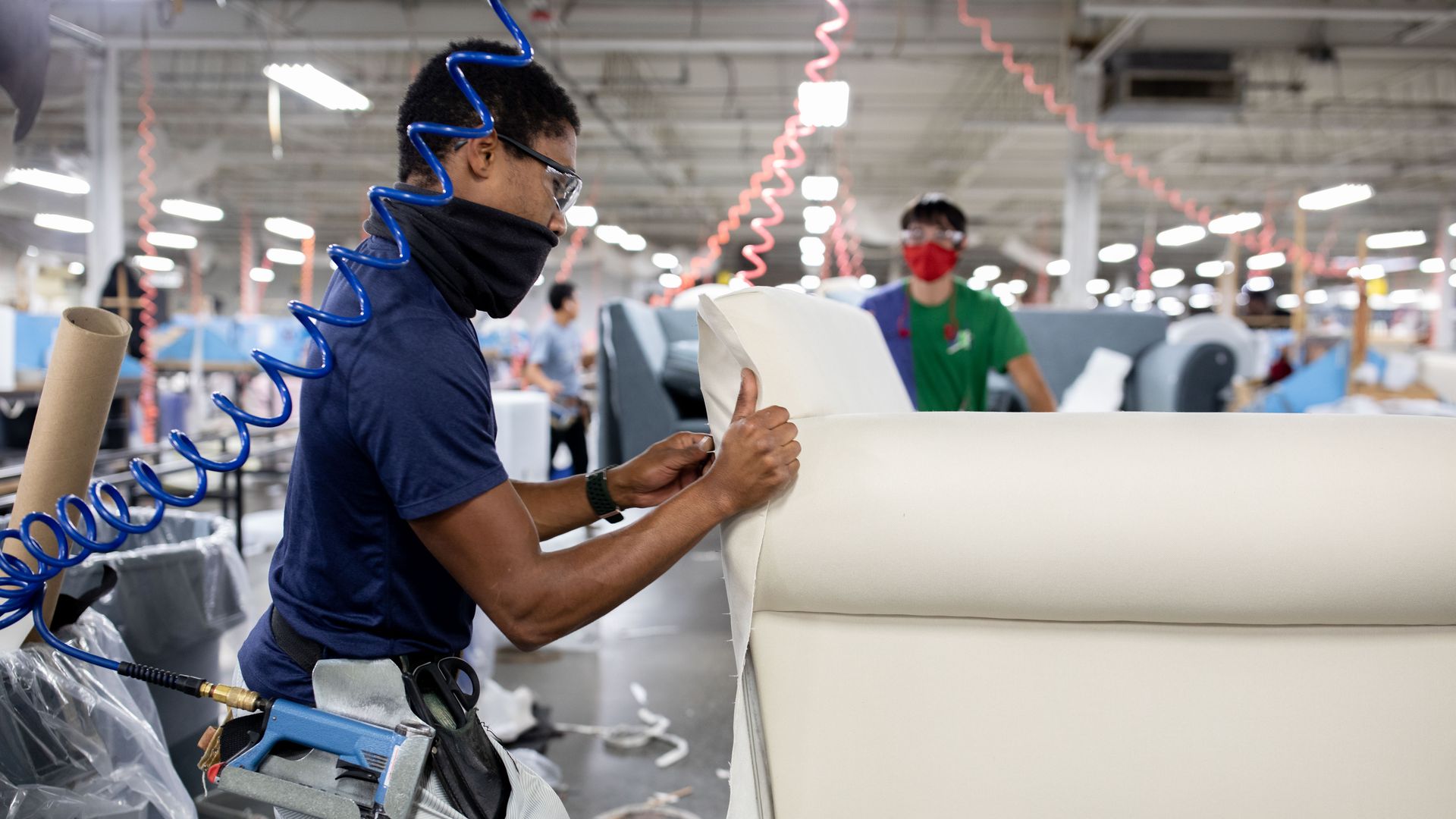
A worker upholsters a sofa in Hiddenite, N.C., in 2021. Photo: Logan Cyrus/Bloomberg via Getty Images
President Trump is unleashing a new round of tariffs on furniture with the stated goal of reviving North Carolina's furniture manufacturing industry.
Why it matters: After the South lured factories and thousands of jobs from the North with the promise of cheap labor in the mid-20th century, North Carolina became a hotbed of furniture manufacturing.
- During this century, much of that work moved to lower-cost markets like China and Vietnam. Those in the industry say tariffs are unlikely to revive the industry that once underpinned much of North Carolina's economy.
By the numbers: In 2000, there were more than 78,000 furniture jobs in the state, according to the Bureau of Labor Statistics. As of August, roughly 28,000 remain.
Driving the news: On Monday, Trump took to Truth Social to promise a new round of tariffs on overseas furniture.
- "In order to make North Carolina, which has completely lost its furniture business to China, and other Countries, GREAT again, I will be imposing substantial Tariffs on any Country that does not make its furniture in the United States. Details to Follow!" he wrote.
Zoom in: The White House later provided more details, saying it would levy a 25% tariff on upholstered furniture imports, rising to 30% on Jan. 1, and a 25% tariff, rising to 50% on Jan. 1, for imports of kitchen cabinets and vanities.
- It also adds a 10% tariff on imports of softwood lumber.
- However, countries like the United Kingdom, ones in the European Union and Japan were given lower rates.
State of play: The furniture industry has been seeking more clarity on the tariffs, but the ruling is likely to have a mixed impact within North Carolina.
- "While the tariff categories have been named, many practical details remain murky," including which pieces qualify as "upholstered seating" and the rules on how the country of origin is determined, the High Point-based Home Furnishings Association wrote to its members.
- It told members to prepare for increased costs.
The American Home Furnishings Alliance, a High Point-based group that represents manufacturers and importers, said domestic companies that specialize in mass production of upholstered furniture will likely see an increase in demand in the coming months.
- But other domestic upholstery manufacturers that specialize in custom work, many of which are based in North Carolina, likely won't benefit as much, the alliance added.
- "Companies importing upholstered furniture cannot offer this level of customization and therefore are not generally considered direct competitors," it said.
The other side: The American Kitchen Cabinet Alliance, however, applauded the tariffs for its segment of the furniture industry, saying it would protect them from cheap products flooded in from other countries.
- Edwin Underwood, president of High Point-based Marsh Cabinets, in a statement called the 50% tariff on kitchen cabinet imports "a gamechanger" for the domestic cabinet industry.
- "We will ramp up domestic cabinet production in North Carolina and across America," he said.
Gov. Josh Stein told Axios Tuesday he hadn't seen the post from the president, but added he wished there were fewer fluctuations in the country's tariff policy.
- "Obviously, we want to support our furniture industry. I just don't understand how this tariff fits into his overall tariff policy," Stein said. "I do think that our economy is best served when there's consistency, and that way businesses have an expectation of what policy is, because then they will invest around it."
The big picture: Some in the furniture industry have warned that tariffs will not be a silver bullet for the state's furniture heritage.
- In an April response to the U.S. Department of Commerce's investigation of lumber imports, Furniture for America, a trade group led by the High Point-based American Home Furnishings Alliance, pushed back against potential lumber tariffs.
- The group argued that overall lumber tariffs could harm home building and remodeling, key drivers of furniture demand, by making them more expensive.
- It also said a severe labor shortage in the furniture industry would make reshoring difficult. During the Great Recession, the Hickory area had an unemployment rate of 15% after a wave of factory closings. But today, it is 3.7%.
What they're saying: Tariffs cannot "unravel and reverse" the global trends that shaped the home furnishings industry over the last few decades, Furniture for America's letter said.
- "Tariffs cannot reopen factories that no longer exist, bring back thousands of workers who retired or moved on to other industries, nor reverse the interests and inclinations of today's younger workers, who are attracted to higher-paying trades and the burgeoning tech industry."