A major energy bill would change Duke Energy's carbon reduction goals


Add Axios as your preferred source to
see more of our stories on Google.
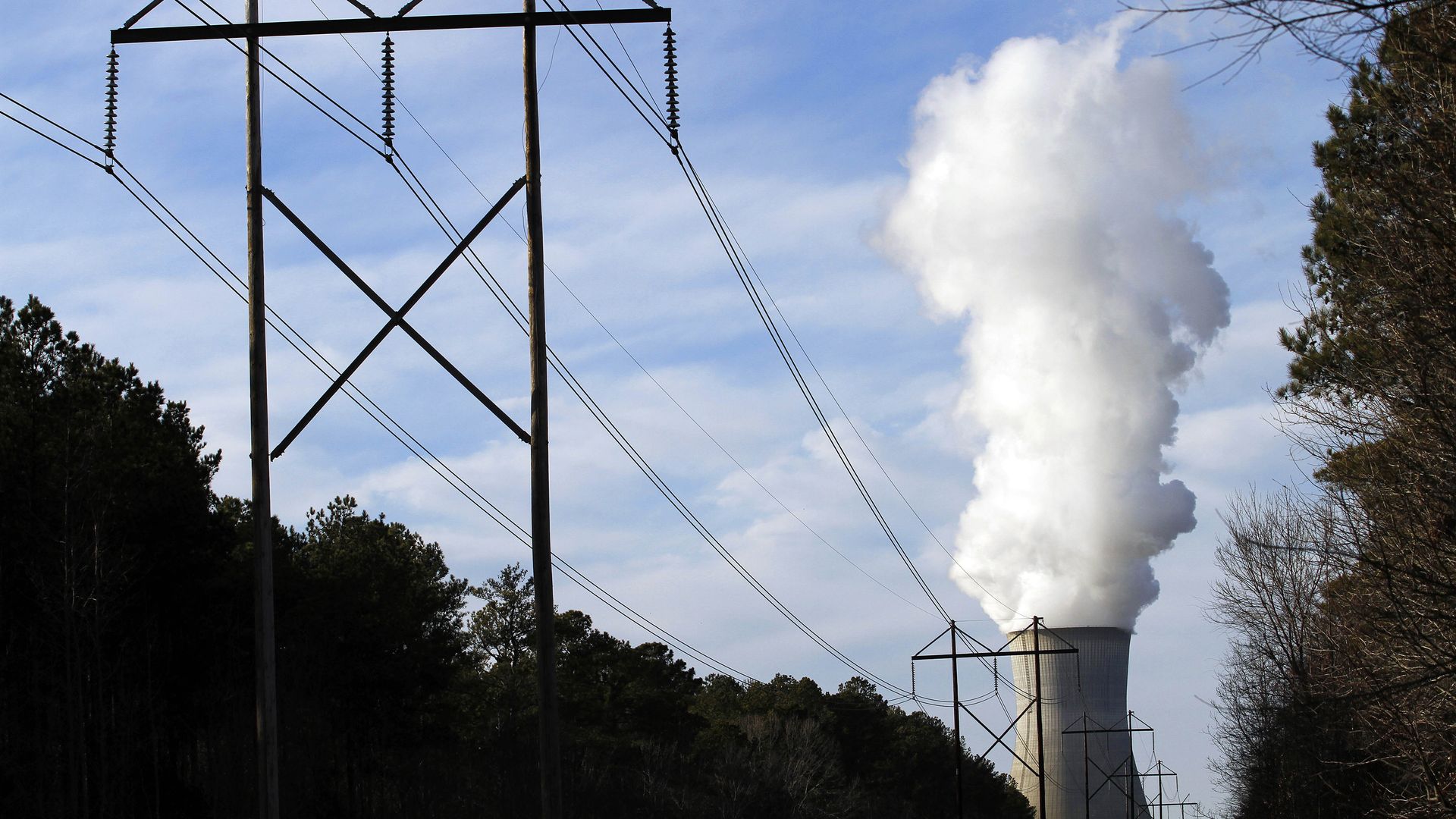
Steam rises from the cooling tower of Shearon Harris nuclear plant in New Hill, N.C.. Photo: Jim R. Bounds/Bloomberg via Getty Images
A major energy bill being debated by the Republican-led General Assembly could soon make its way to the desk of North Carolina Gov. Josh Stein.
Why it matters: Senate Bill 266, if passed, would eliminate an interim goal that mandates Duke Energy reach a 70% reduction in carbon emissions by 2030, while keeping in place a longer-term goal of being carbon neutral in 2050.
- It would also change how Duke Energy can set its rates and recover costs from its under-construction plants.
State of play: The Senate could vote on the energy bill as soon as this week, and Republicans in the chamber have yet to pose any major objections to it.
- Gov. Josh Stein's office did not respond to a request for comment about whether he planned to sign or veto the legislation. Earlier this year, Stein criticized the initial version of the proposal the Senate passed.
- House Republicans, however, did convince 11 Democratic representatives to join them in voting for the bill, meaning it could potentially have enough votes to override any veto.
- A previous version of the bill was co-sponsored by Paul Newton, a former Duke Energy executive who resigned from the state senate in March.
What's in the bill: The bill would eliminate Duke Energy's 2030 carbon reduction goals, which were set in a bipartisan 2021 law. Supporters say scrapping the interim goal would give Duke flexibility to meet rising energy demand and save a projected $15 billion over the next two decades.
- The bill would also give Duke Energy more flexibility in charging customers for construction costs of new plants, like a nuclear energy or natural gas facility, before the plants begin producing energy.
- Further, the bill would also change how Duke Energy divides costs among customers for energy it purchases to supplement its own plants, Canary Media reports. The change, one study found, would raise costs for residential users while cutting them for industrial users — though it does not take into account savings from scrapping the 2030 carbon goal.
Between the lines: Duke Energy appears to be in favor of the bill. "Policies which build on our state's strong customer protections while helping meet growing energy demands from population growth, business expansion and a resurgence of manufacturing can play a critical role in supporting North Carolina's thriving economy," a company spokesperson said.
What they're saying: Several environmental groups, including the NC Sustainable Energy Association and League of Conservation Voters, have pushed back on the bill, saying it will slow down Duke's transition to clean energy sources and put more risk onto the shoulders of residents.
- Dan Crawford, director of governmental relations of the N.C. League of Conservation Voters, told Axios that he doesn't believe scrapping the carbon emissions goals will lead to $15 billion in savings.
- "There are a lot of assumptions being made," he said, adding that the legislation ignores that clean energy technology continues to get cheaper.
- Crawford added that eliminating the 2030 goals will make it harder for Duke Energy to be carbon neutral by 2050 — likening the situation to trying to get in shape for the beach a week before your vacation.