Bill would eliminate Duke Energy's 2030 carbon reduction goals


Add Axios as your preferred source to
see more of our stories on Google.
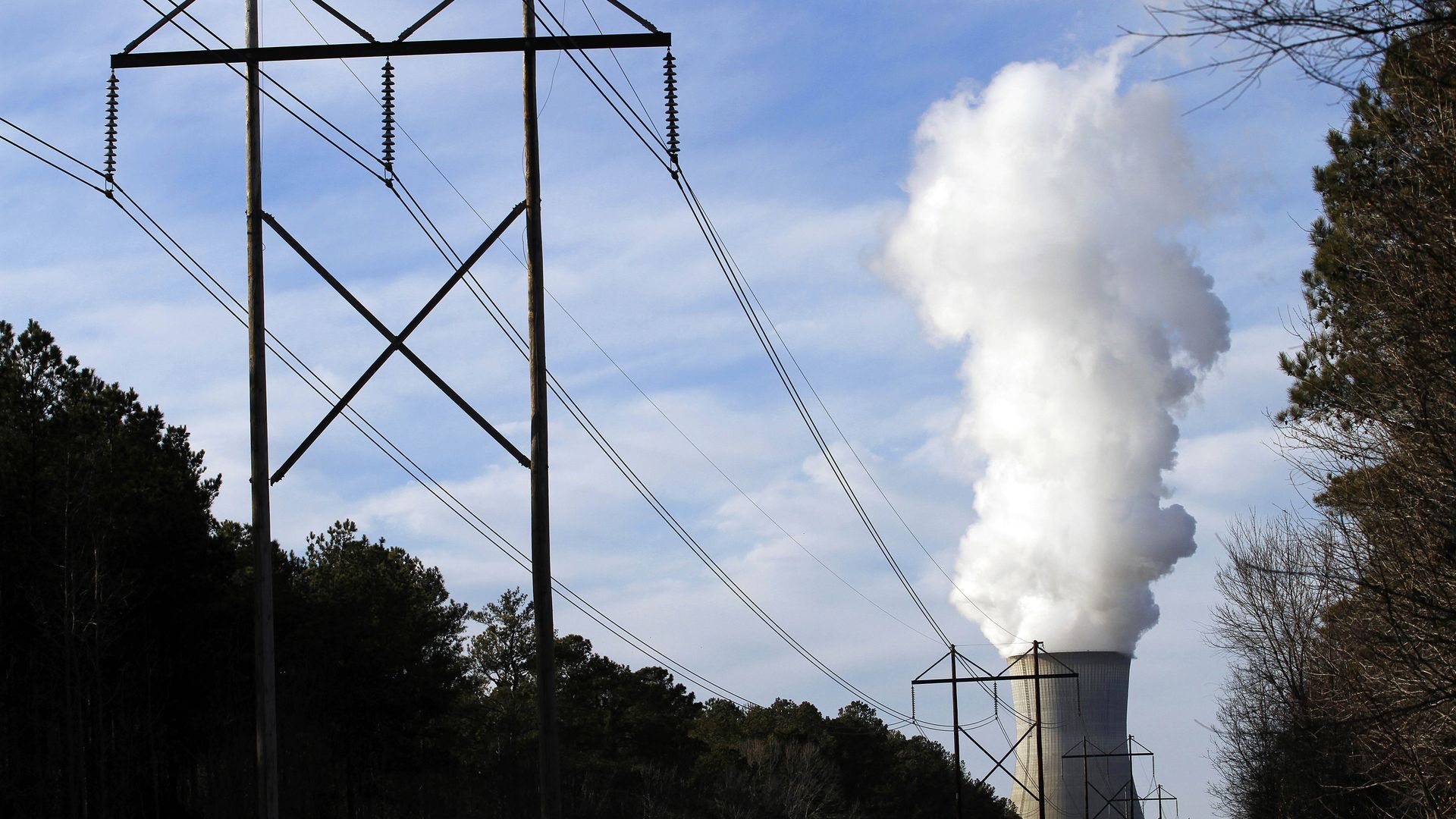
Steam rises from the Shearon Harris nuclear plant in New Hill, N.C. Photo: Jim R. Bounds/Bloomberg via Getty Images
Duke Energy would shed its goal of a 70% carbon reduction by 2030 under a new bill filed in the North Carolina General Assembly by powerful state Senate leader Phil Berger.
Why it matters: The proposal would roll back a portion of a major 2021 bill, which Republican state lawmakers and then-Gov. Roy Cooper compromised on, calling for Duke to achieve a 70% drop in its statewide carbon dioxide emissions from 2005 levels by 2030 and net-zero carbon dioxide emissions by the 2050.
Driving the news: The bill, however, would get rid of the 2030 target entirely — though it would leave the 2050 goal in place.
- The bill would also change how Duke can adjust electricity rates for users to cover the costs of building new power plants — that is if the state Utilities Commission approved the rate increase.
- Duke has put forward plans for several new power plants, including small module nuclear reactors in Stokes County and new natural gas plants.
Flashback: In November, the Utilities Commission gave Duke a waiver to miss the 2030 target, after the utility company submitted an energy resource plan that showed it could not hit the reduction target by then.
State of play: The new energy bill is one of several bills that Berger, a Republican, has pushed forward this session and that have advanced quickly.
- The energy bill was filed with Sen. Paul Newton, a Republican and former Duke executive, as the co-sponsor.
What they're saying: Berger said in a release that the bill was an effort to keep costs down for customers.
- "North Carolinians shouldn't be saddled with the increased costs created by arbitrary benchmarks," he said. "Instead, we should be focused on ensuring our energy sources will meet carbon reduction requirements while remaining reliable and affordable. That's exactly what this bill does."
The other side: "Other stakeholders have not been involved in drafting this bill, and it's going really fast," Democratic state Sen. Julie Mayfield said in a committee hearing Wednesday. "It doesn't make sense to me why this is going really fast."
- Critics of the bill said they believe getting rid of the targets would put less pressure on Duke to invest in clean technologies, like solar and battery storage.
- They also warned that letting Duke more easily charge customers for construction costs could put ratepayers on the hook for failed projects — with several groups pointing to the example of a failed power plant in South Carolina that ratepayers still paid for.
- "The Legislature is also proposing to let Duke start charging customers for new, expensive methane gas and nuclear plants while they are under construction, forcing ratepayers to foot the bill for delays and cost overruns years before they ever see service," Dan Crawford, director of governmental relations for the N.C. League of Conservation Voters, said in a statement.
Yes, but: Legislators behind the bill, however, said the change could help Duke spread out the costs of projects, making it cheaper for ratepayers over the long term and preventing a sharp increase in rates once projects are completed.
- Newton said at a committee meeting on the bill that the Utilities Commission would still have significant power to block rate increases.
Duke, for its part, said it was "supportive of policies that enable us to meet the state's growing energy needs, including those that advance efficient and always-on baseload generation resources."
- "As North Carolina continues to experience unprecedented growth, we're focused on making substantial investments in our critical infrastructure to ensure reliability and keep costs as low and predictable as possible for our customers," Duke spokesperson Garrett Poorman said in the statement.