North Carolina's summers are getting hotter


Add Axios as your preferred source to
see more of our stories on Google.
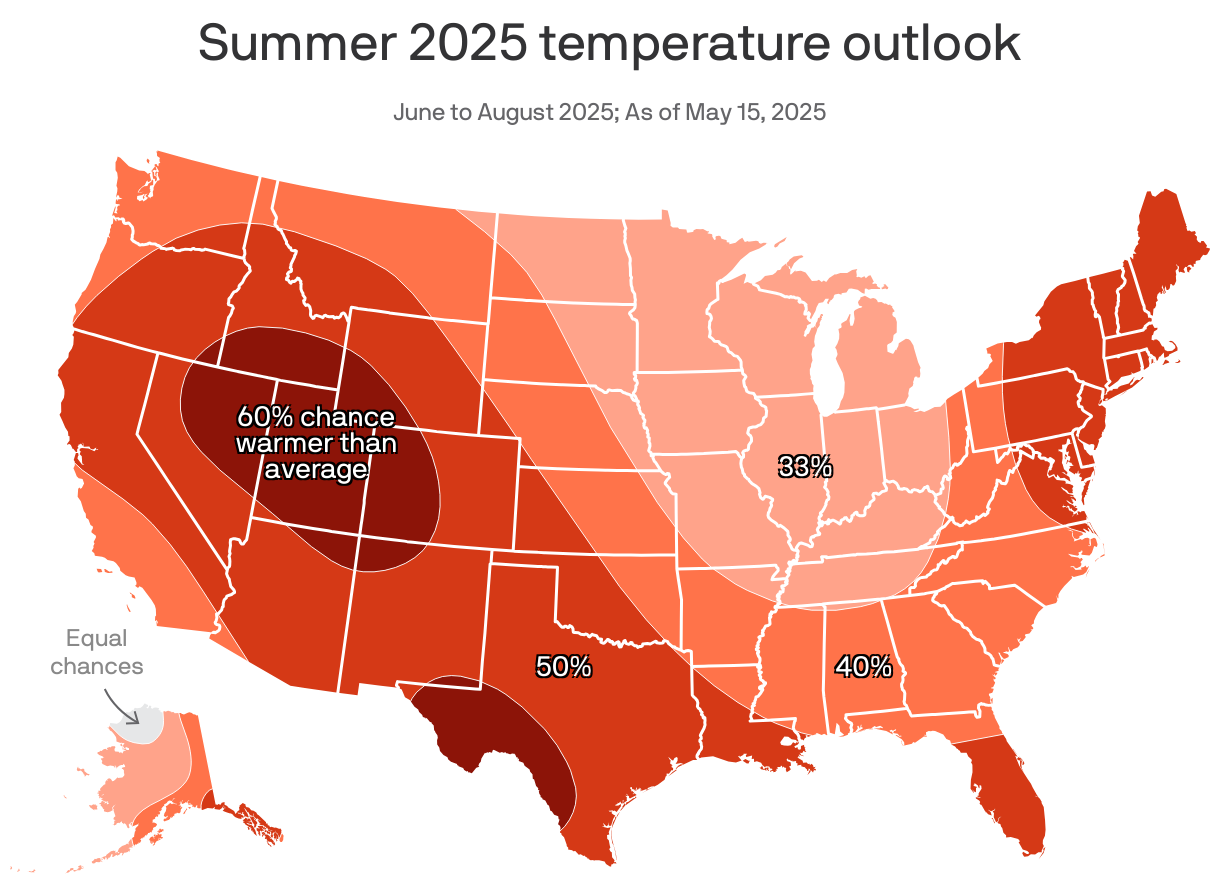
This summer has a 40% chance of being hotter than average in North Carolina, according to the National Weather Service Climate Prediction Center.
Why it matters: Hotter summers are one of the most tangible ways we're experiencing climate change — and they're a health risk for vulnerable groups like children, pregnant women, the elderly and homeless people.
The big picture: Summers are warming nationwide, a recently updated analysis finds.
- Average summer temperatures between 1970 and 2024 rose in 97% of the 242 cities analyzed in a new report from Climate Central, a research group.
- In Wake County, temperatures are up 2.8°F degrees, above the national average of 2.6°F. Durham has gotten even hotter, with temperatures up 2.9°.
- Scotland County saw the greatest increase in summer temperatures, up 3.3° in the last 54 years.
🥵 Zoom in: Reno, Nevada (+11.3°F), Boise, Idaho (+6.3°F), and El Paso, Texas (+6.2°F) saw the greatest rise in average summer temperatures between 1970 and 2024.
Between the lines: Many cities suffer from "heat islands" — areas of especially high temperatures caused by roads, parking lots, buildings and other heat-trapping features.
- Heat islands tend to be more common in low-income neighborhoods and ones with predominantly Black and Latino residents, researchers have found.
- That trend holds in Raleigh, which is using digital maps to guide city efforts of remediating its heat islands.
Go deeper: America's summers keep getting warmer