New Wolfspeed CEO faces critical first days

Add Axios as your preferred source to
see more of our stories on Google.
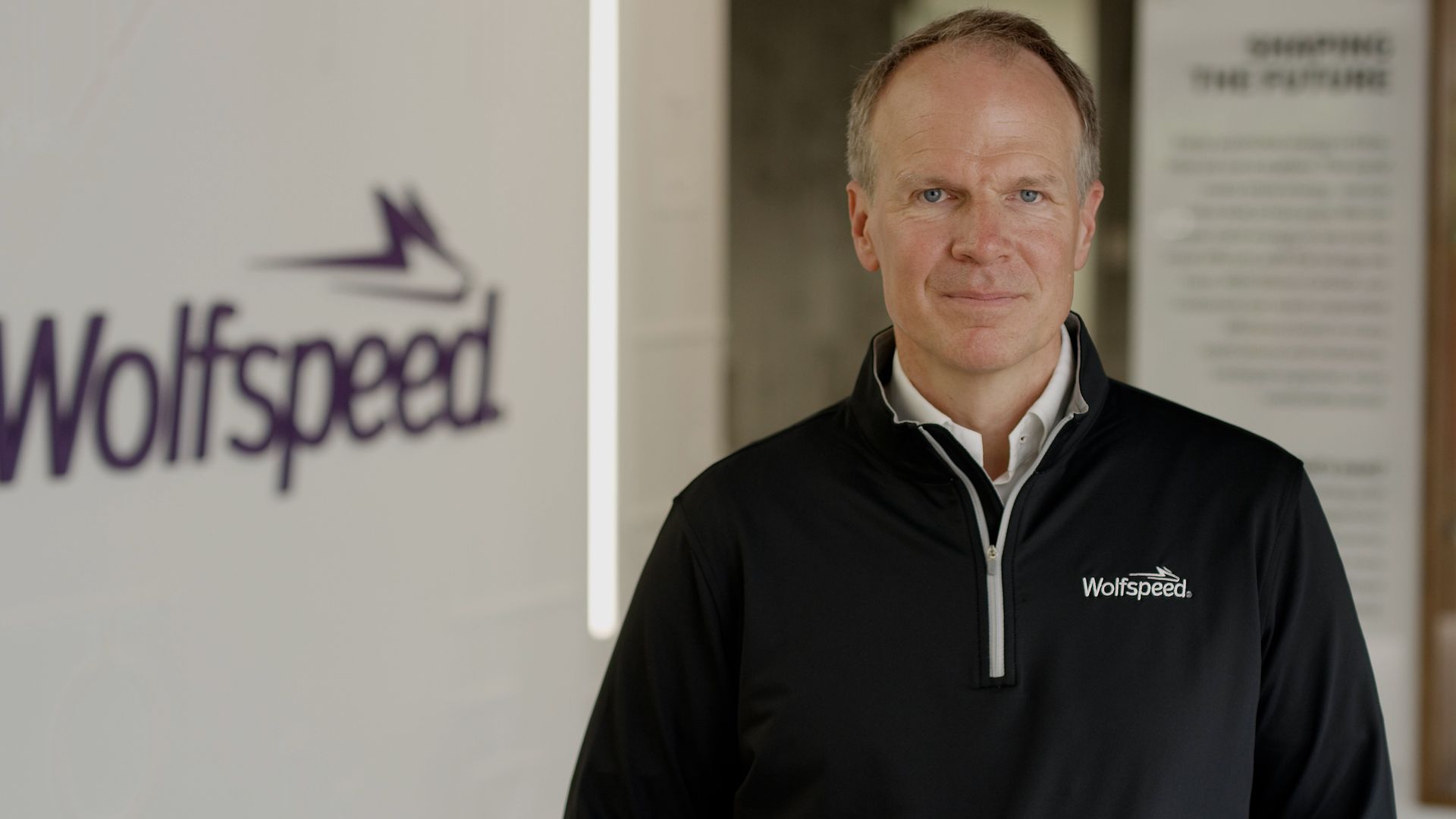
Wolfspeed's new CEO, Robert Feurle Photo: Courtesy of Wolfspeed
Robert Feurle, the new CEO of the semiconductor maker Wolfspeed, arrived from Germany only on Tuesday but already faces a critical first month at the Durham company.
Why it matters: Feurle, a veteran of the semiconductor industry, was hired in March to solve Wolfspeed's financial woes and return it to growth.
- The silicon carbide manufacturer has $6.4 billion in long-term debt that helped it build out two factories in New York and in Chatham County. But it has also weighed heavily on the company's stock performance, led to layoffs and the firing of the previous CEO.
Driving the news: To complete a turnaround, Feurle will need to refinance $575 million in debt that comes due next May.
- The company also hopes to secure a $750 million commitment in CHIPS Act funding that remains in negotiations with the Trump administration.
- The company told reporters on Thursday that it hopes to strike a deal with lenders to restructure its debt this month (before its current chief financial officer is set to leave) and then finalize a deal with the government to receive CHIPS Act funding.
- Feurle will be traveling to D.C. in the coming weeks to meet with members of the Commerce Department to underline his belief that it is critical to support silicon carbide chips made in the U.S. instead of China.
State of play: Despite those obstacles, Feurle — who most recently worked at the German chipmaker ams OSRAM — is optimistic about the company's chances, saying silicon carbide remains a compelling technology.
- "I truly believe in the future of silicon carbide — that this is a growth market," he told a group of reporters.
- Wolfspeed's silicon carbide chips are a popular component of many electric vehicles, a market that has seen its growth stall in the past year.
- "There was a big plan to do electrification of all cars," he said, noting a slowdown in the market. "This will come back. I think, ultimately, this trend to electrify vehicles — to electrify a lot of things — is going to happen."
Between the lines: But the company has been too dependent on the EV market, he said, leaving its factories in New York and in North Carolina underutilized.
- He hopes to expand its business into other industries, including data centers for artificial intelligence and solar farms to create more demand for its products.
- It also needs to fine-tune the operations at those factories because some technical issues have previously led to delays for its devices.
What they're saying: "We have made huge investments — billions of dollars — into really amazing factories," Fuerle said. "I think now it's, let's turn these [factories] into cash flow for the company and do this in a profitable way."