What went wrong at Wolfspeed

Add Axios as your preferred source to
see more of our stories on Google.
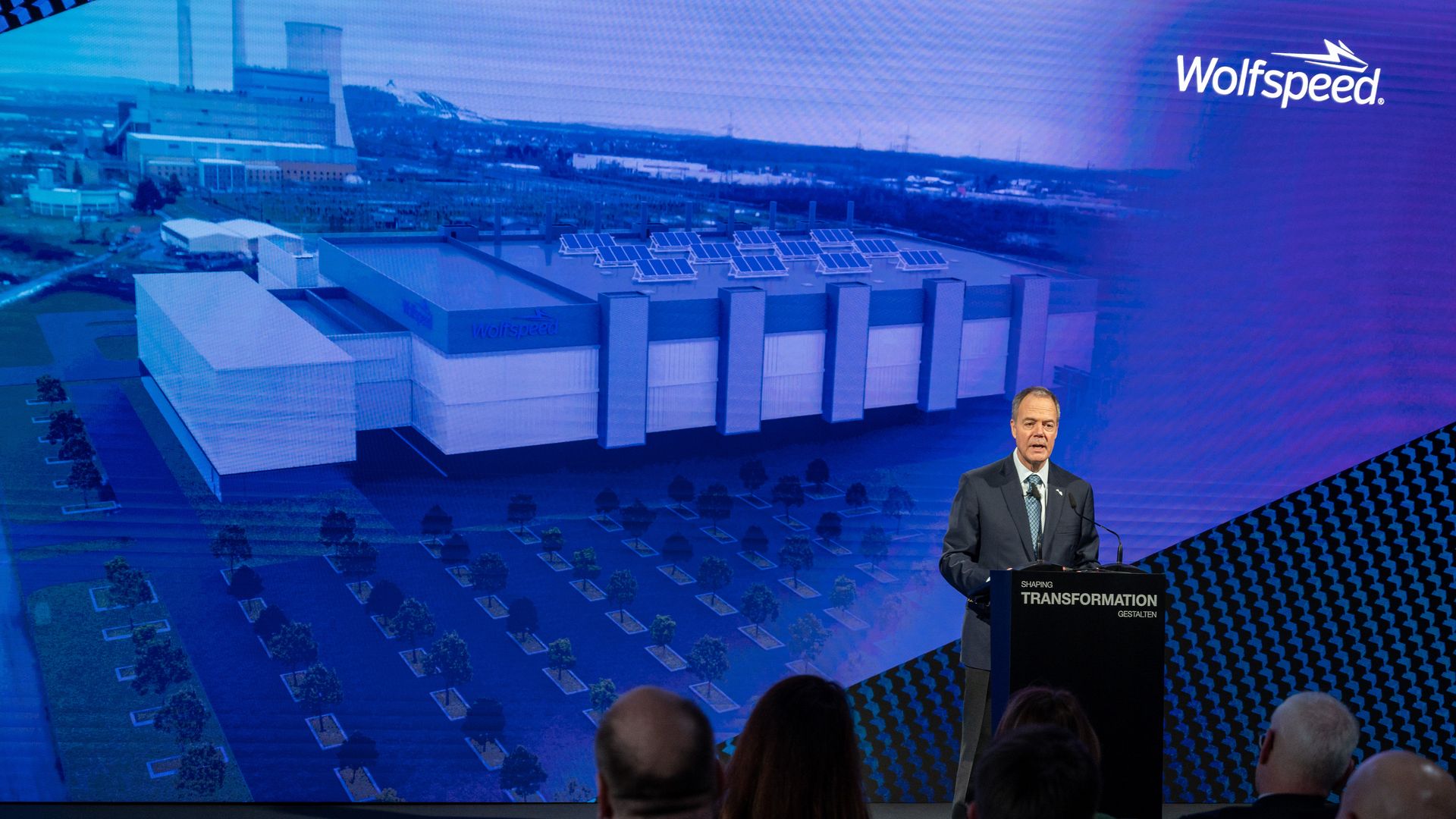
Former Wolfspeed CEO Gregg Lowe speaks at an event in Germany in 2023. Photo: Harald Tittel/picture alliance via Getty Images
Before Gregg Lowe took over as CEO in 2017, Wolfspeed was not even Wolfspeed. It was still known as Cree, a company primarily focused on LED lighting.
- But under Lowe's leadership, the Durham company underwent a radical transformation, changing its name and selling off its LED lighting and radio frequency technology businesses.
- Wolfspeed began to focus solely on its fledgling silicon carbide chips business, which was quickly gaining momentum in the electric vehicle space — ushering in a period of company expansion and high demand for its products.
Why it matters: That transformation, however, is now under scrutiny after the company decided to oust Lowe as CEO last month, cut 20% of its workforce and shelve plans for a plant in Germany.
- The fall can most strikingly be seen in the company's share price, which in November 2021 peaked at nearly $140. Shares now trade at around $11 — a drop of more than 90%.
Zoom in: With Lowe at the helm, Wolfspeed, founded on technology built at N.C. State University, went all in on its silicon carbide tech, which is more energy-efficient than traditional silicon components. This made it popular with some EV makers, including GM and Mercedes, which are trying to increase the range their cars can go on one charge.
- Wolfspeed invested heavily in scaling the business, putting $1 billion into a silicon carbide devices factory in New York and up to $5 billion into a silicon carbide materials plant in Chatham County that could employ an additional 1,800 workers.
- Those investments, however, significantly increased the company's debt load — and some investors remain worried about the future of the CHIPS Act funding approved for its Chatham County plant once the Trump administration takes over in January.
State of play: Wolfspeed's silicon carbide material stands out among its peers, but attempting to scale up that business has not been easy, according to George Gianarikas, who leads sustainability research at Canaccord Genuity, a financial services firm.
- Wolfspeed has routinely revised its earnings nearly every quarter, often due to operational and equipment issues at its factories or lower demand for EVs and other electrifying industries, Gianarikas said, causing its stock to fall.
- Wolfspeed's plant in New York operates at only 25% utilization due to technical issues and delays with manufacturing devices, estimates Jed Dorsheimer, head of the investment bank William Blair's energy and sustainability sector.
- On top of that, Dorsheimer said, Wolfspeed has found it difficult to build a vertically integrated business manufacturing its own silicon carbide devices while still selling silicon carbide material for its competitors' devices.
Investors haven't been happy with the company's results and operations. One notable example: Jana Partners, an activist investment firm that took a large stake in the company this year.
- Jana urged Wolfspeed's management to review its operations and even seriously consider selling itself due to how much the company's value had declined.
What's next: That review will have to be done by a new CEO, even as Lowe said he still believed in the company's existing strategy on his way out.
- Wolfspeed did not respond to a request for comment, and Lowe could not be reached.
- But both Dorsheimer and Gianarikas believe the debt load will be an issue to be solved by the next CEO given that demand for electric vehicles has slowed.
What they're saying: "The company has to restructure its balance sheet," Dorsheimer told Axios. "That's the key, because the debt burden is so enormous that something would have to miraculously change in terms of demand in order to grow into its balance sheet."
At the same time, Wolfspeed remains an attractive acquisition target because of its underlying technology and low share price, Dorsheimer added.
- "Is there strategic value in the business that would be attractive to other suitors? Yes, I think there is," he said.