Tariff uncertainty is complicating business decisions in North Carolina

Add Axios as your preferred source to
see more of our stories on Google.
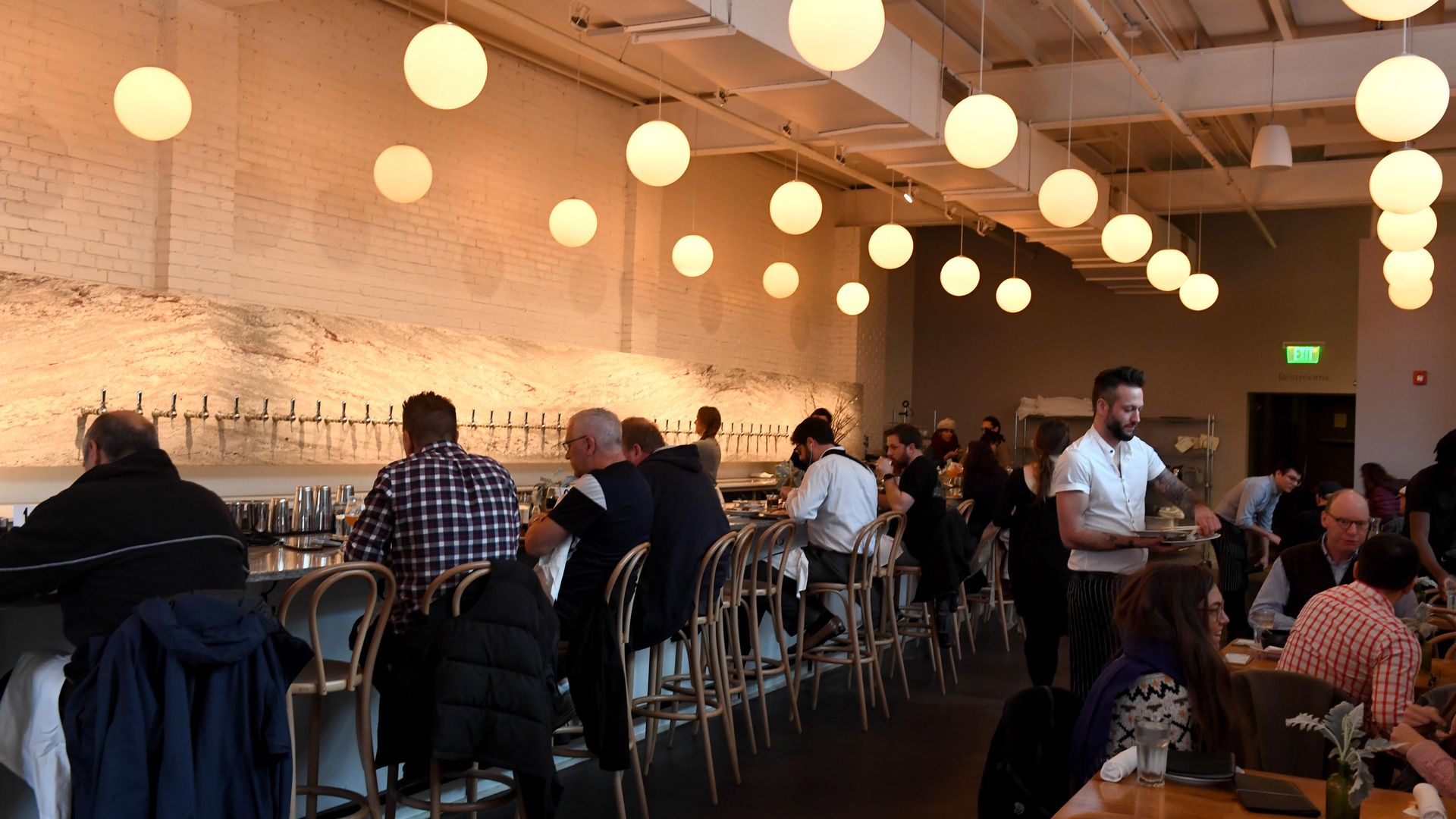
Brewery Bhavana's supply chain, from aluminum cans to dim sum flour, could be hit by tariffs. Photo: Katherine Frey/The Washington Post via Getty Images
The trade war is likely to cause fewer jobs and higher prices, Richmond Fed president Tom Barkin, whose district includes North Carolina, tells Axios.
Why it matters: Barkin, in an exclusive interview with Axios' Neil Irwin, said uncertainty among businesses is likely to slow economic activity.
- His comments, however, came before the Trump administration decided Wednesday to scale back its reciprocal tariff plans, except for those targeting China.
- The move was a relief for global markets, but uncertainty remains.
What they're saying: "As I've talked to business people, they're still struggling to have confidence in where this lands," Barkin said.
- "The direction is clear ... it's just the destination that people are challenged with," Barkin told Axios on Wednesday morning, in advance of a speech to the Economic Club of Washington, D.C.
State of play: That's true for North Carolina businesses, too.
- Lee Lilley, North Carolina's commerce secretary, told Axios that many companies the state is talking to are stuck in a holding pattern while they wait to see whether the tariffs stick or are not implemented.
- "Everybody's kind of got their hands up in the air," he said. "It's hard to make an investment decision with the multiplicity of variables that are at play."
Chris Chung, head of the Economic Development Partnership of North Carolina, said companies are trying to think long term when they decide to open a factory and invest tens of millions of dollars.
- "I think that decision gets to be really hard to move on," he told Axios, "if you have some amount of uncertainty over whether the principal reasons behind your decision are even going to be in place five years from now, let alone 10 years from now."
Between the lines: Lilley added that the pipeline of companies considering North Carolina investments had been pretty strong at the start of the year, as many companies had been waiting to make investment decisions until after the election.
- "I think we're curious to see what happens to it here in the next couple months if this sticks," he said.
Zoom in: The tariff back-and-forth is complicating decisions for smaller businesses, too.
- Patrick Woodson, the owner of Brewery Bhavana in Raleigh, said prices could spike for his brewery and restaurant if the tariffs are implemented — from the aluminum cans they use (most of which come from Canada), the malts they brew with (Europe and Canada) and the flour they use to make their popular dim sum (China).
- "We use American [ingredients] when we can, but there's just such a different quality and history to the European malts, which is a huge aspect of our recipes," he said. "We could reformulate them, but that's going to have flavor impacts on what we do."
Woodson is about to open a second Brewery Bhavana location at The Fenton in Cary in the coming weeks.
- "But if I were looking at leases now and trying to make that decision," he said, "I would probably pause just because of the uncertainty in the market."