Big changes coming to the office of North Carolina's top investor

Add Axios as your preferred source to
see more of our stories on Google.
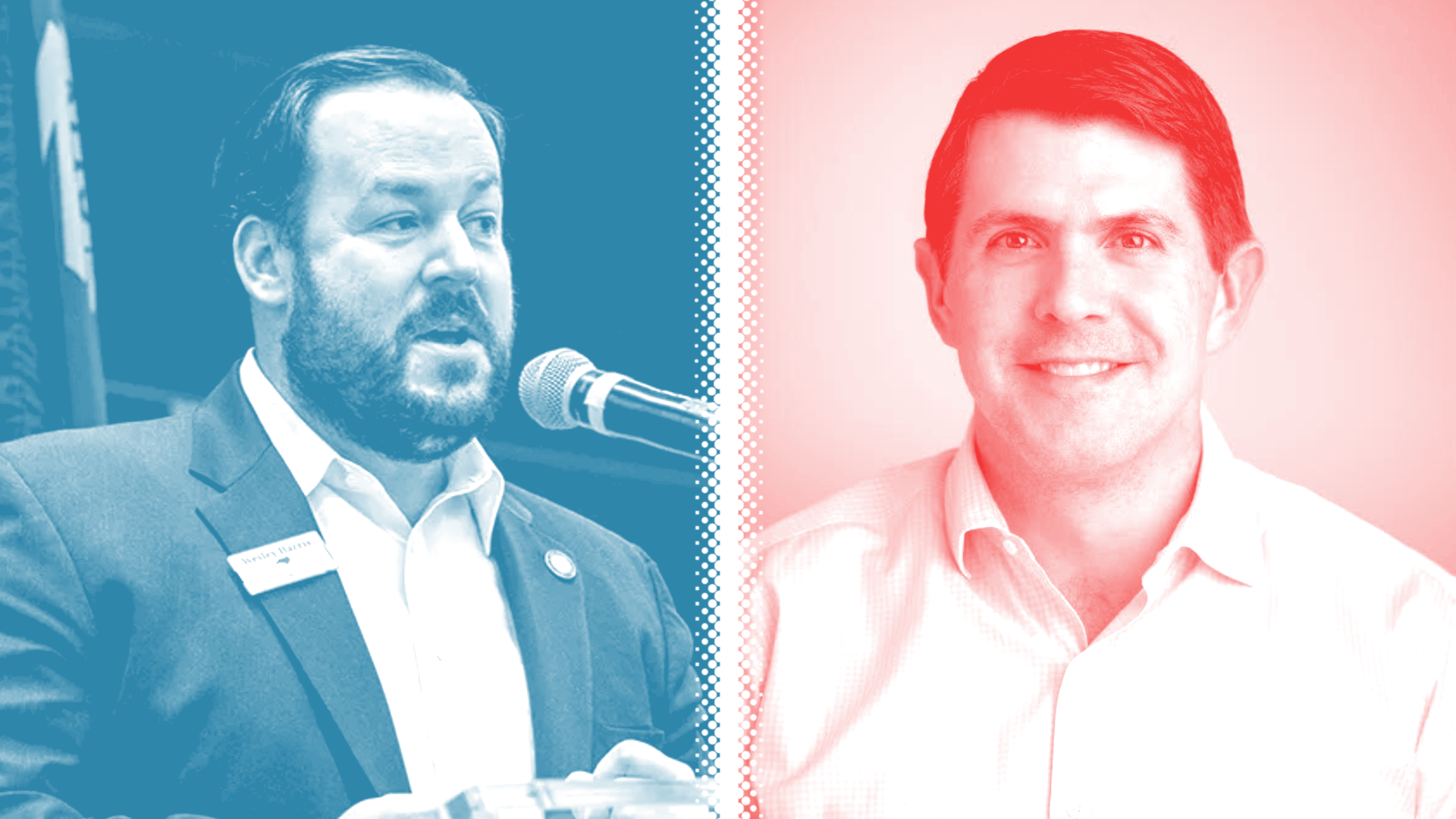
Photo illustration: Axios Visuals. Photos: Courtesy of the Harris and Briner campaigns.
Dale Folwell's nearly eight years leading the State Treasurer's office will come to an end shortly — after an unsuccessful try for the Republican nomination for governor took him out of another run for the office.
- His time in office will be marked by a conservative investment strategy and clashes with the N.C. General Assembly over the state health plan.
Why it matters: The State Treasurer's job isn't as high profile as governor or attorney general, but it is responsible for managing the state's $123 billion pension for state employees as well as the health plan for those workers.
- The state's top banker also works with counties to administer bonds that cover needs like affordable housing.
Driving the news: In his place, North Carolinians will either select Democrat Wesley Harris, an economics professor and state representative for Mecklenburg County, or Republican Brad Briner, a member of the UNC-Chapel Hill Board of Trustees and a former chief investment officer for Michael Bloomberg's family office.
Changing an investment strategy
Both Harris and Briner say that the state pension needs to change its investment strategy after Folwell cut back the plan's exposure to hedge funds and private equity and kept a larger position of cash.
- Folwell argues his conservative approach kept the fund from being at risk of losing money, when it has so many retirees pulling from it, and it pays the lowest fees among state pensions, according to Institutional Investor.
- Folwell described the pension plan as mature and needing money today to pay for its obligation, likening it to a college investment fund for a child nearing high school graduation. You would want fewer risky investments the closer you get to the child turning 18, he said.
Harris and Briner, on the other hand, believe that approach missed out on strong returns. For the three- and five-year periods ending June 2022, for example, North Carolina's pension had the lowest returns of any state pension, per Institutional Investor.
- Harris told Axios that the state needs to invest more of its cash. "It's not like you need to go full private equity or do all of these alternative investments, You just need to invest the money" even if it's just index funds, he said.
- Briner, who did not return a request for comment, has said that the state pension should reduce its allocation into cash and government bonds and increase it into private equity or other assets.
Yes, but: The state pension had an 8.2% return for the fiscal year that ended on June 30, a quarterly investment report shows.
A potential change in governance
One noteworthy change that could happen if Briner were elected is a potential move away from the sole-fiduciary model, which gives the state treasurer the final say over the pension fund's investment decisions.
- Briner has noted that North Carolina is one of only three states that still operates that way and he believes it would benefit from moving to a system where a board votes on decisions and has more decision-makers weighing in.
- "If we keep the current sole fiduciary governance model, it matters entirely who the treasurer is. Everyone else is just an adviser," Briner said during a debate with Harris last month, according to The News & Observer.
Both Harris and Folwell, however, have objected to this potential change.
- Harris said he believes the creation of a committee would just cede more power to the Republican-controlled General Assembly to appoint members and have more influence over the office.
- Folwell told Axios that the current model is not broken. "I'm sure it's driven by his consultant and [state Senate Leader] Phil Berger, who probably want to appoint a board of friends that make $150,000 a year and work a few hours a month."
Covering Ozempic and Wegovy for state employees
Folwell has repeatedly raised attention during his time in office that the State Health Plan needs a $250 million injection of cash from the legislature to remain solvent.
- That has been mostly met by silence from General Assembly leadership and in response, Folwell has cut administrative spending, tried to negotiate with drug makers and hospitals for lower costs and notably stopped covering weight-loss drugs like Ozempic because of their high cost.
Both Briner and Harris said their goal is to find a way to once again cover those drugs for state employees.
- Briner said during the debates that the State Health Plan needs to find better methods of saving money, like investing in preventative care, so that it isn't in the position to need money from the General Assembly every year.
- Harris said that he would use the office to put pressure on the General Assembly to fund the plan adequately so that it doesn't have to make short-term cuts and push to negotiate better rates with drug makers and hospitals.
- Harris added that weight-loss drugs and other wellness benefits are "a smart investment, because if you invest in preventative care, if you invest in these wellness programs, not only will those benefits help to attract younger folks to come join the state health plan ... it will also help people get healthier."