Fall temps aren't falling like they used to



Add Axios as your preferred source to
see more of our stories on Google.
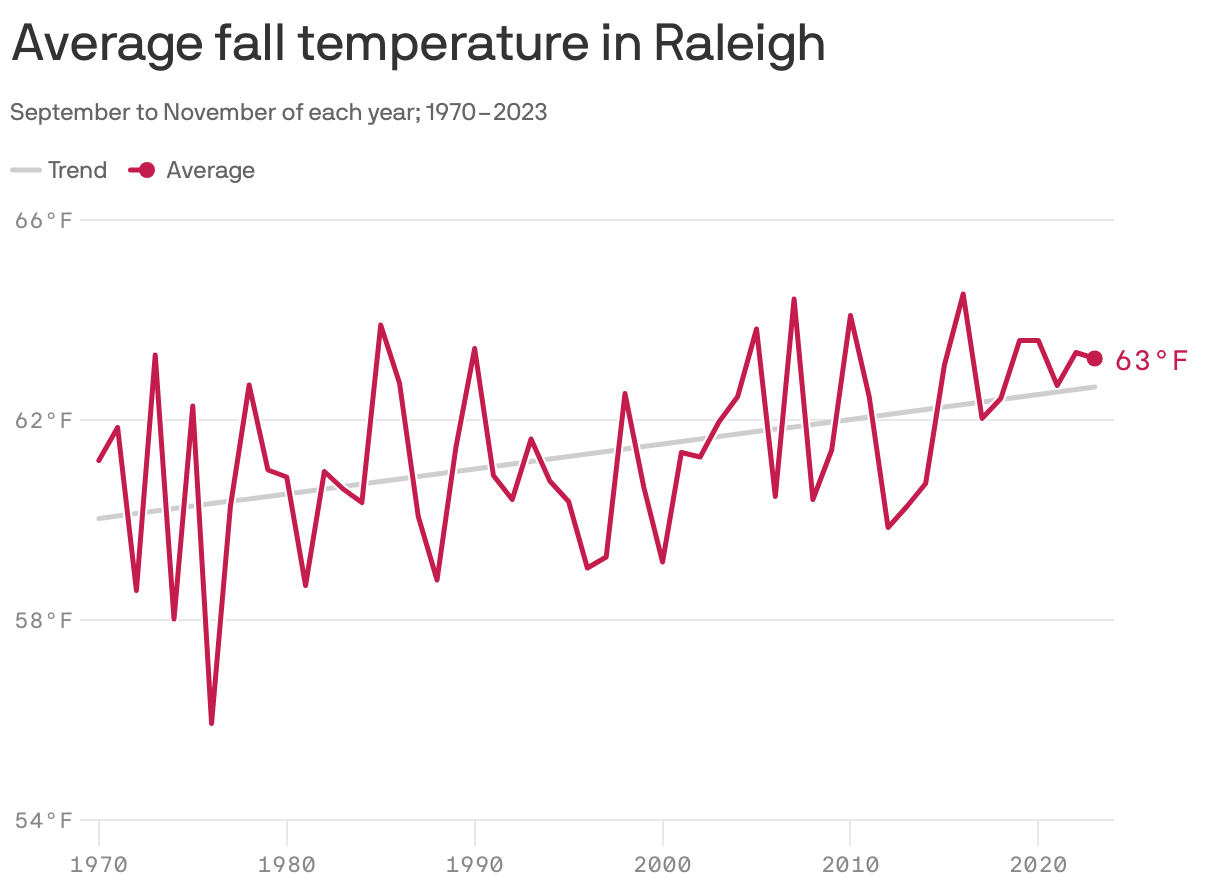
Fall is getting warmer across the continental U.S., including here in the Triangle, a new analysis finds.
Why it matters: Warmer autumns mean more demand for cooling (and thus higher energy use), longer wildfire seasons and big changes for farmers and gardeners, Axios' Alex Fitzpatrick writes.
Driving the news: Fall temperatures rose 2.5°F on average between 1970 and 2023 across 234 locations analyzed in a new Climate Central report.
- The nonprofit climate research group's analysis is based on average temperatures between September and November of each year.
Zoom in: Here in the Triangle fall temperatures increased on average by 2.7°.
Between the lines: The fall trends are consistent with climate science findings showing how the planet is responding to human-caused increases in greenhouse gases, such as carbon dioxide.
- All other seasons are also warming.
The latest: Expect above-normal temperatures across much of the country this fall, per NOAA's seasonal outlook.
- Fall foliage is expected to peak in color in mid-October in the mountains this year and mid-November in the Piedmont, according to a forecast from N.C. State University.
- Warmer temperatures can mean leaves stay green longer, while sunny days and cool nights will lead to more vibrant colors. Lots of rain, on the other hand, leads to less vibrancy.