Removing "forever chemicals" in North Carolina drinking water

Add Axios as your preferred source to
see more of our stories on Google.
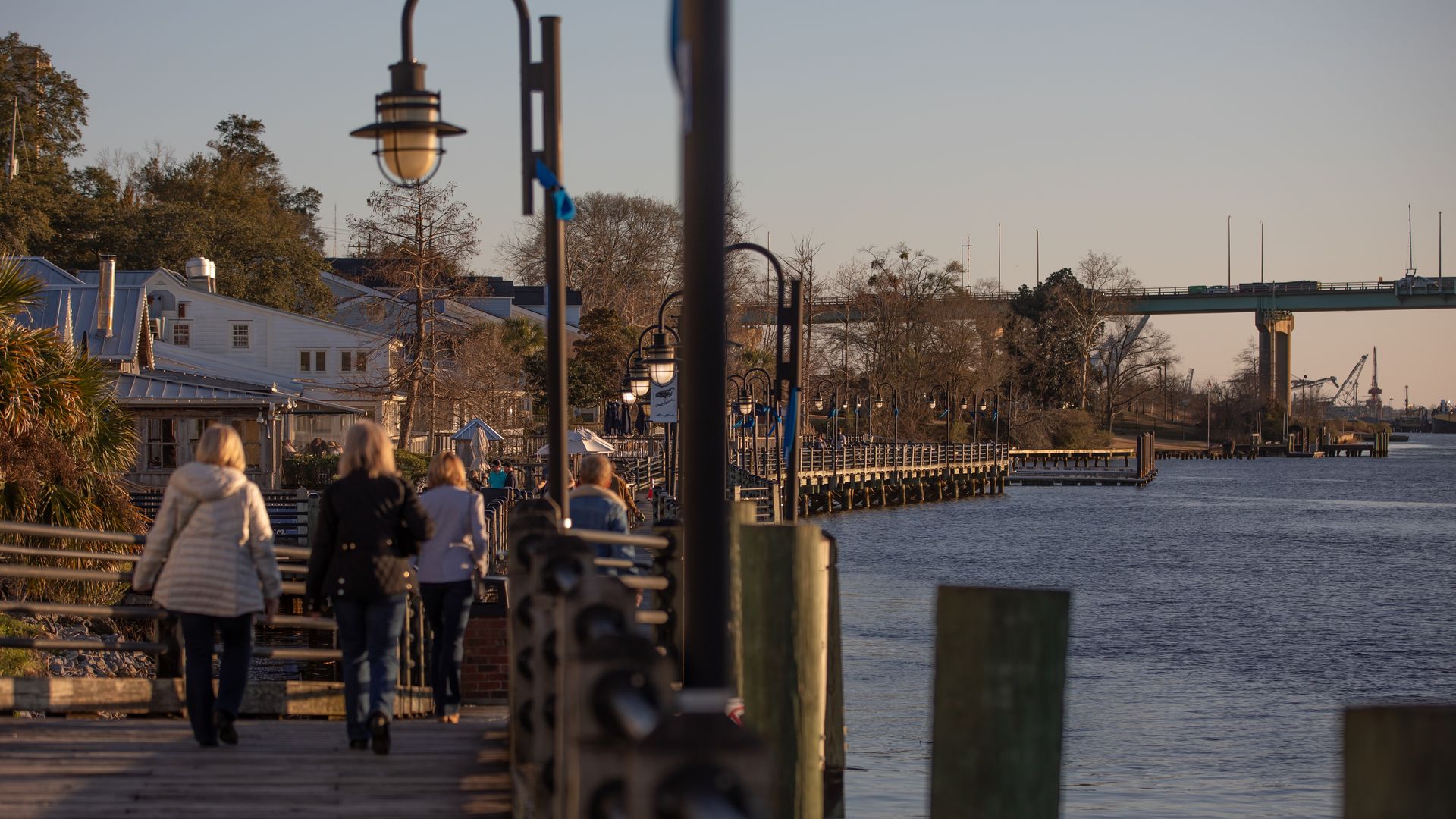
The Cape Fear River runs next to downtown Wilmington. Photo: Madeline Gray/Bloomberg via Getty Images
President Biden's Thursday trip to Wilmington — the site of one of North Carolina's most notorious chemical contaminations — comes just weeks after his administration moved to curb the presence of per- and polyfluoroalkyl substances (PFAS) pollution in the U.S.
Why it matters: Exposure to certain levels of these synthetic compounds, referred to collectively as "forever chemicals," has been linked to adverse health effects in humans and animals, including an increased risk of cancer, Axios previously reported.
Zoom in: The chemicals have also become a salient issue in North Carolina since PFAS were found in the Wilmington area's water supply around seven years ago, leading to huge lawsuits against a manufacturer and millions of dollars invested in remediation.
- North Carolina is the third highest state for PFAS exposure, the National Institute of Environmental Health Sciences reported. Drinking water has been affected in communities across the state, including on the Haw River in Pittsboro.
- The chemicals are used to make coatings for products like firefighting foam and other goods resistant to heat, water, grease and more.
Flashback: In 2017, a report from the Star News in Wilmington found the local water supply was contaminated by PFAS manufactured by Chemours at the company's Fayetteville Works facility up river.
- That same year, N.C. State researchers discovered high levels of the chemicals coming from a Chemours plant on the Cape Fear River.
State of play: In the past month, the Environmental Protection Agency, led by North Carolina native and Biden nominee Michael Regan, has made two new rulings on PFAS.
- It set the first-ever national limits on the presence of PFAS in drinking water.
- And it classified two commonly used PFAS as hazardous materials, which will help the EPA hold polluters accountable.
- The EPA also made $1 billion in funding available via the Bipartisan Infrastructure Law to help states and territories implement PFAS testing and treatment.
What they're saying: In Wilmington Thursday, Biden described PFAS as "very dangerous chemicals that shouldn't be near our water supply."
- "As a consequence of PFAS, you've seen aggressive cancers emerge in that [Cape Fear watershed] area. It's gone so far, we're advising and warning you can't eat the fish from the same water that you drink," Biden said, lauding his administration's efforts to remove the chemicals.
- A representative from the Trump campaign did not respond to a request for comment.
Between the lines: Emily Donovan, a Brunswick County resident, co-founded Clean Cape Fear to advocate for clean drinking water in the months after PFAS were discovered in the Cape Fear in 2017.
- She said the recent rules have been the most impressive thing any administration has done around regulating the chemicals — but more still needs to be done.
- "This is a good first step ... but it's not the finish line," Donovan told Axios from Wilmington. "We are 100% going to continue to engage this administration to keep moving in the right direction."
Donovan said her group wants to see the government do more to stop PFAS pollution at its source and conduct large-scale health studies of populations exposed to the chemical.
- Her group is also pushing to prevent new shipments of PFAS to the Fayetteville Chemours plant and ask for recognition that people within the Cape Fear watershed had their human rights violated, noting the United Nations Human Rights Council condemned the pollution in the river.