Why people in the Triangle are moving in with their parents

Add Axios as your preferred source to
see more of our stories on Google.
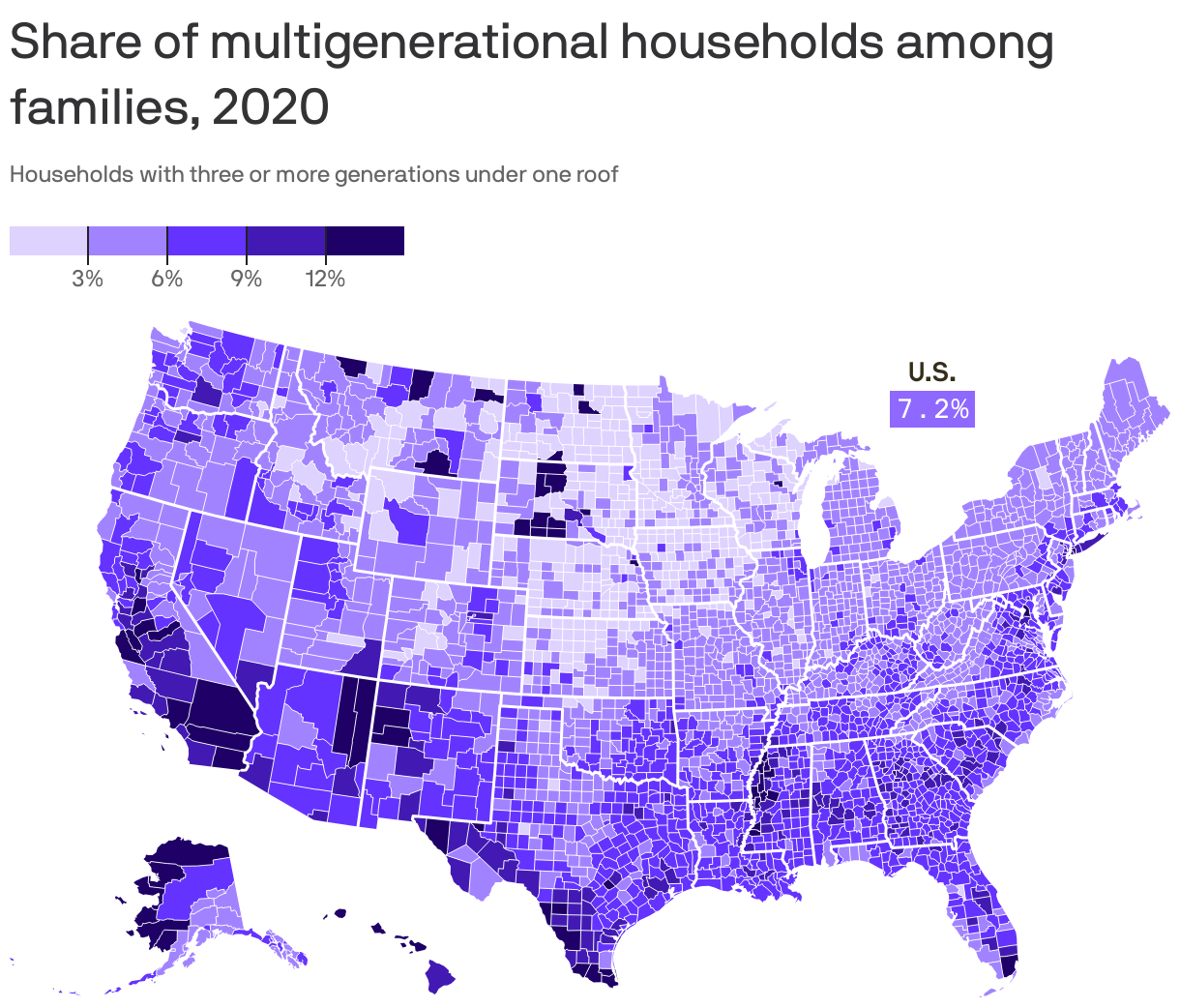
Multigenerational households — three or more generations under one roof — are on the rise across the U.S..
Driving the news: In Raleigh, an estimated 87% of Gen Z-ers live with family, which is one of the highest rates in the country, according to a new RentCafe study cited by CBS17.
Why it matters: Housing has grown increasingly unaffordable in the Triangle, and financial concerns are one of the major reasons people live with their parents (and parents' parents).
What they're saying: "We're tired. We just want to move up in the world. We want to have a house, we want to have a family, we want to eventually have those nice things that everyone else has had," Kennady Briscoe, a 23-year-old who lives with her mom told CBS17.
Between the lines: Americans living in multigenerational households were less likely to be poor, Pew Research found in an analysis of census data last year.
- But beyond financial reasons, caregiving needs are another key reason people said they have chosen to live with relatives.
By the numbers: Some 6 million households in the U.S. were multigenerational as of 2020 — 7.2% — up from 5.1 million in 2010, according to census data.
- The share of multigenerational households in Wake County is 5%, which is just slightly below the state average.
- In Durham, that rate is slightly higher, at 6%.
Be smart: Though living with relatives can be stressful for some of us, research shows being close to family or friends can improve your health and happiness.