Phoenix launches microtransit pilot program

Add Axios as your preferred source to
see more of our stories on Google.
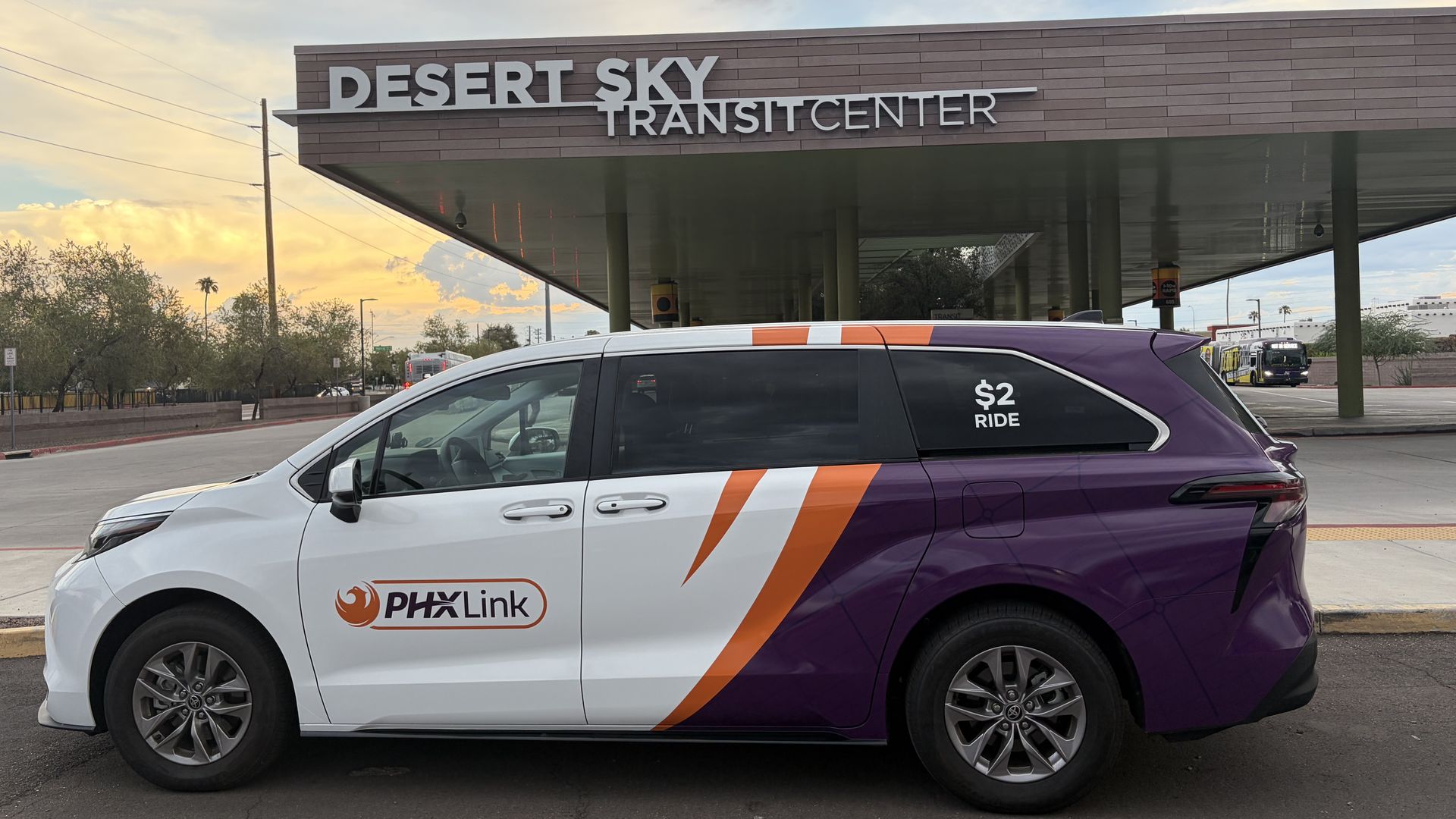
One of the new PHXLink microtransit cars at Desert Sky Transit Center. Photo: Courtesy of the City of Phoenix
Phoenix bolstered its public transportation system with the launch of a rideshare-style transit program to help people get around the city.
Why it matters: Public transportation is a lifeline for some people, and microtransit can help bridge gaps in Phoenix's mass transit system, city spokesperson Brenda Yanez tells Axios.
- Phoenix saw 18.3 million bus boardings and nearly 7.1 million light rail boardings in 2025, per city data.
State of play: PHXLink launched a three-year pilot program Monday with five cars in each of three zones in the city.
- Riders pay $2 per trip and can travel anywhere within their zones.
- Unlike Uber and Lyft, pickups and dropoffs are at designated stops.
- Each zone has five cars operated by Via Transportation, including one that's Americans With Disabilities Act-compliant. Those cars provide curbside service for riders.
Zoom in: The program's main purpose is to connect riders to bus stops and other mass transit options.
- The north and west zones include park-and-ride centers for RAPID commuter bus services on I-10 and I-17.
- The Desert Sky Transit Center is in the west zone.
- Riders in the south zone can also connect to the southern terminus of the light rail system at Baseline Road.
Yes, but: You can use PHXLink to go anywhere within your zone, regardless of whether you're connecting to other public transportation.
Between the lines: Riders can access PHXLink via phone or online, and those with Android phones can order rides using an app.
- The city developed an iPhone app as well, but it's not yet available due to an Apple Store review backlog, Yanez says.
By the numbers: PHXLink is expected to increase public transit options to 210,000 residents in the three zones, the city's transit department tells Axios.
What we're watching: Transportation officials will evaluate PHXLink to help determine whether the program continues after the pilot ends in 2029 and whether the city will expand coverage.
- The $16 million program is primarily funded through a $12.9 million federal grant, with the city covering the rest. Phoenix would have to find funding if it decides to continue PHXLink past the initial three years.
Zoom out: Several other Valley cities have implemented microtransit or similar programs in recent years, including Avondale, Buckeye, Chandler, Glendale, Goodyear, Peoria and Tolleson.
- Surprise ended a two-year microtransit pilot program in 2025 due to its cost.