Microtransit programs spreading in Valley cities

Add Axios as your preferred source to
see more of our stories on Google.
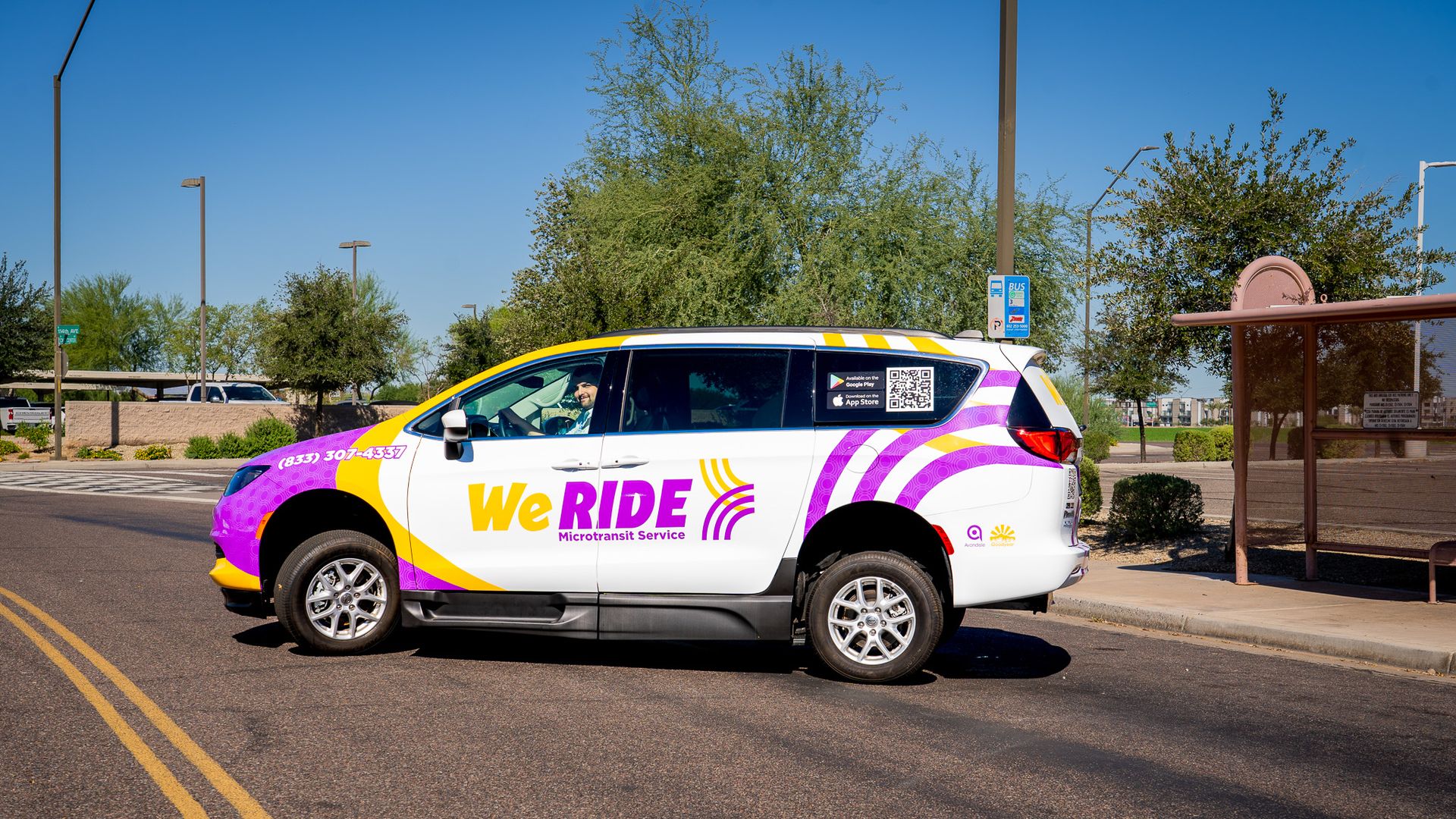
A vehicle from Avondale's WeRIDE fleet. Photo: Courtesy of City of Avondale
A handful of cities have ushered in a new era of mass transit in the Valley, a rideshare-style service known as microtransit.
How it works: Microtransit operates similarly to Uber and Lyft. Riders can use a smartphone app or call a phone number to hail a car, which typically picks them up at "virtual stops" and takes them to other stops in pre-established zones of operation.
- The cars accommodate multiple passengers, who might have to walk a block or two to their virtual stop.
The big picture: Numerous Valley cities have established microtransit programs over the past year or so.
- In the West Valley, Avondale, Goodyear and Surprise offer a service called WeRIDE. Glendale has Glendale OnBoard, while Tolleson offers a microtransit program through Uber and Lyft.
- Chandler launched its Chandler Flex microtransit program last year.
- Sun City residents can now try a similar program that uses autonomous vehicles.
Details: The service typically has a nominal cost — WeRIDE is $2 per trip, with a discounted $1 fare for riders over 60, disabled riders, veterans and students, and Glendale OnBoard costs $5 per trip, with discounts for people who are 65 and over or disabled.
Zoom in: In Avondale, WeRIDE will supplant its longstanding Zoom service, which uses minibuses that run on fixed schedules.
- The program operates only in parts of town north of Interstate 10, but will expand to south of the freeway in October, which will cover about 90% of the city.
- Zoom service in that zone usually has 20-30 passengers per day, compared with 60-70 for WeRIDE, city transit manager Matthew Dudley tells Axios Phoenix.
Between the lines: Some of the cities that have implemented microtransit had limited public transportation options. Avondale and Goodyear, for example, had few Valley Metro bus stops.
- The brightly colored WeRIDE vehicles "were a huge marketing opportunity" to help get the word out as they drove around the city, transit coordinator Christine McMurdy said, and Goodyear sent postcards, distributed fliers and put up a billboard on I-10.
- Surprise implemented its program earlier this year after hearing complaints from residents about limited transit options, and it started its pilot program in an area with a "higher percentage of zero car and low-income households," said business services administrator Kristen Taylor, who manages the city's WeRIDE program.
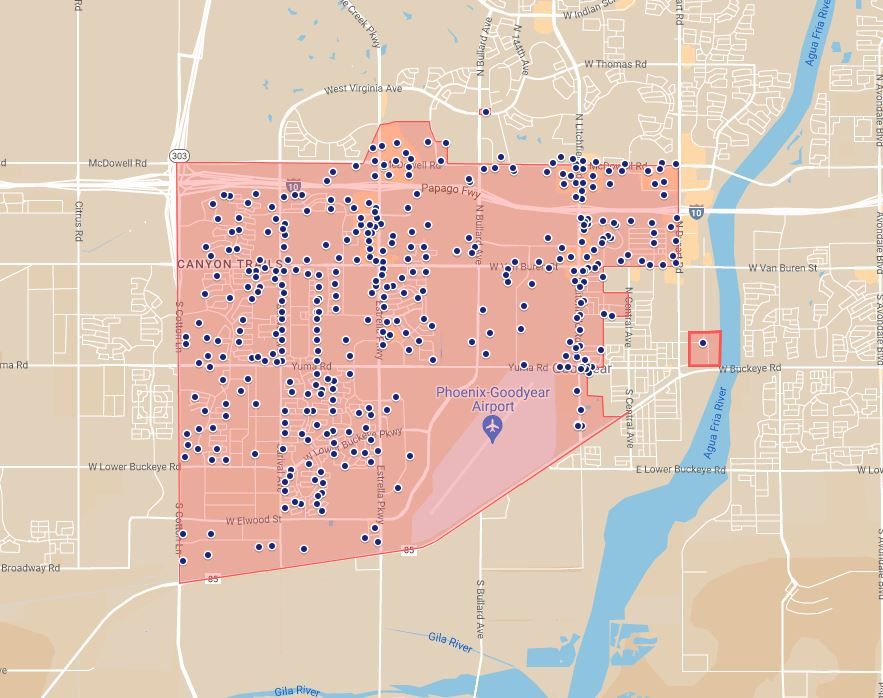
State of play: Chandler's program is largely oriented toward schools and students, who can ride for free, the city's transportation planning manager, Jason Crampton, tells Axios Phoenix.
- The goal wasn't to get students to use Chandler Flex instead of school buses, but to serve students who live out-of-district or otherwise don't have bus service, or who need transportation before- or after-school activities.
- Crampton says it's also become popular with seniors and commuters who take it to the city's park-and-ride center so they can catch express buses to downtown Phoenix.
In Glendale, the program works a little differently from most places, picking up riders directly from their homes rather than virtual stops.
- Glendale OnBoard uses "cutaway" buses that accommodate eight or 12 passengers, along with a couple wheelchairs.
- "With the climate and our clientele, I just didn't want folks having to walk in this heat to catch us," Glendale transit administrator Kevin Link told Axios Phoenix.
- Glendale OnBoard has buses that handle about 225 passengers per day, and the service covers the entire city.