Arizona school districts grapple with war-induced fuel costs


Add Axios as your preferred source to
see more of our stories on Google.
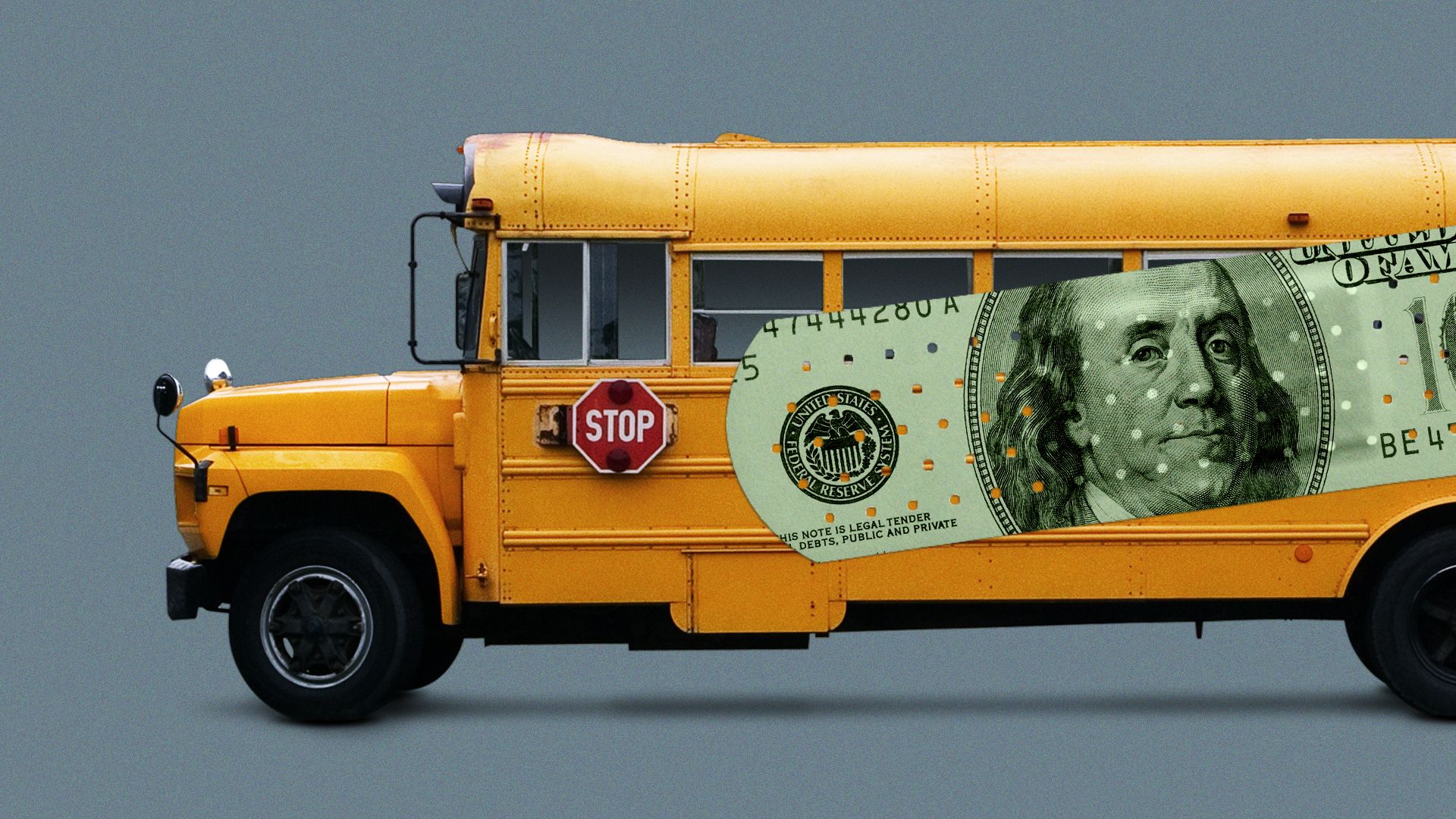
Illustration: Maura Losch/Axios
Arizona school districts are feeling the pinch from high diesel costs caused by the Iran war.
Why it matters: The war is sending diesel costs higher just as districts are grappling with a yearslong bus driver shortage — a double whammy that can ripple into missed breakfasts, late classes and fewer school activities.
Zoom in: The Deer Valley Unified School District increased its budget for the current fiscal year by around $500,000 — just over 14% — primarily because of rising diesel costs, spokesperson Brittany Sutton tells Axios.
- Gilbert Public Schools is spending an extra $8,000 weekly on diesel, Pluribus News reports.
- The Cave Creek Unified School District is combining bus routes to help cope with the costs.
- "It's caused us to really look at every little detail of routes," CCUSD fleet supervisor Ken Doss told Cronkite News.
By the numbers: The average cost of a gallon of diesel in Arizona is currently $6.37, per AAA.
- A year ago it was $3.59.
Threat level: "We continue to monitor fuel prices and staffing needs closely, as additional increases could place further strain on the transportation budget," Sutton says.
The big picture: Districts nationwide are consolidating routes, cutting trips and squeezing more efficiency out of their fleets.
- A May survey of 188 school officials found 40% had adjusted routes, 27% enforced anti-idling rules, 25% cut routes and 8% made students walk farther to stops.
- Peter Mannella of the National Association for Pupil Transportation tells Axios that those changes result in more parents driving students to school activities or districts moving pickup points farther from students' homes.
- "It starts to affect kids and families, which you know you'd rather not do," he said.
Zoom in: The driver shortage isn't just about wages.
- Nick Martini, a former school bus driver who's now an executive at a Minneapolis-area school bus contractor, said drivers must simultaneously manage children and traffic while meeting extensive training, licensing and safety requirements.
- Districts also compete with delivery and logistics companies for the same workers with commercial driver's licenses.
Between the lines: Rural districts have even fewer escape routes.
- Rural children may live miles away from school, requiring longer bus routes. Meanwhile, districts struggle to match private-sector driver pay or hire third-party operators.
Flashback: The Biden administration offered federal funding to electrify school bus fleets, but some of those programs have since slowed or ended, Association of School Business Officials International's Elleka Yost tells Axios.
- Electric buses aren't an immediate fix everywhere. Yost pointed to narrow or winding roads, small bridges, extreme temperatures and a lack of trained technicians.