Trump admin wants to nix rule protecting Arizona wilderness


Add Axios as your preferred source to
see more of our stories on Google.
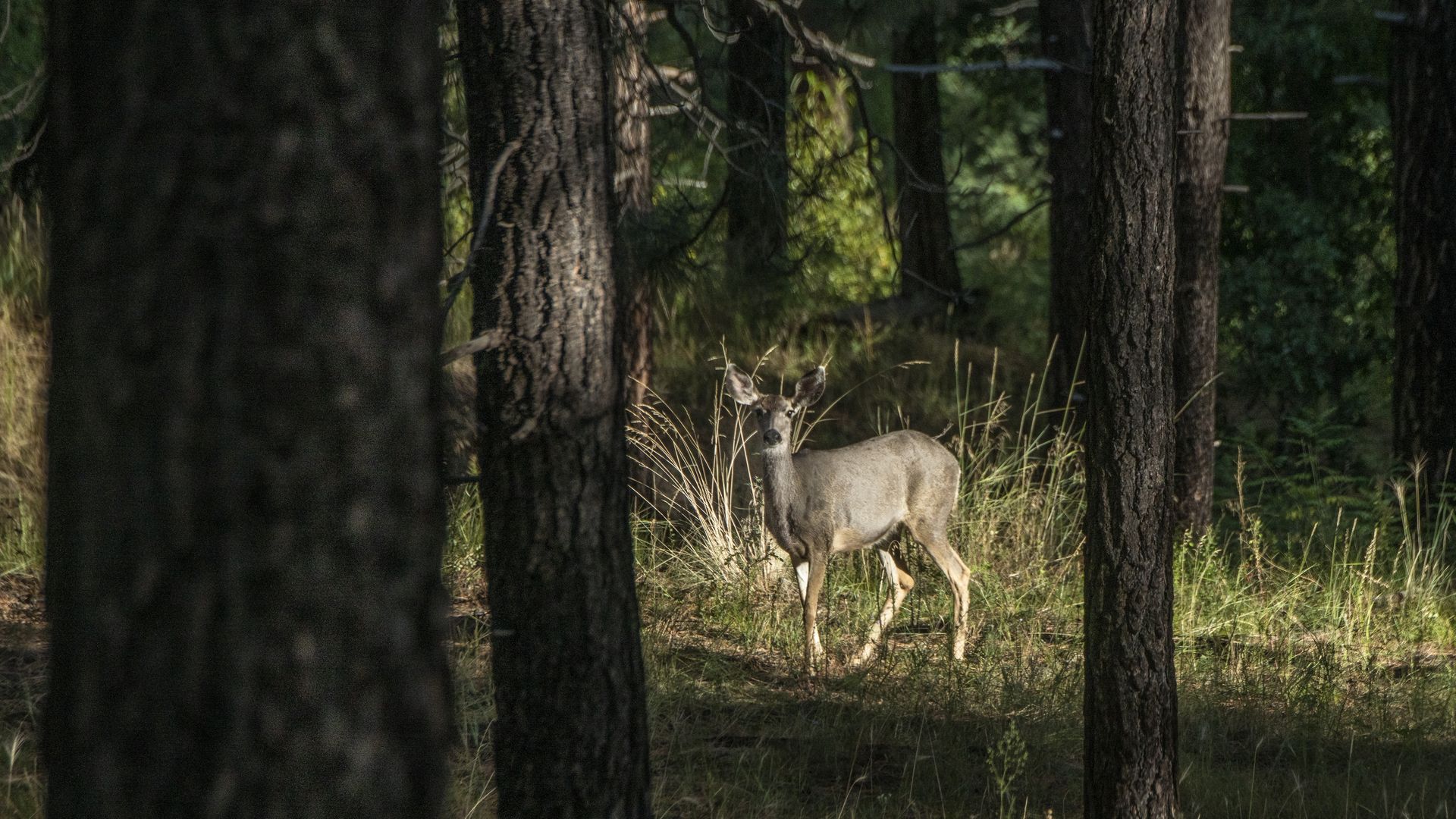
A mule deer in Apache-Sitgreaves National Forest. Photo: Lance Cheung/USDA
The Trump administration has moved closer to eliminating the Roadless Rule in national forests, potentially opening hundreds of thousands of acres of Arizona wilderness to development.
Why it matters: The decades-old federal policy has protected millions of acres of wilderness from new roads and logging — to the delight of conservationists and the ire of the timber industry.
What they're saying: The Trump administration says the 2001 rule hampers wildfire prevention and firefighting, including forest thinning and insect control.
- "We've watched preventable conditions — overgrown stands, insect outbreaks and disease — turn healthy landscapes into tinderboxes," Agriculture Secretary Brooke Rollins said in a statement this month.
Reality Check: Multiple studies have shown that roads are themselves associated with increased risk of wildfires.
- The rule already allows crews to build roads in protected areas to address any "imminent threat" to public safety, including fires.
Catch up quick: The Trump administration began looking at ending the rule last year.
Driving the news: Now the formal process has begun with a new call for public comments, which can be submitted here until Sept. 21.
By the numbers: Rescinding the rule would open about 1.2 million acres of Arizona's forests to logging and road construction — about 10% of the land in its national forests.
- 27% of the Coronado National Forest is designated as roadless, as is 2% of Apache-Sitgreaves National Forest.
- Arizona's four other national forests — Prescott, Kaibab, Coconino and Tonto — have roadless areas that allow roads under certain circumstances.
Zoom in: Many of Arizona's roadless areas are roadless for a reason, says Sandy Bahr, the Grand Canyon chapter director of the Sierra Club.
- "When you're looking at a big map, they may look small, but a lot of those areas were identified to protect things like wildlife corridors," Bahr tells Axios.
- Portions of the Black River in Apache-Sitgreaves are in a roadless area, as are large swaths of the Santa Rita mountains in Coronado.
- Bahr says "it's important to have this unfragmented wildlife habitat protect these watersheds, and now they're proposing to open these areas up for no good reason."
The other side: Travis Joseph, president of the timber industry group American Forest Resource Council, said wilderness areas have changed in ways "that few anticipated when the Roadless Rule was adopted."
- "We should continue to adapt and learn from failed policies to meet the moment, not continue to cling to positions and ideas that don't serve the public's interest," he said in a statement.