Feds announce Colorado River cuts for Arizona

Add Axios as your preferred source to
see more of our stories on Google.
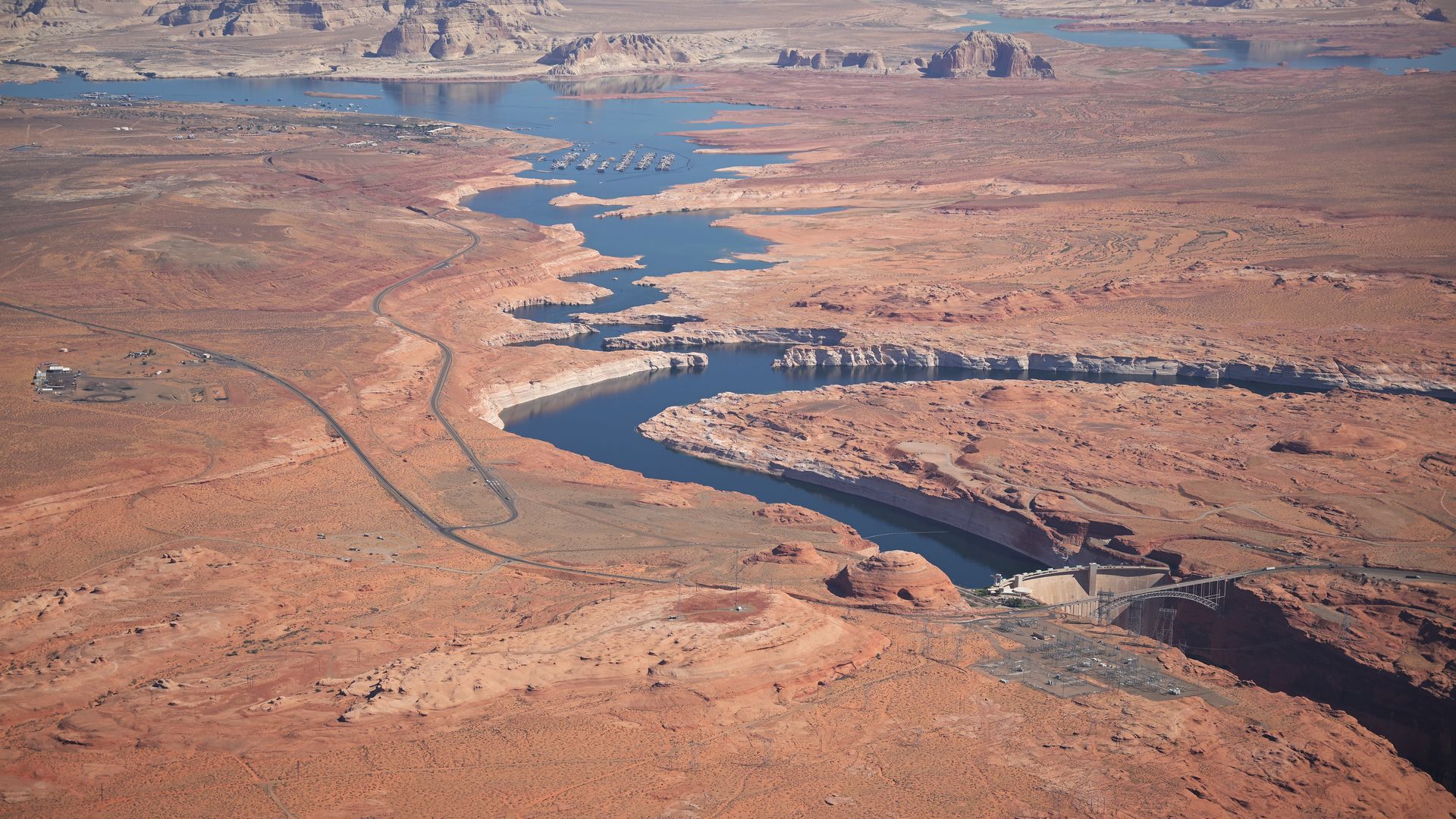
Lake Powell in April 2026. Photo: RJ Sangosti/MediaNews Group/The Denver Post via Getty Images
The U.S. Department of the Interior made its final decision on cuts to water allocations from the drought-stricken Colorado River over the next two years, and while it's not good, it's likely the best-case scenario for Arizona — at least for now.
Why it matters: An environmental study that the department's U.S. Bureau of Reclamation released in late July indicated that Arizona, California and Nevada — which constitute the Colorado River's Lower Basin — could lose up to 3 million acre-feet of water annually for the next two years.
- That's nearly twice what the three states offered to conserve under a voluntary proposal.
State of play: Under the new guidelines the bureau released Friday, the Lower Basin states would lose 1.25 million acre-feet of Colorado River water per year in 2027 and 2028 — 760,000 from Arizona, 440,000 from California and 50,000 from Nevada. An acre-foot is about 326,000 gallons of water.
- The states would also conserve an additional 700,000 acre-feet among them over the next two years.
- That largely mirrors a plan proposed by the Lower Basin states.
- Former Central Arizona Project (CAP) general manager Ted Cooke says this is the best-case scenario under the bureau's July plan, telling Axios, "That is as good as it gets."
Arizona takes the largest cuts because, by law, CAP, a canal system that delivers Colorado River water to the state's interior, has low-priority water rights.
The big picture: The Colorado River basin, which also includes all or parts of Colorado, New Mexico, Utah and Wyoming — has suffered a massive drought for more than two decades.
- Lake Mead and Lake Powell, key reservoirs for the river, are at record lows, threatening "deadpool" conditions in which water levels would be too low to flow through the Hoover and Glen Canyon dams.
What they're saying: Gov. Katie Hobbs applauded the feds, saying they "saved Arizona from forced federal cuts that would have crippled our economy and America's national security."
- Yes, but: Hobbs criticized the Upper Basin states for refusing to negotiate cuts and said Arizona "stands prepared to protect our water by any legal means necessary."
CAP said the Lower Basin states' "historic level of conservation" helps "stabilize the River for all users through 2028."
- But the new guidelines impose "disproportionate, unlawful, and intolerable cuts on Arizona and CAP users" and require no cuts from the Upper Basin.
Arizona Department of Water Resources director Tom Buschatzke, in a press statement, welcomed "a level of stability for the Colorado River system" but added that the remaining eight years of the feds' 10-year framework are still a concern.
Threat level: If conditions worsen, Arizona and the rest of the Lower Basin could end up taking deeper cuts, and Cooke says the state needs to prepare for that.
- "It's likely to happen. There will be some changes, unless El Niño comes through for us," he says. "We should have learned the lesson: Don't expect good news from Mother Nature."
The intrigue: Arizona still must determine the cuts to individual water users in the state.
- Cooke says those cuts will mostly come from CAP, which will make determinations based on its priority guidelines.
What's next: The Legislature must approve the agreement with California and Nevada, meaning Hobbs will have to call lawmakers into special session this year.
- There's no date or timeline for that yet, Hobbs spokesperson Christian Slater tells Axios.