A population boom is transforming Pinal County

Add Axios as your preferred source to
see more of our stories on Google.
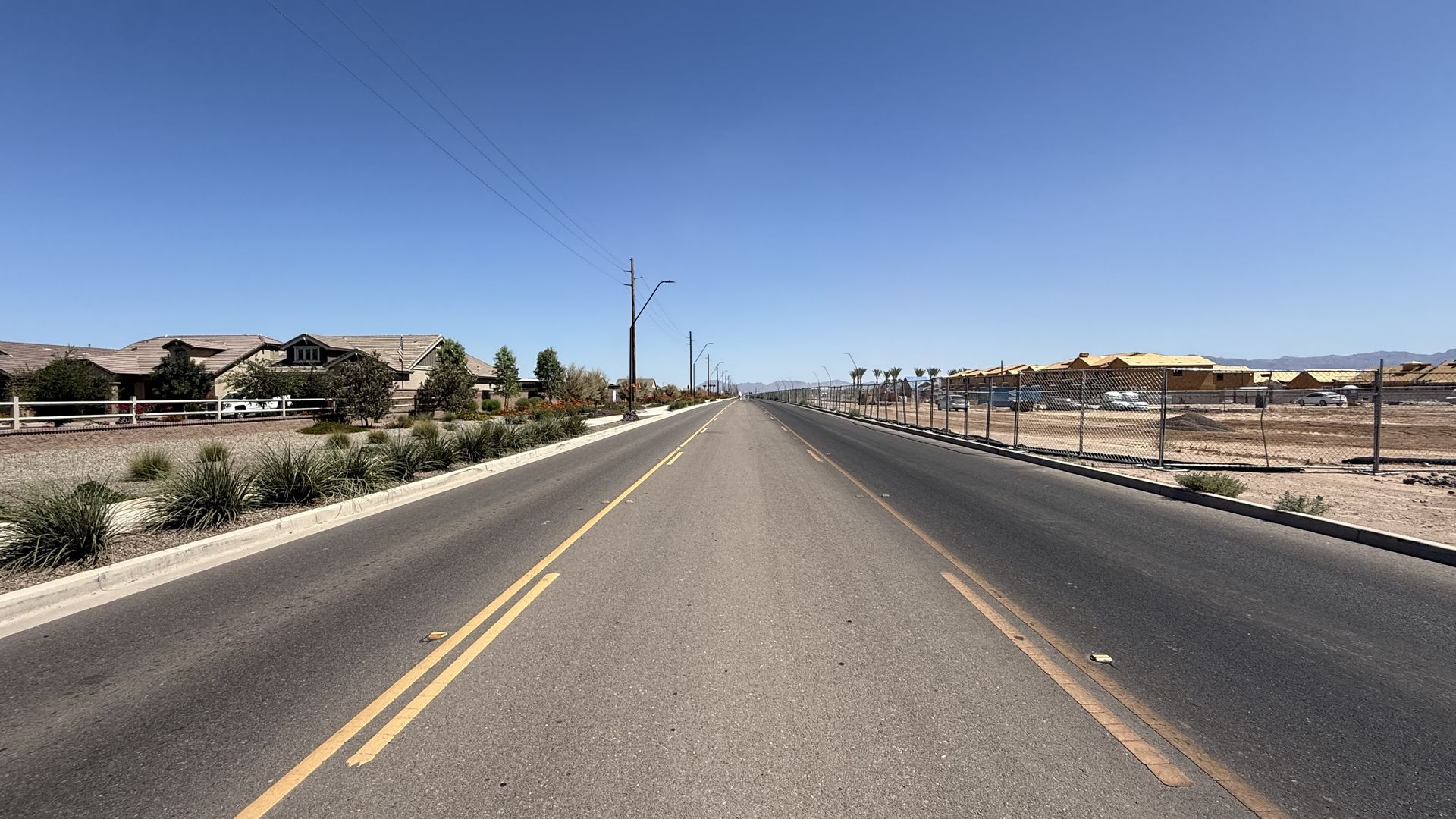
Meridian Road, the dividing line between Maricopa and Pinal counties in Queen Creek, with housing construction on the right. Photo: Jeremy Duda/Axios
Arizona's population boom is spilling far beyond the Phoenix metro area and into the next frontier — Pinal County.
Why it matters: Pinal County, for generations the rural hinterland between the Phoenix and Tucson areas, is now the 7th fastest-growing county in the U.S.
- The county's population in 2000 was about 180,000.
- In 2025, the U.S. Census Bureau estimated it had ballooned to 539,000.
By the numbers: Maricopa gained an estimated 20,000 residents since 2020, per the U.S. Census Bureau, increasing its population to over 78,000. In 2000, the city had 1,040 residents.
- Casa Grande has nearly 70,000 people, more than double its turn-of-the-century population.
State of play: Much of the growth is fueled by people who work in the Valley but want cheaper housing.
- You can buy the same house in Casa Grande for $100,000 less than in Chandler, says Craig McFarland, president and CEO of Pinal Partnership.
- But it's more than just housing pressure from the Valley driving some of the growth — Casa Grande, for example, has attracted major employers like electric vehicle maker Lucid, which has a massive manufacturing campus in town.
The intrigue: Different Pinal population centers have their own characteristics.
Case in point: The East Valley has sprawled across the county line from Maricopa, fueling the explosive growth in Pinal and adding parts of the county to suburban Phoenix.
- San Tan Valley voted to incorporate last year, making it one of the most populous municipalities in Arizona and the largest in Pinal, with an estimated population of over 100,000.
- Queen Creek, which is mostly in Maricopa County, is one of the fastest-growing cities in the U.S., and homebuilding has ramped up in the area that extends into Pinal.
And Florence, which for most of its history was far outside the Phoenix metro area, is now growing toward San Tan Valley.
- With new housing developments mushrooming on Florence's northwest side, it won't be long before Florence connects to the Valley, says Paul Felker, executive director of the Greater Florence Chamber of Commerce.
What they're saying: Many people moving to the growing northwest area commute to the Valley for work, but the city and the chamber are working hard to bring in major new employers and shake the perception that Florence is just a prison town, Felker tells Axios.
- "Five years from now when hopefully all this is coming to fruition, it's going to look a lot different," he says.
Between the lines: Casa Grande and Maricopa will remain separated from the Valley, with the Gila River Indian Community as a buffer.
- "We will never truly be suburbia," former Maricopa Mayor Christian Price tells Axios. "But I think that's actually a real benefit."
- Most of Maricopa's workforce commutes outside of town, McFarland says.
Threat level: The state imposed a moratorium in 2021 on new housing subdivisions that relied on groundwater for their water supplies, which threatened to restrict supplies for the county's growing housing demand.
- But two new state programs — ag-to-urban, which converts agricultural land to housing, and the Alternative Designation of Assured Water Supply (ADAWS) — are now alleviating those issues and opening up more homebuilding.
- Pinal County communities are also ramping up apartment construction after years of inactivity, McFarland says.