Programs providing water for areas hit by homebuilding moratorium

Add Axios as your preferred source to
see more of our stories on Google.
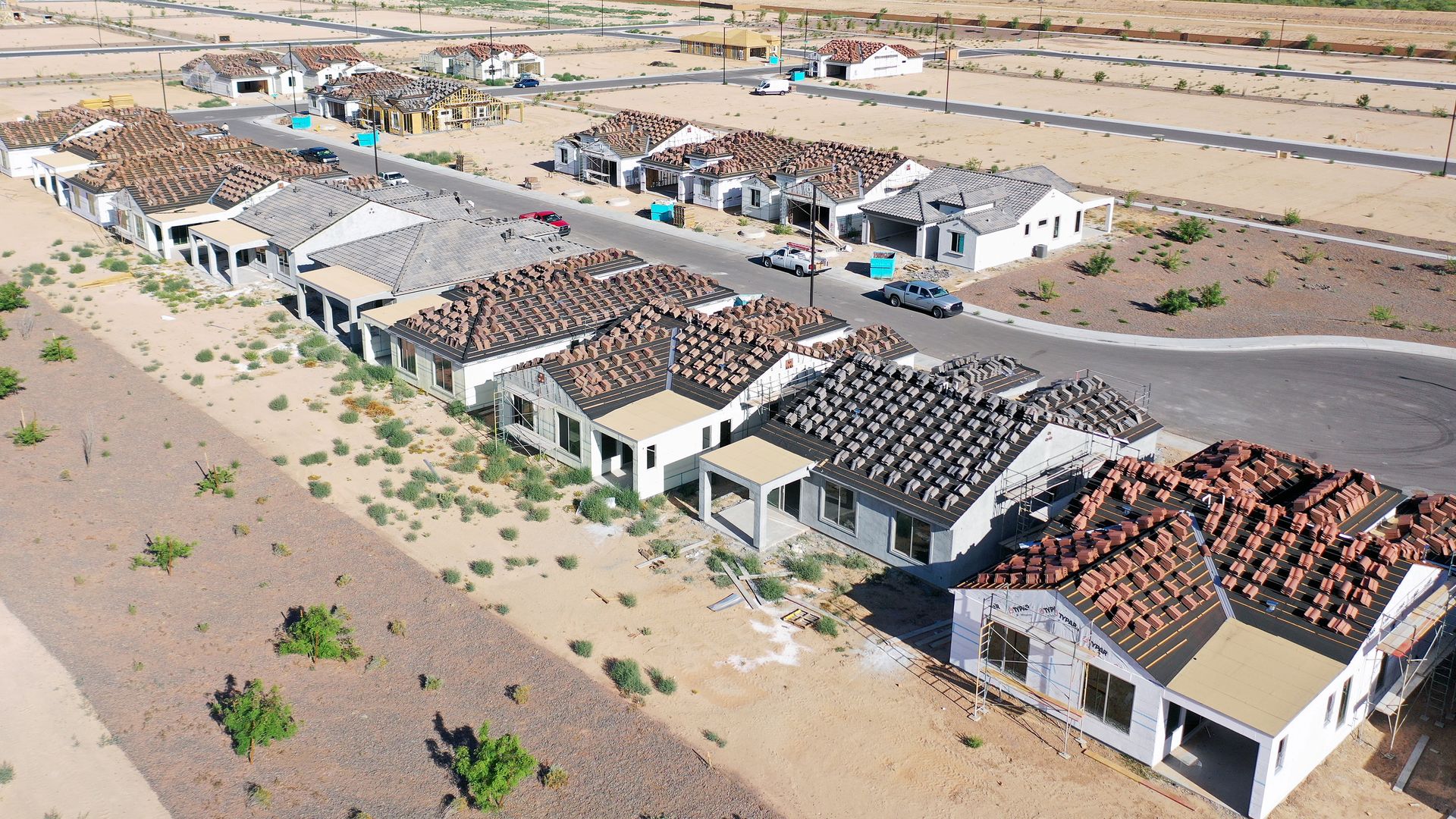
A 2023 moratorium on using groundwater for new housing in Buckeye, shown here, and Queen Creek, prompted new programs aimed at providing water supplies. Photo: Mario Tama/Getty Images
Two programs intended to bolster water supplies for housing in Arizona's fast-growing, drought-stricken areas are gaining momentum.
Why it matters: Gov. Katie Hobbs in 2023 imposed a moratorium on homebuilding in the rapidly growing Buckeye and Queen Creek communities unless they used water sources other than groundwater.
- A similar restriction was imposed in Pinal County in 2021.
Context: Under Arizona's landmark 1980 Groundwater Management Act, subdivisions in urbanized areas must demonstrate they have at least a 100-year water supply.
State of play: Two state programs enacted over the past two years could get water flowing again for new housing in areas subject to the moratoriums.
- In the wake of the moratorium, the Hobbs administration created the Alternative Designation of Assured Water Supply (ADAWS) program, giving water providers new paths to demonstrate they have the required 100-year supplies.
- Last legislative session, Hobbs signed a bill creating the "ag-to-urban" program in which agricultural land, typically more water-intensive than single-family homes, is retired so the water can be used for new subdivisions.
The latest: The Arizona Department of Water Resources (ADWR) last week approved its first ag-to-urban application, which will provide developer Forestar Group Inc. with water credits for 825 homes in Buckeye.
- This followed the department's first ADAWS designation in October for the utility EPCOR, which the company said "unlocks the potential to support 60,000 new homes" in Buckeye and Surprise.
What's next: ADWR is processing other applications for the two programs, including one from each in Buckeye.
- The city submitted an ADAWS application in March that, if approved, would provide water to Buckeye's Tartesso community and an adjacent development.
- An ag-to-urban application submitted last month would also provide water for the area.
Yes, but: ADAWS and ag-to-urban are a "really, really good start," but they still won't meet all Buckeye's water needs, Mayor Eric Orsborn tells Axios.
- There are massive tracts of land west of the White Tank Mountains that lack access to either agricultural land that could be used for ag-to-urban, or to other water sources that could provide ADAWS water, he said.
ADWR in July approved Buckeye's plan to import about 5,900 acre-feet of water annually from the Harquahala Valley groundwater basin, and Orsborn said the city is considering other sources.
Meanwhile, Queen Creek plans to submit an ADAWS application, which will cover the entire town and some neighboring unincorporated areas, in the first or second quarter of 2026, utilities director Marc Skocypec told Axios.
- The town also got approval in July to import about 5,000 acre-feet of Harquahala water, and agreed to buy another 12,000 annually, which Skocypec said is an option for demonstrating the water supply needed for ADAWS.
- Ag-to-urban is more of a "companion issue" for Queen Creek, Skocypec said, and could be useful for developers in the short term if ADAWS takes longer than expected.
The Arizona Water Company, which services Pinal County, also has an ADAWS application under review by the state.
- The company tells Axios that it's expected to provide water for about 25,000 new homes over the next decade in Casa Grande, Coolidge, Arizona City and surrounding areas.