New jaguar seen in Arizona as Trump border wall threatens habitat

Add Axios as your preferred source to
see more of our stories on Google.
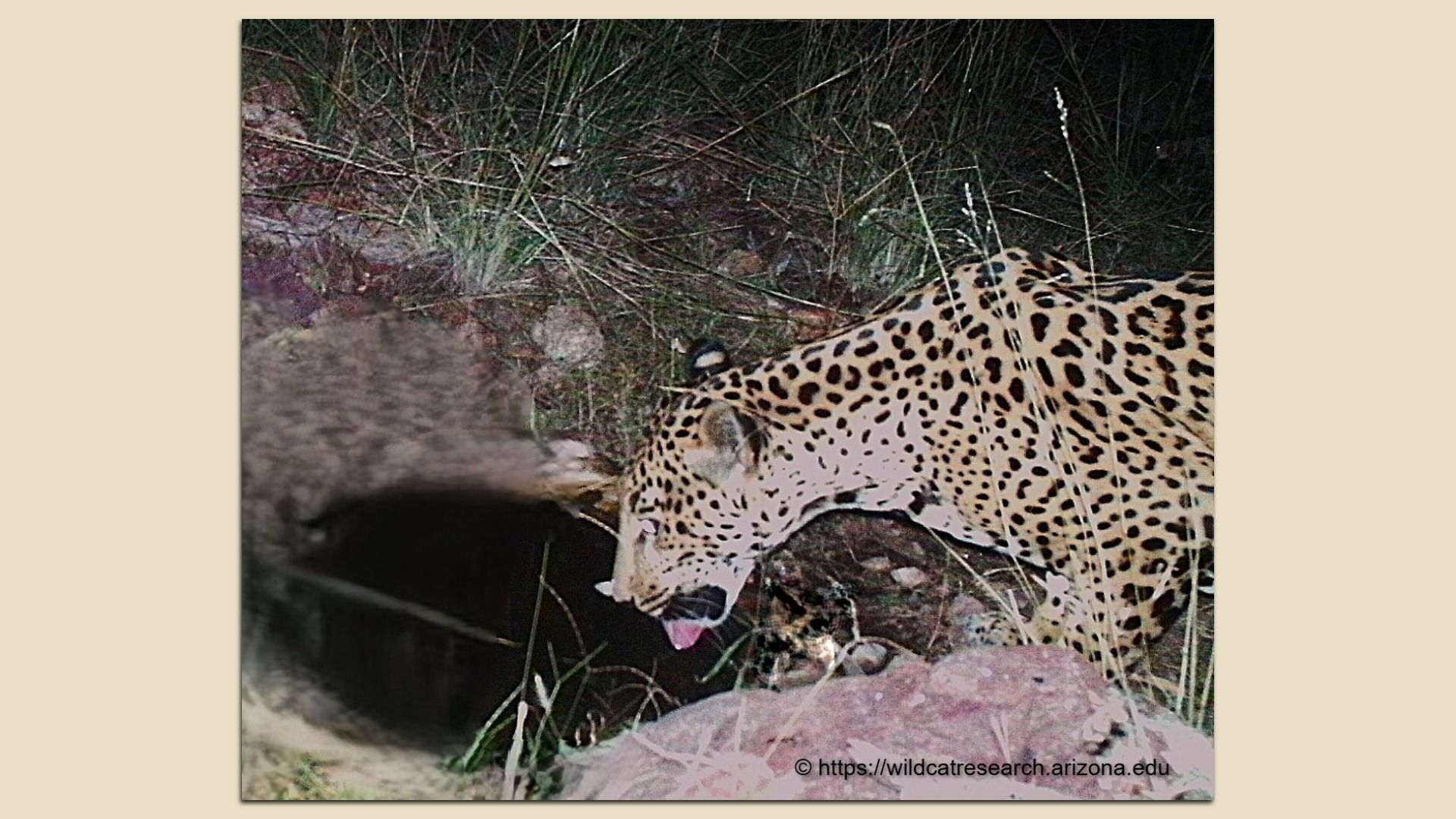
A jaguar in southern Arizona last month. Photo: Courtesy of University of Arizona Wild Cat Research and Conservation Center
A new jaguar was spotted in southern Arizona last month — the fifth documented in the area since 2011 — showcasing the endangered species' resiliency in the face of climate change and habitat destruction.
Why it matters: The presence of big cats — apex predators that require an expansive and balanced ecosystem to thrive — indicates that the Sky Islands region of southern Arizona has retained its health and biodiversity in spite of significant conservation headwinds, said Susan Malusa, director of the University of Arizona Wild Cat Research and Conservation Center.
- It also underscores the need to maintain international wildlife passageways, which are threatened by ongoing construction of President Trump's U.S.-Mexico border wall, environmentalists say.
The big picture: Jaguars once roamed much of Arizona, but hunting and habitat loss led the species to become endangered in 1972.
- Today, the southwestern jaguar population is primarily located in Mexico, but on occasion, the cats travel into southern Arizona.
State of play: The new jaguar, nicknamed "Cinco," was spotted on trail cameras nine times in 10 days this November. The big cat had never been detected in the U.S. or Mexico before.
- Malusa said her team first thought it was the same jaguar that was spotted over the summer, but an analysis of the cat's spot pattern revealed it was a new detection.
How it works: About 40 trained "citizen scientists" work with the center, launched in 2011, to monitor trail cameras and collect water samples and scat that provide genetic information about the cats.
- Unlike other endangered species that are collared and tracked, jaguar monitoring is entirely noninvasive because the species is notoriously elusive and sensitive to human interaction.
- The center has captured 230 images of jaguars in southern Arizona since 2011, but has millions of other trail camera photos in a database that allows Malusa to analyze prey availability, movement patterns, water levels and other information she shares with land managers to guide decisions on habitat protection.
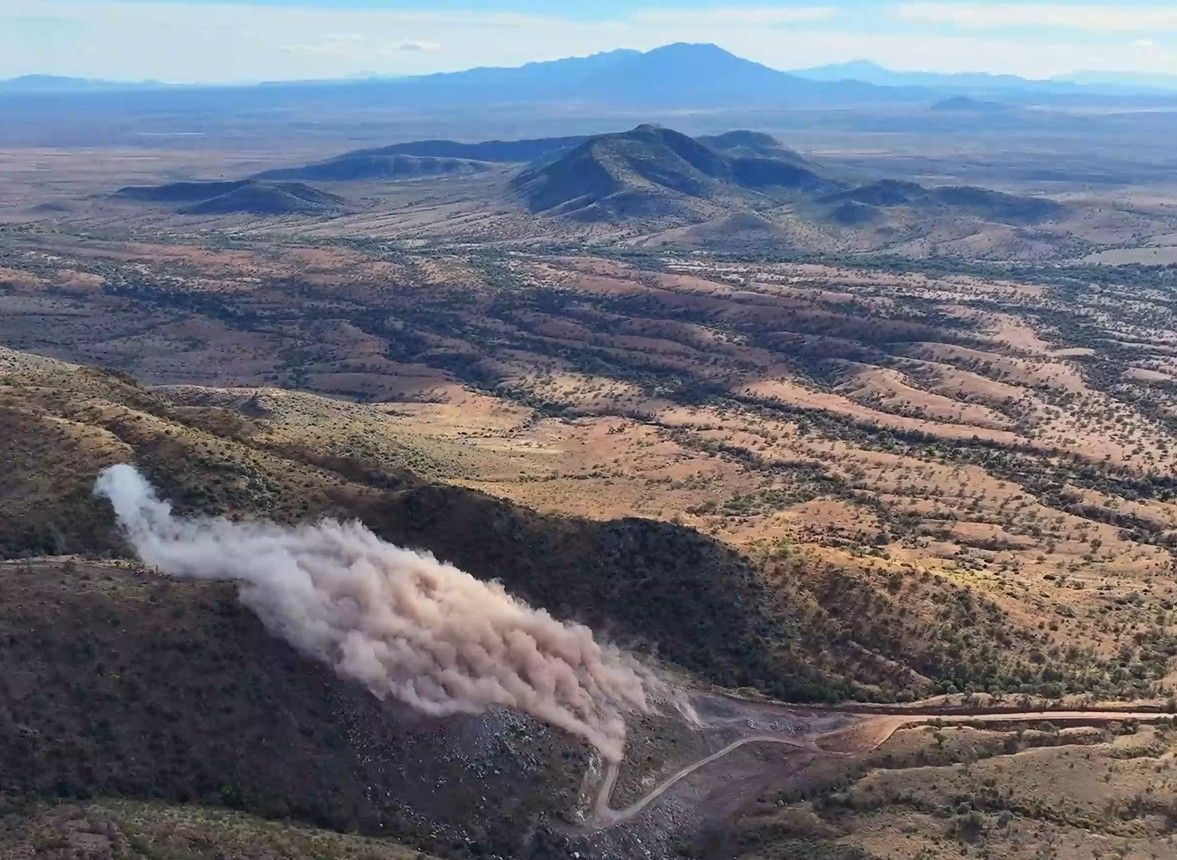
The intrigue: The new jaguar detection comes as the federal government has waived environmental laws to speed construction of the U.S.-Mexico border wall.
- The Center for Biological Diversity in Tucson has already documented the impact of the wall on disrupted wildlife areas and warns a completed wall could lead to an "ecological collapse."
- Russ McSpadden, a southwest conservation advocate with the group, last week captured video and photos of construction crews blasting and quarrying at the edge of the Coronado National Memorial, Coronado National Forest and San Rafael Valley.
Zoom in: Malusa said jaguars need very large habitats that allow them to move to where the landscape is most hospitable at a particular time.
- Temperatures have been climbing in recent years and prey is dwindling in Mexico, which is likely why Cinco headed into southern Arizona.
- Roads and other land development have limited jaguars' cross-continental movement in the past, but a full-scale border wall is the "epitome of habitat fragmentation," she said.
The bottom line: Cinco's U.S. sighting shows "there's still time to get [habitat protection] right — we hope," Malusa told us.