As U.S. home insurance prices rise, Arizona stays below average


Add Axios as your preferred source to
see more of our stories on Google.
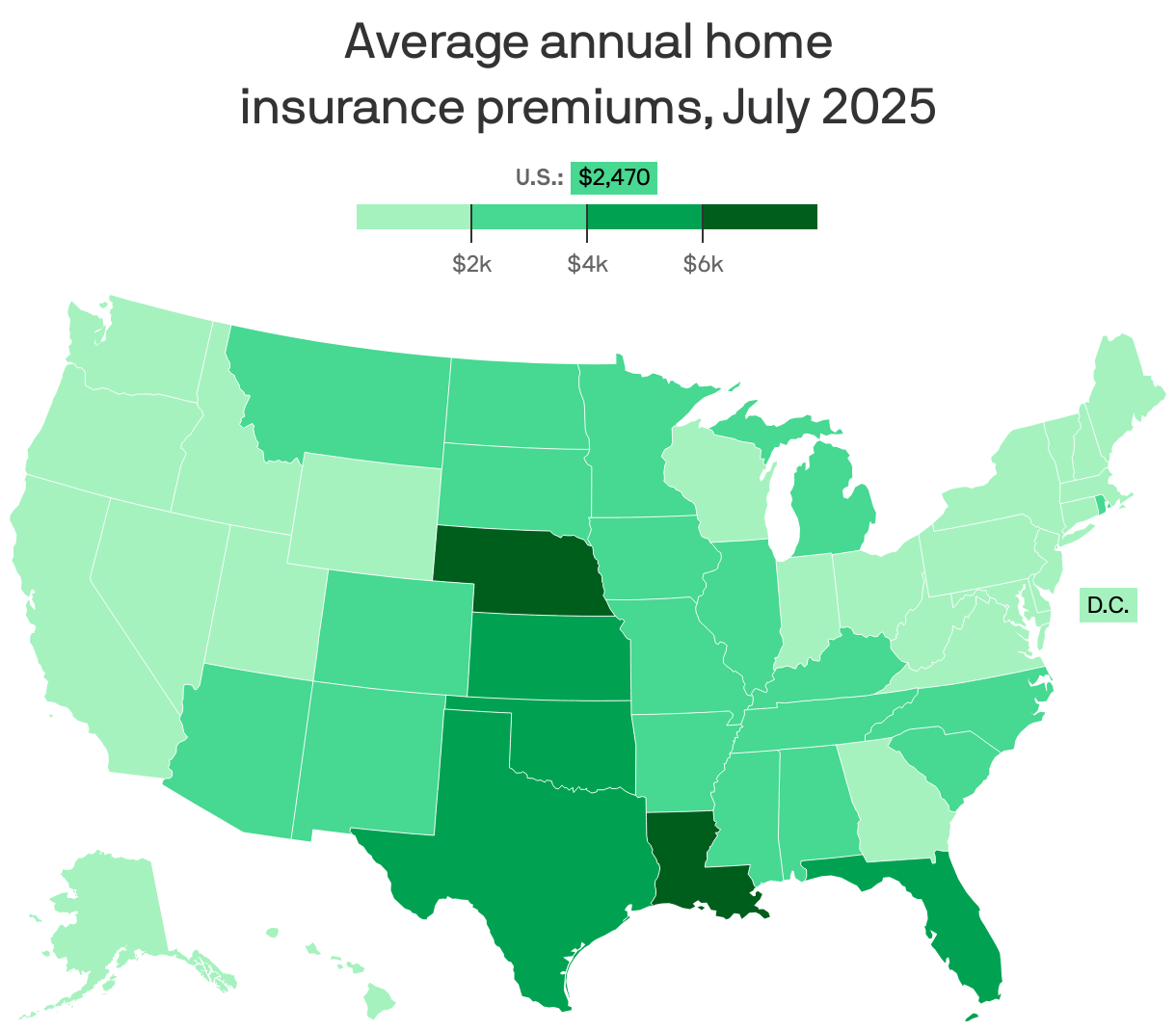
Extreme weather is driving insurance prices sky-high in some parts of the country, but Arizona rates are below average, a new analysis finds.
Why it matters: Climate change is supercharging extreme weather events like hurricanes, increasing the odds of losses and claims and driving up insurance premiums.
Driving the news: The national average for annual home insurance premiums is up 9% since 2023, per a new Bankrate breakdown, hitting $2,470 as of July.
- That's based on quotes for married male-female homeowners with an eight-year-old $300,000 home, a clean claim history and good credit.
Zoom in: Arizonans are paying an average of $2,309 — about 2.99% of income — around the middle of the pack compared to other states.
- The $2,387 price tag in the Phoenix area is slightly more than the state average.
Threat level: Arizona doesn't get hurricanes and tornadoes, but wildfires are prevalent.
- Homeowners statewide, including in Maricopa County, face possible price increases or even policy cancellations due to wildfire risks.
- Arizona has 123,906 homes that are moderate or greater risk of wildfires, per the property data firm Cotality.
- The Arizona cities with the most at-risk homes are Flagstaff (33,466) and Prescott (31,883).
Zoom out: Nebraska ($6,425), Louisiana ($6,274) and Florida ($5,735) are some of the states with shockingly higher-than-average premiums, Bankrate found.
- All three are vulnerable to extreme weather, including hurricanes, tornadoes, wind, hail and more.
Caveat: These figures don't include flood insurance.
Yes, but: Some places with relatively high average homeowner premiums also have higher median incomes.
- In the Denver metro, for example, "the average $300,000 home insurance policy costs $3,644 per year ... but homeowners there earn a median annual income of $103,055, resulting in just 3.54% of their pay going toward premiums," Bankrate says.
The other side: Florida lawmakers' attempts to address the climate-driven insurance crisis appear to be working.
- "From 2023 to 2025, home insurance costs in Florida decreased by an average of $579, representing a 9% drop," per the analysis.
Between the lines: Climate change is driving non-renewals in some areas, a December 2024 Senate Budget Committee report found.
- Non-renewals are correlated with higher premiums and are "often an early warning sign of market destabilization," per the report.
- "Premiums are skyrocketing, insurers are non-renewing customers or pulling out of risky markets altogether. As climate change gets worse, insurance availability and affordability will also get worse."
Reality check: The amount you'll actually pay for home insurance depends on many factors — not least of which is your credit score, but also the cost of your home, its materials and other variables.
Go deeper: Soaring home insurance rates are acting as a "stealth inflation driver," Axios' Emily Peck reports.