Proposed federal land sale stokes concerns over Utah water pipeline

Add Axios as your preferred source to
see more of our stories on Google.
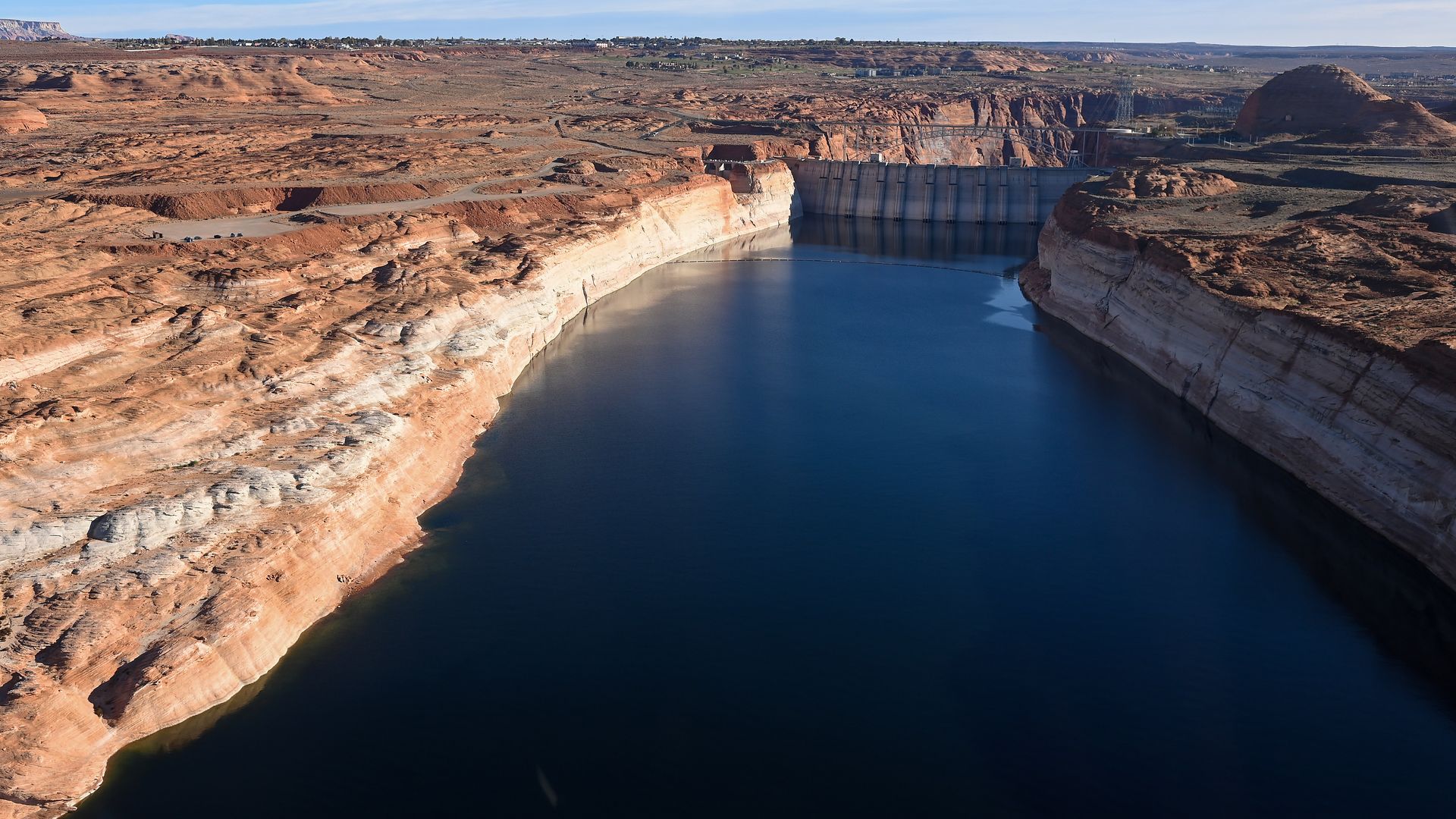
A proposed sale of federal land is raising concerns about a proposed pipeline that would bring water from Lake Powell, pictured in 2022, into southwestern Utah. Photo: Joshua Lott/The Washington Post via Getty Images
A proposed sale of federal land to local governments in Utah is raising concerns that it could help pave the way for a controversial water pipeline from Lake Powell.
The big picture: The Lake Powell Pipeline is a proposed 143-mile duct that would transport 86,000 acre-feet of water annually from the lake into southwestern Utah.
- Water officials from Arizona, California, Colorado, Nevada, New Mexico and Wyoming — the six states that share the Colorado River basin with Utah — asked U.S. Interior Secretary David Bernhardt in 2020 to halt an environmental impact statement for the pipeline until "substantive legal and operational issues" were resolved.
- The project has largely been on hold for the past several years.
Driving the news: In the House Committee on Natural Resources on May 6, a late-night amendment to President Trump's "big, beautiful bill" by U.S. Rep. Mark Amodei (R-Nevada) included provisions to transfer federal land to Washington County in southwestern Utah, the Washington County Water Conservation District and the city of St. George.
The intrigue: An analysis that the Arizona Department of Water Resources (ADWR) provided to U.S. Rep. Greg Stanton's office called the amendment "a direct threat to Arizona's water future."
- The analysis said the land sale that aligns with the pipeline's path would have "serious implications" for ongoing Colorado River negotiations, would weaken Arizona's negotiating position and would risk "an escalation of unilateral actions by other states, further destabilizing river governance."
- ADWR told Axios it contributed to the analysis, but it's unclear who else was involved or which details came from the agency.
Between the lines: Maps obtained by Axios that the Bureau of Land Management prepared for U.S. Rep. Celeste Maloy (R-Utah), who introduced the amendment with Amodei, show that a small stretch of land running parallel to the Arizona state line, and another spur that juts off to the north, largely mirrors a segment of the pipeline route.
- A portion would also run through a block of land that would go to the water district.
- Yes, but: The overwhelming majority of the pathway is outside the federal land from the amendment, including lengthy segments in Coconino and Mohave counties in Arizona and Utah's Kane County.
What they're saying: Stanton and U.S. Rep. Susie Lee (D-Nevada) said several of the federal parcels align with the pipeline's proposed route, and water managers in their states warned the land sale could be used to develop the project.
- They called on House Republicans to remove the proposed land sale from the bill, calling it a "Trojan horse to steal Nevadans' and Arizonans' water."
The other side: Karry Rathje, a spokesperson for the Washington County Water Conservancy District, told Axios the land it would receive isn't related to the pipeline and wouldn't help expedite it, adding it wouldn't change the National Environmental Policy Act process required for the pipeline.
- The district plans to use that parcel for a potential reservoir, while the county said it intends to use the land for transportation and other infrastructure projects like enhancements to a regional water reuse system.
- County Commissioner Adam Snow said in a statement the amendment only authorizes the land's sale and doesn't require any purchases.
- The statement didn't directly mention the pipeline, but Snow said the county is open to discussions with anyone concerned about specific parcels, including about possible deed restrictions "to ensure proper use if the option to acquire was exercised."
- Maloy said the land is for "trails, roads, water infrastructure, a little bit for the airport," and is unrelated to the pipeline, E&E News by Politico reported last week.
Context: The renewed concerns about the Lake Powell Pipeline come as Arizona, Utah and the other basin states are negotiating a new compact to determine how water from the drought-stricken Colorado River is allocated.
What we're watching: The bill passed a key hurdle when the House Budget Committee narrowly passed it Sunday night. It now faces a vote in the full House, where conservative holdouts are demanding changes.