ASU solar-powered libraries aid Arizona, Africa and beyond

Add Axios as your preferred source to
see more of our stories on Google.
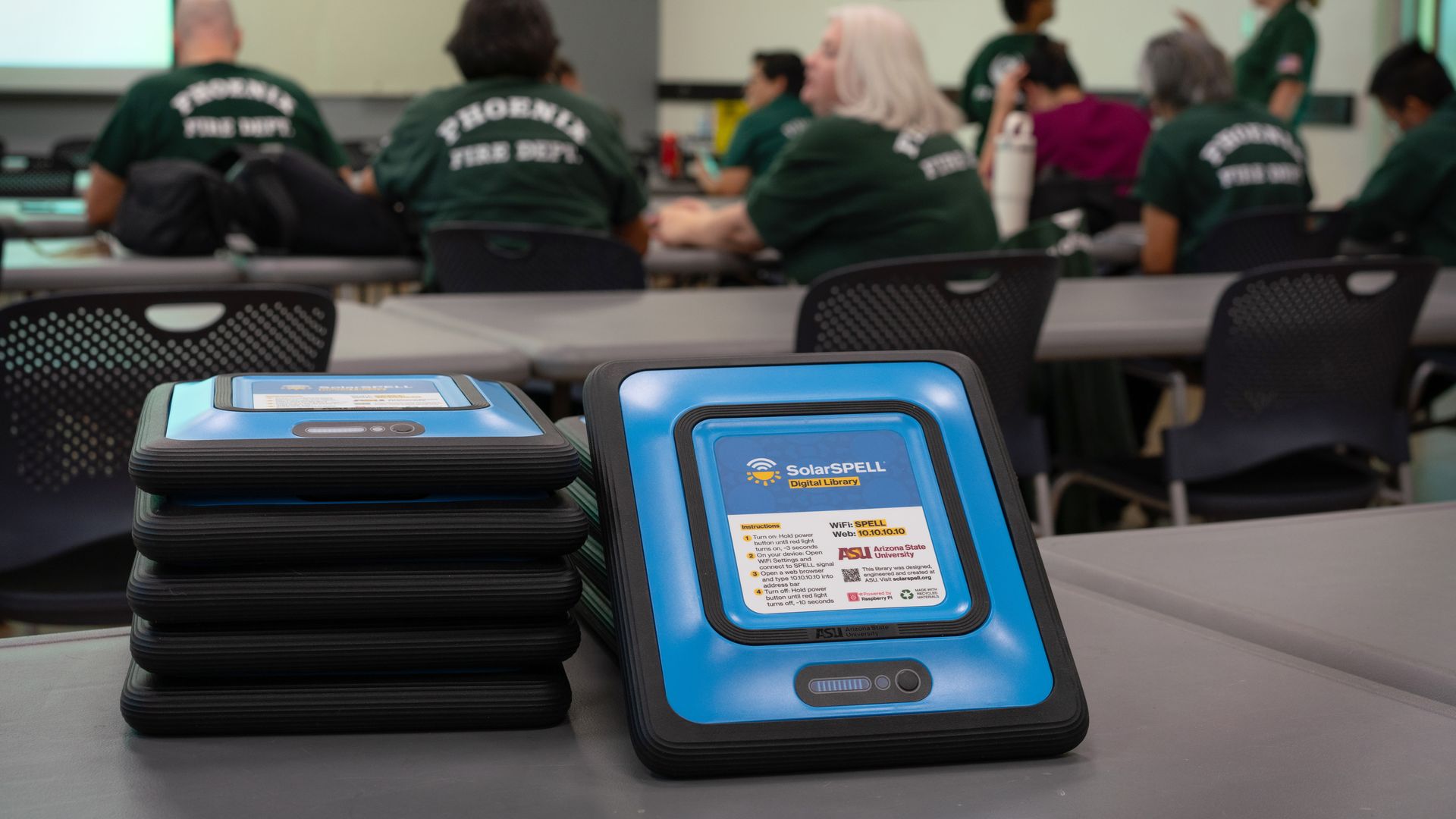
The ASU SolarSPELL Initiative deployed 10 digital libraries with the Phoenix Fire Department's Community Assistance Program. Photo: Courtesy of Abby Johnson via ASU SolarSPELL Initiative
A laptop-size solar-powered library designed by ASU researchers to expand education access in developing countries is now helping Phoenix residents.
The big picture: SolarSPELL digital libraries contain a selection of educational materials specially curated for the local communities they serve. The devices mimic an online experience but are not connected to the internet.
- They've been deployed in more than a dozen countries, including Lesotho, where they're used through a Peace Corps partnership to increase child literacy. In Rwanda, they provide agricultural training for farmers.
- And now the Phoenix Fire Department is using them to connect trauma victims with information about therapy, shelter services, funeral assistance and more.
Flashback: SolarSPELL co-founder and co-director Laura Hosman told us she set out more than a decade ago to bring internet connectivity to hard-to-reach corners of the world, including remote Pacific islands.
- While she was successful in bringing internet access to these places, she realized a lack of digital literacy meant people were mostly using the web for unproductive purposes — think social media and pornography.
- "We would talk to the people and they would say, 'We have a new disease in town. It's called Facebook,'" Hosman told us.
Between the lines: Hosman, an ASU professor, shared the conundrum with her students and asked them to imagine a way to "bring the best of the internet" to offline communities.
- SolarSPELL was born out of that challenge, and the initiative continues to evolve and expand based on ASU research.
The latest: Through collaboration with ASU health students and professors, SolarSPELL libraries were deployed domestically for the first time last year.
- They're now being used at health care facilities on the Hopi Reservation to provide low-literacy and culturally sensitive medical information to tribal members.
- And most recently, the city of Phoenix has deployed the libraries with its crisis response units.
Zoom in: Prior to using SolarSPELL, Phoenix's crisis teams kept a collection of resource handouts in a hanging file folder in the back of their vehicles.
- When they encountered a resident who had experienced domestic violence, witnessed a family member's death or had a mental health crisis, social workers would sort through the files to find the correct resources and hand a stack to the resident.
- That wasn't the most efficient or effective way to help people in crisis, Heather Ross, a professor at ASU's Edson College of Nursing and Health Innovation, told us.
State of play: Now, all of the materials are available through the digital library and have been rewritten in a low-literacy format to ensure people who receive them can understand them.
- Because the library is solar-powered, it can be easily accessed and transferred to victims' cellphones even if they don't have a data plan.
The intrigue: ASU Doctor of Nursing Practice student Patricia Inman recently completed research that showed the fire department's crisis response team workers reported higher job efficacy and lower burnout rates after the introduction of SolarSPELL libraries.
What's next: Hosman and Ross are eager to introduce the libraries to other communities locally and beyond in the years ahead.
1 cool thing to go: The ASU SolarSPELL Initiative was named Best in Show in the 2025 SXSW Innovation Awards in March.