Arizona's outdoor recreation industry worth $14 billion


Add Axios as your preferred source to
see more of our stories on Google.
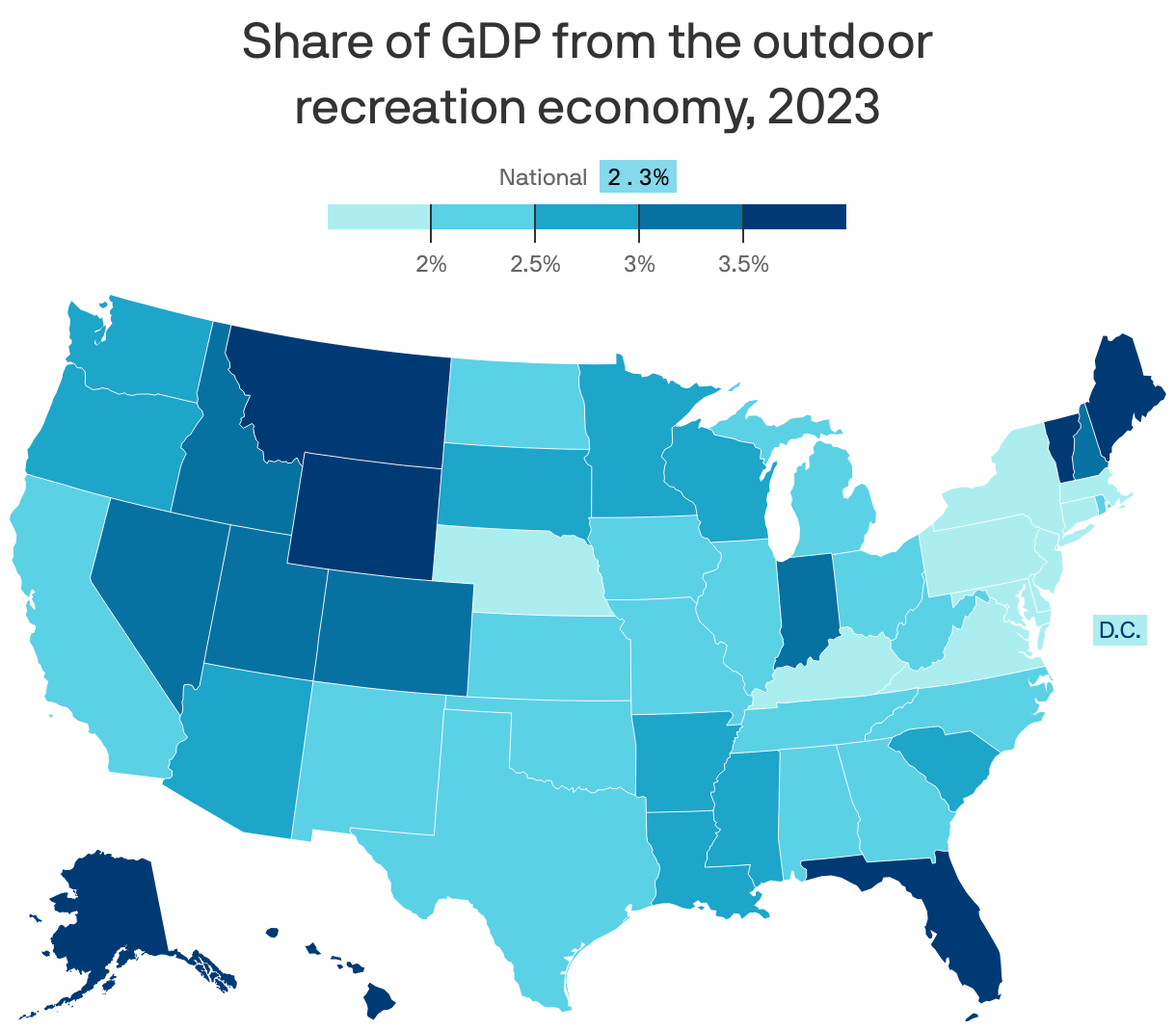
Outdoor recreation's economic impact in Arizona surged to $14 billion in 2023, a 20% increase from the prior year.
Why it matters: The industry's growth continues post-pandemic and now accounts for 2.7% of the state's economy, according to a U.S. Bureau of Economic Analysis report released last month.
By the numbers: The outdoor recreation industry generated about 111,000 Arizona jobs in 2023, about 3.4% of our total employment.
- We saw the biggest revenue growth in industries that support outdoor recreation, like construction, lodging and other tourism-adjacent sectors.
- There was also significant growth in conventional outdoor activities like bicycling, hiking and camping.
The intrigue: Although Arizona is most known for our omnipresent sunshine, snow sports like skiing and snowboarding contributed $55 million to the state's economy.
- The state is home to three major ski spots: Snowbowl in Flagstaff, Sunrise Park near the New Mexico border and Mt. Lemmon north of Tucson.
The big picture: The outdoor recreation industry is now valued at $1.2 trillion nationwide, accounting for 2.3% of the U.S. economy and 5 million jobs, the BEA report found.
- The 3.6% year-over-year growth exceeded the U.S. economy as a whole, which grew at 2.9% in 2023.
- The top activities at the national level are boating, fishing and RVing, while the fastest-growing are bicycling, snow sports and hunting.
Between the lines: Outdoor advocates created the Great American Outdoors Act, passed in 2020, to invest billions in upgrading the nation's national parks.
- The funding for repairs and maintenance expires in 2025 and conservationists are pushing for its reauthorization.
What's next: Public lands advocates are encouraging Congress to finalize approval of the EXPLORE Act, which passed the U.S. House in April. The legislation represents the largest measure ever to support outdoor recreation and would update management policies and invest more money in recreational spaces.