Prop. 312 would punish cities that don't hem in homeless camps

Add Axios as your preferred source to
see more of our stories on Google.
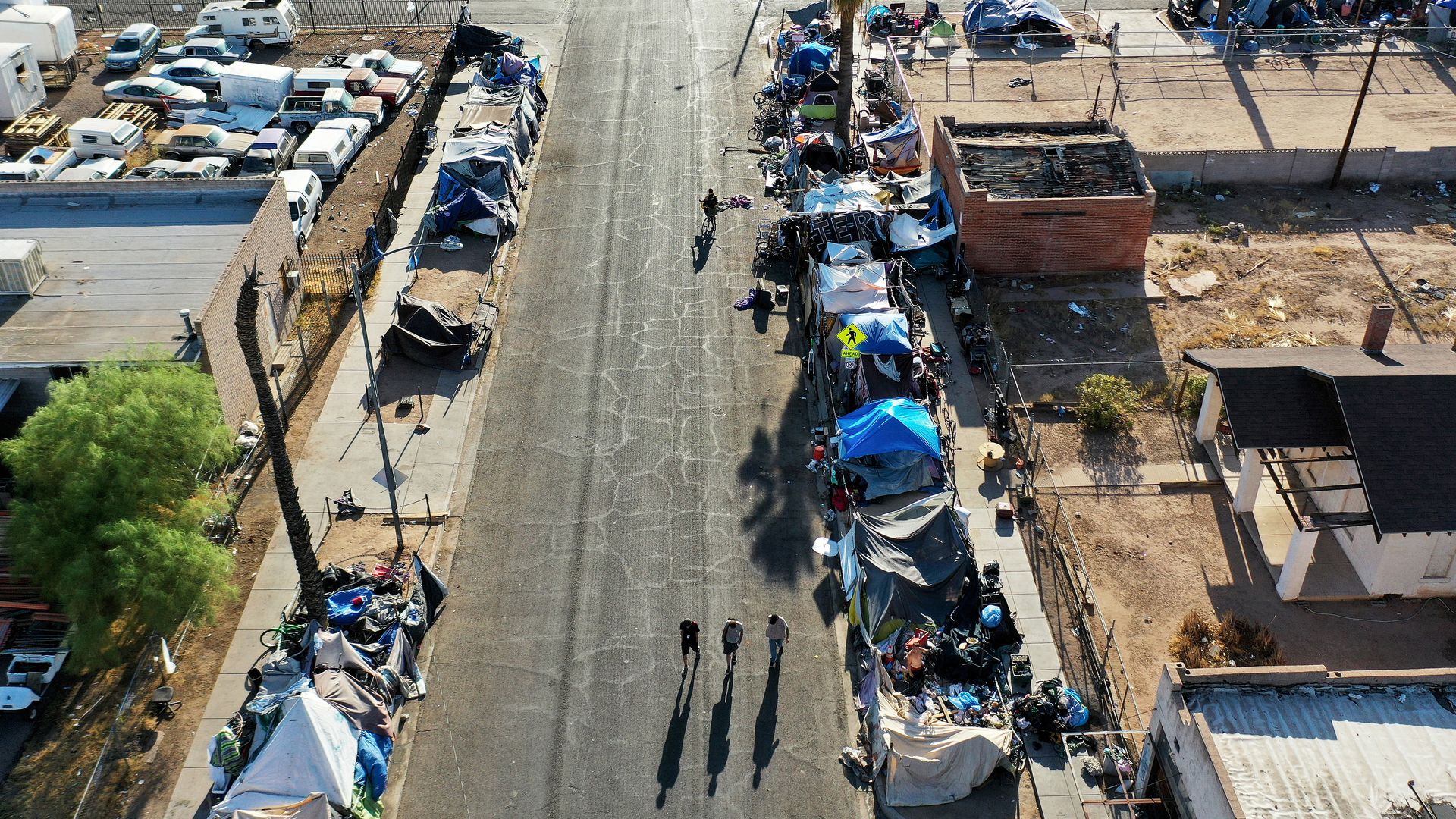
A portion of "The Zone" homeless encampment south of downtown Phoenix seen in July 2023. Photo: Mario Tama/Getty Images
Arizonans will consider a ballot proposition that would punish cities and towns that allow homeless encampments to sprawl onto private property.
Why it matters: More than 4,000 people live unsheltered in Maricopa County — creating health and safety issues for both unhoused people and neighbors who live in areas where encampments take hold.
The big picture: Proposition 312, referred to voters by the Legislature on party lines, would allow property owners to apply for reimbursement if they pay to clean or repair their property because of a nuisance unaddressed by their city or town.
How it works: If a municipality fails to enforce existing laws related to homelessness — including illegal camping, public defecation, panhandling or loitering — residents whose properties are directly impacted by the non-enforcement could seek compensation.
- For example, if a property owner pays to have trash or feces removed from their yard, they can apply to have that cost reimbursed. Compensation would be capped at the amount the owner paid in property taxes the previous year.
What they're saying: "The goal here is not … dollar to dollar refunds — we're looking to hold our government accountable. We want them to do their jobs," Goldwater Institute director of government affairs Jenna Bentley said. The conservative organization supports the proposition.
- Bentley said the measure is intended to apply only when cities or towns develop a "policy, pattern or practice" of nonenforcement.
Flashback: Prop. 312 is a direct response to the City of Phoenix's handling of "The Zone" encampment, Bentley said. At its peak in 2021, about 1,000 people slept in tents in the area nightly.
- Neighbors eventually sued the city, claiming it allowed the encampment to overtake the neighborhood and turn dangerous by not enforcing laws related to illegal camping, drug use and public health.
- Maricopa County Superior Court Judge Scott Blaney ruled that the city intentionally stopped enforcing "criminal, health and other quality of life statutes and ordinances," creating "lawlessness and chaos in the Zone." He ordered the encampment's removal last year.
The other side: Opponents of the proposition include Lutheran Social Services of the Southwest, Opportunity Arizona, Arizona League of Cities and Towns, and American Civil Liberties Union of Arizona.
- They argue the measure would not do anything to address homelessness, would use city funds that could otherwise be spent on shelter or housing, and would force cities to criminalize homelessness.
- "Aside from being cruel, untested and fiscally irresponsible, this proposal will worsen Arizona's housing and homelessness crisis … and deepen the state's revenue crisis, hurting our state's economy," Ben Scheel wrote in opposition to the measure. He's the executive director of Democratic advocacy group Opportunity Arizona.
What we're watching: A Supreme Court decision this year gave more leeway for cities and towns to enforce camping bans that lower courts previously held as unconstitutional.
- Local jurisdictions now have the authority to enforce ordinances that criminalize behaviors associated with being unhoused — like sleeping on public property — even when no shelter is available.