Metro Phoenix homelessness drops for the first time since 2017

Add Axios as your preferred source to
see more of our stories on Google.
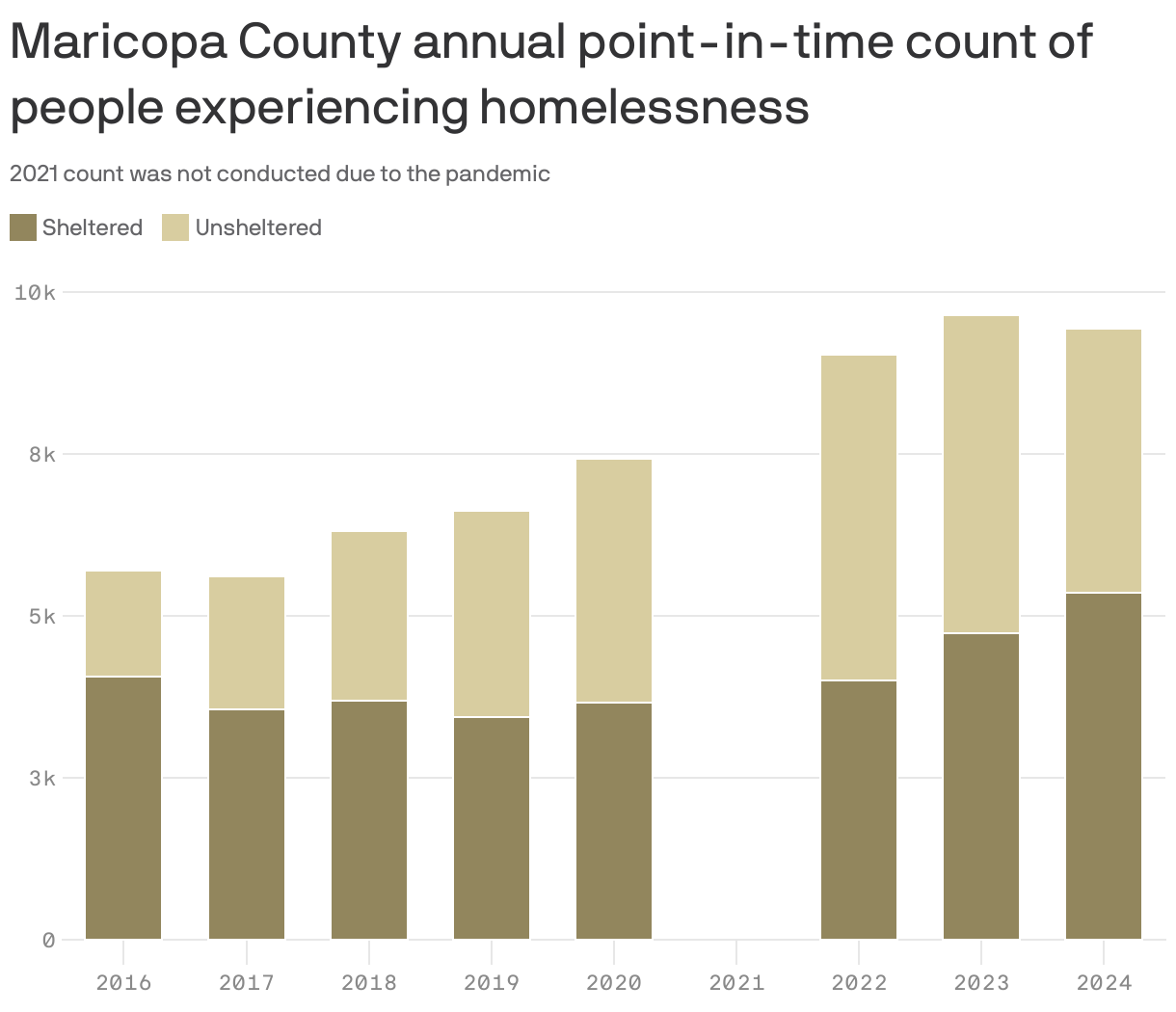
The number of people experiencing homelessness in the Valley decreased for the first time since 2017 and the majority are now staying in shelters, per January's point-in-time count released Wednesday.
Why it matters: This was the first year since 2019 that more unhoused people in metro Phoenix were sleeping inside than outside.
- The decrease in people sleeping outside is probably attributable to the 820 new shelter beds added in the region in the past year, according to the Maricopa Association of Governments, which organized the count.
The big picture: Unhoused people who don't stay in shelters have higher stress levels and more health risks than those who are stay in shelters, per a study published in the Journal of Social Distress and Homelessness last year.
- They're also less likely to use services such as mental health treatment and substance abuse treatment.
By the numbers: A total of 9,435 unhoused people were counted in January, down about 2% from 2023.
- The number of people sleeping on streets, in desert washes, cars or other places not meant for human habitation dropped by 17%, while the number of people staying in shelters increased by 13%.
What they're saying: "This result is a win for our community," Phoenix Office of Homeless Solutions director Rachel Milne said in a statement. "We are seeing that the investments we made in shelter are paying off."
Zoom in: Phoenix and Tempe had the largest decreases in the number of people sleeping outside shelters.
- Glendale had a 24% increase in its unsheltered population.
Between the lines: Until this year, metro Phoenix had seen stubborn growth of its homeless population in each of the preceding seven years.
- Last year, more people experienced homelessness in the Valley (and Arizona as a whole) than at any point since national tracking began in 2007.
Caveat: The point-in-time survey is an imperfect tool and largely believed to undercount the number of people experiencing homelessness.
- It also rained the night before the early-morning count in January, and that may have led some people who would typically sleep outside to find indoor shelter, according to MAG.