Fall allergies are hitting Phoenix hard


Add Axios as your preferred source to
see more of our stories on Google.
If you're feeling run down lately, a plant — not an illness — may be to blame.
Why it matters: Warmer temperatures are fueling longer and more intense pollen seasons, studies find.
The big picture: Phoenix is in the middle of a "surprisingly bad fall," according to allergist and immunologist Julie Wendt of Scottsdale's Relieve Allergy, Asthma & Hives.
- It may be hard to believe that any plant could thrive in our unusually warm and dry fall weather, but the Valley has several weeds that enjoy these conditions — and they're likely responsible for the surge in people seeking allergy help, Wendt told Axios.
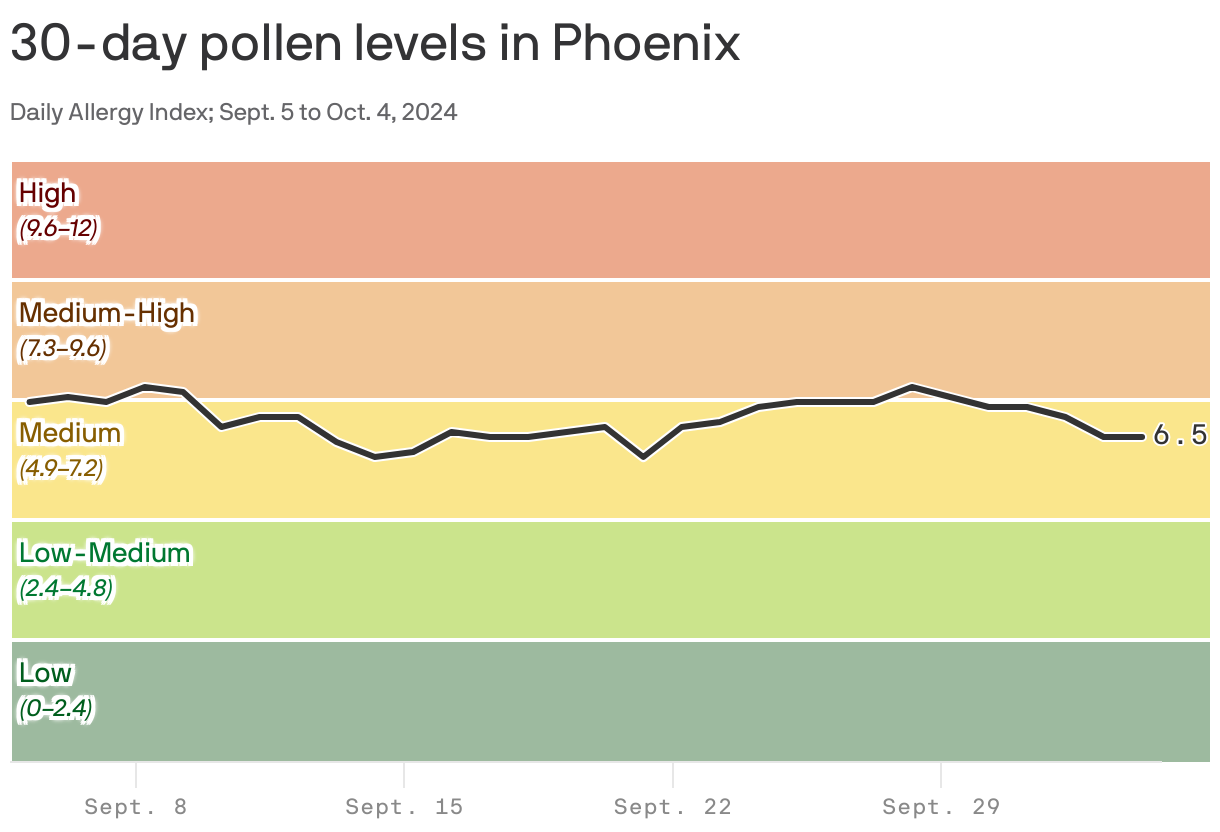
Zoom in: Phoenix's pollen levels tracked at medium or medium-high levels all of September, according to Pollen.com.
- As of Monday, our top allergens were: ragweed, chenopods and sagebrush.
Pro tips: Once you determine what you're allergic to — either by process of elimination or with the assistance of allergy testing — you can try to avoid them.
- Wendt suggested keeping doors and windows closed (not a problem in this weather!), investing in air purifiers and wiping down dogs with baby wipes after they're outside.
Yes, but: Wendt noted that avoidance can sometimes make symptoms more severe when you do inevitably encounter the allergen.
- She said she saw an uptick in severe allergy cases after the COVID pandemic, which she believes is linked to people dodging pollen and other allergens while wearing masks.
Between the lines: A board-certified allergist can administer shots or drops to help reduce allergy symptoms.
- You can also try over-the-counter allergy medications, nasal sprays and rinses, eye drops and natural honey.
What we're watching: Worsening allergy seasons are a concern nationwide. NOAA researchers are developing a new pollen forecasting model, the first of its kind for a federal agency.