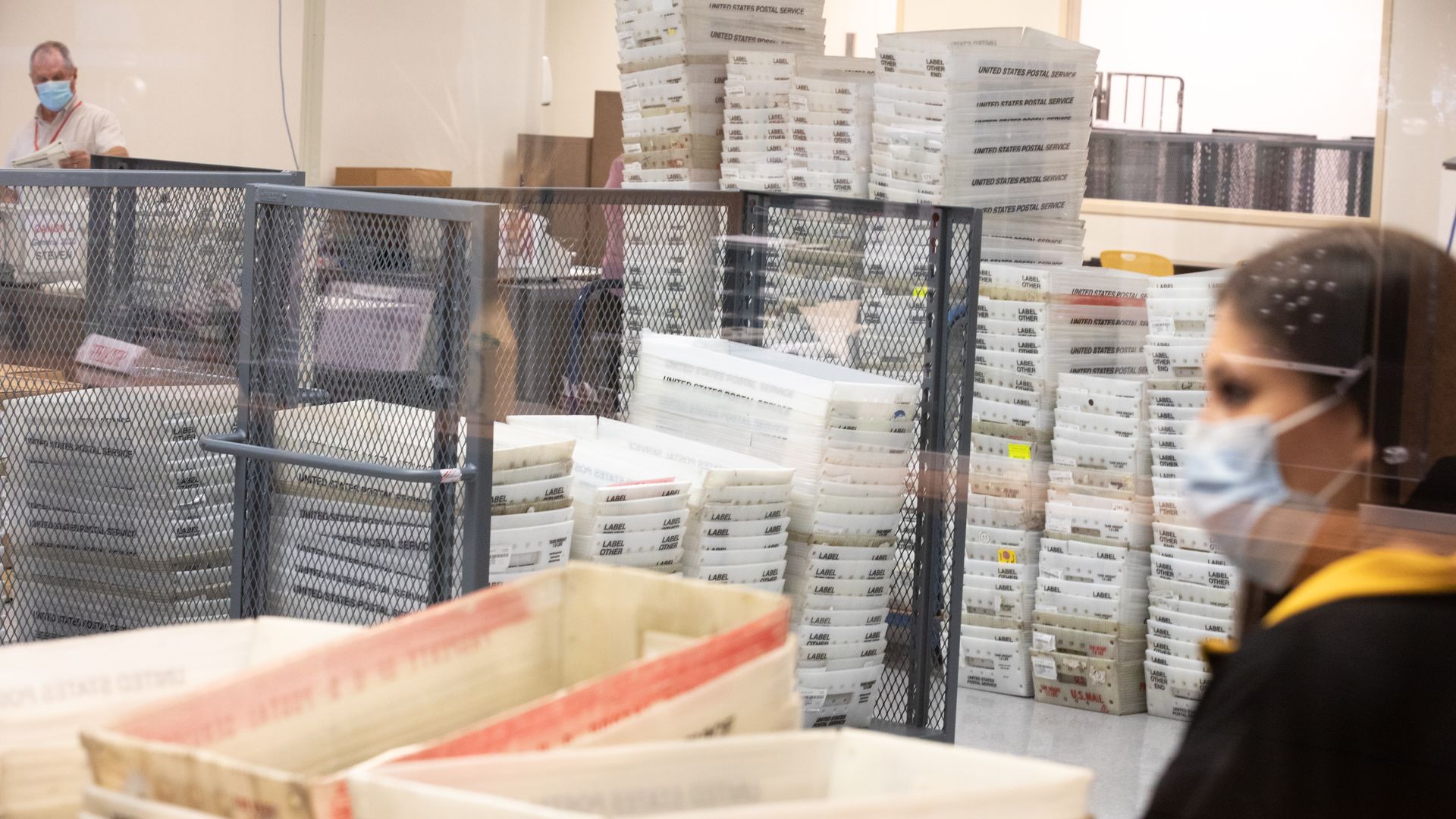
Uncounted ballots at the Maricopa County Tabulation and Election Center the day after the 2020 election. A similar scenario is likely this year. Photo: Courtney Pedroza/Getty Images
Arizona's notoriously long ballot-counting process is largely unchanged from the last presidential election and we're again among the swing states where delayed results could sow confusion, frustration and conspiracy theories in November.
Why it matters: Four years ago, former President Trump seized on expected delays in counting heavily Democratic absentee and mail-in ballots in swing states to fuel false claims that the election was stolen. Experts warn it could happen again in 2024.
Some new laws and policies aim to expedite ballot counts in swing states, but many rules and timelines will likely be the same.
Flashback: On election night in 2020, now-President Biden was ahead in Arizona by so much that Fox News called the state for him, followed several hours later by the Associated Press.
But Trump narrowed Biden's lead to under 11,000 in the days to come as early ballots that voters dropped at polling places on Election Day were counted.
State of play: Arizona's counties will almost certainly take as long to count those early ballot drop-offs as in past elections.
When voters drop their early ballots on Election Day, it takes days for election workers to verify the signatures used to confirm their identities.
Those post-Election Day counts can change the leads in close races.
In 2022, the governor's race wasn't called until the Monday after the election.
Between the lines: Maricopa County, home to more than 60% of Arizona's population, hired more temporary workers in 2022 to verify signatures, and added to those this year.
In 2020, many Republicans turned against voting by mail at Trump's urging.
Republican election analyst George Khalaf told Axios it's difficult to predict how voting habits will play out and whether large numbers of Republicans will deliver early ballots on Election Day.
"I don't think we're ever going to revert back to the exact habits that we had before 2020. I think they're going to be less pronounced though," he said.