1 in 10 older adults in Arizona have Alzheimer's disease


Add Axios as your preferred source to
see more of our stories on Google.
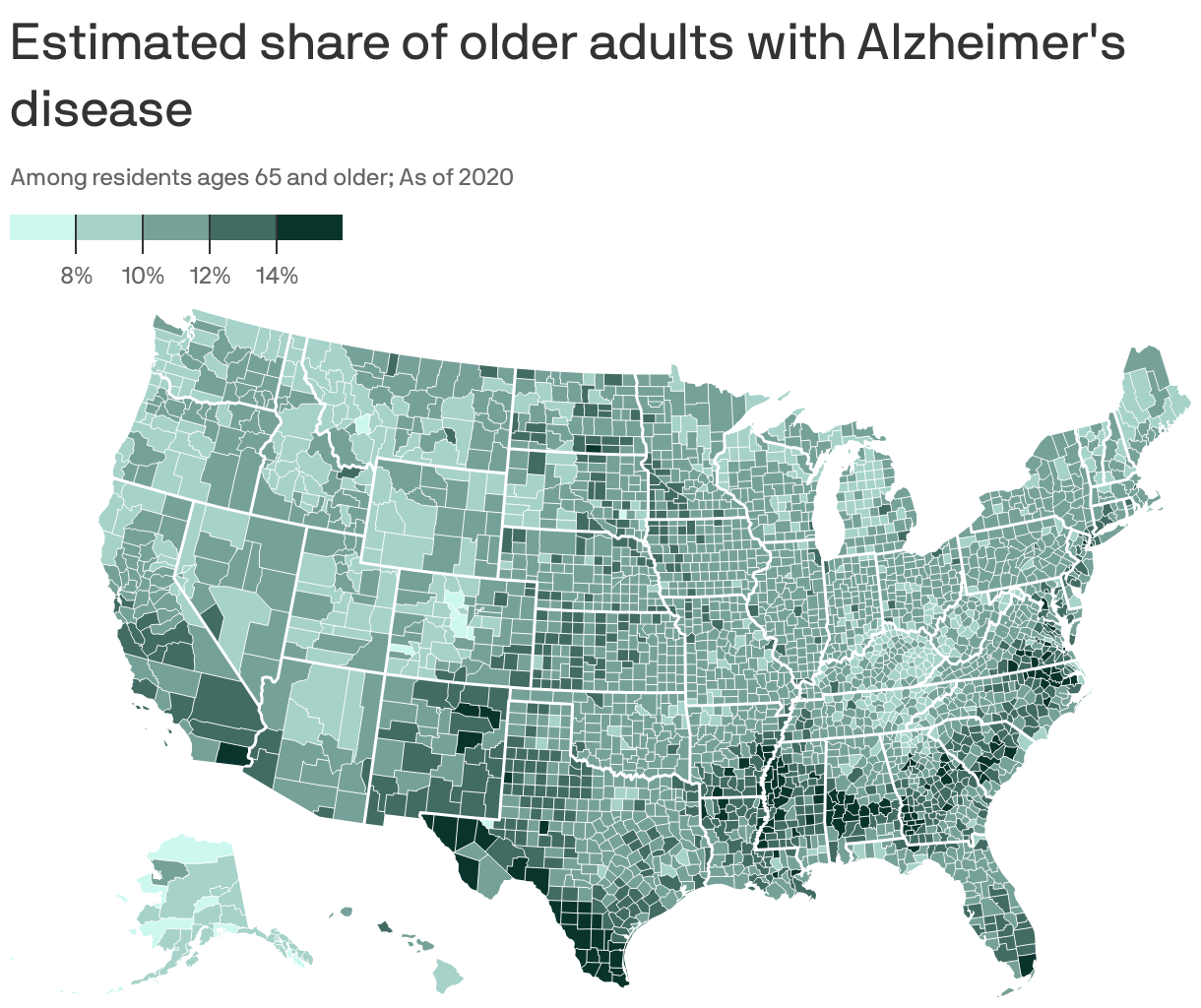
An estimated 11% of Arizona residents ages 65 and older have Alzheimer's disease, per a new study.
Why it matters: It's critical for public health officials, policymakers and others to have a clear look at the number of Alzheimer's cases in a given area, authors say.
- Caring for those with the disease cost an estimated $321 billion nationwide last year, much of which came via Medicare and Medicaid.
Details: For the study, published in the journal Alzheimer's & Dementia, researchers estimated the rates of disease among people ages 65 and older in a given area based on demographic risk factors, including age, sex and race/ethnicity.
Zoom in: Maricopa County has an estimated 81,000 people living with Alzheimer's — about 11.1% of people 65 and older.
- Yuma County has the highest rate in Arizona with 13.3%, followed by Santa Cruz and Greenlee counties with 13.2%.
Between the lines: Phoenix became the largest "Dementia Friendly City" in the U.S. in April 2020 and Alzheimer's is the most common form of dementia.
- Cities can earn this designation by providing services that are informed, safe and respectful of individuals living with dementia, their families and caregivers.
- Phoenix hosts Memory Cafés at senior centers for people with early to moderate dementia to partake in music, therapy and art help with social interactions and brain stimulation
The big picture: The Eastern and Southeastern U.S. have the country's highest rates of Alzheimer's disease, according to the study.
- Maryland (12.9%), New York (12.7%) and Mississippi (12.5%) topped the list of states ranked by estimated number of Alzheimer's cases.
What they're saying: "These estimates could help public health officials to understand the burden of disease (e.g., demand for caregiver counseling and institutional care) at the county and state levels and develop adequate strategies for identifying and caring for people with [Alzheimer's]," the authors write.
Yes, but: The researchers caution their approach is incomplete, as demographic-based risk factors can only show part of the picture.
- Other risk factors — including cardiovascular health and lifestyle — also play a role, but "such data are unavailable at the county level, and we cannot incorporate them into our estimates," they write.