Arizona pregnancy-associated deaths quadrupled in two decades

Add Axios as your preferred source to
see more of our stories on Google.
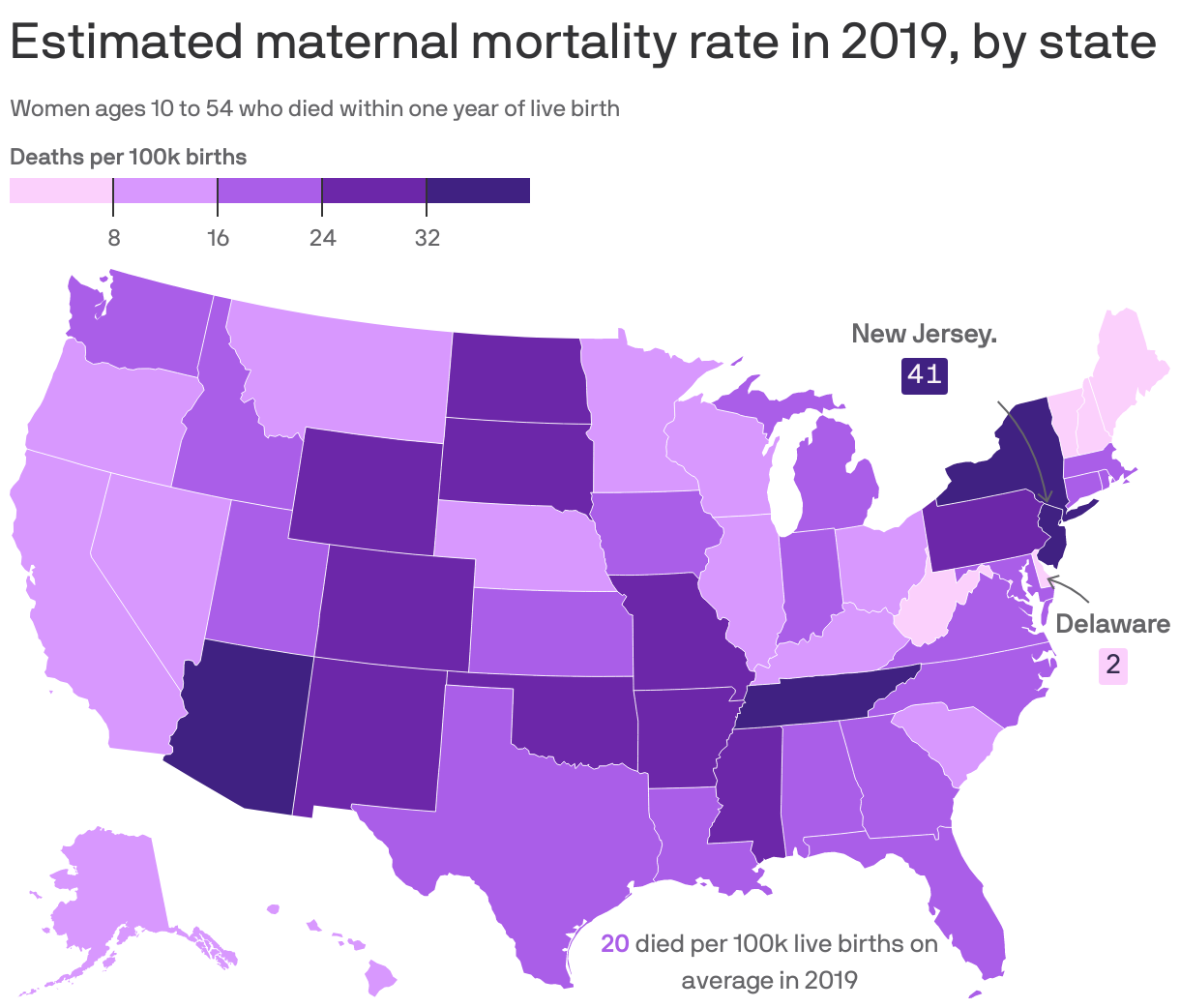
Maternal deaths are increasing in the U.S. and Arizona had one of the nation's highest pregnancy-associated death rate spikes over the past two decades, according to a new study from the Institute for Health Metrics and Evaluation.
Driving the news: The report found maternal mortality rates more than doubled in the U.S. between 1999 and 2019. In the same time period, they quadrupled in Arizona.
By the numbers: The number of deaths per 100,000 live births in Arizona rose from 7.6 to 32.1 between 1999 and 2019. Rates among Black and Native American people increased even more.
- Among Black Arizonans, the rate increased from 23 to 122.9.
- Indigenous Arizonans saw the death rate rise from 28.6 to 92.8.
What they're saying: "Consistently, nationally and in Arizona, the majority of these deaths are preventable. That is the part that keeps me up at night," said Erin McMahon, founding nurse-midwifery specialty coordinator at UofA.
Details: Maternal mortality is defined as a death that takes place during birth or up to a year later.
- The study looked at pregnant individuals ages 10 to 54.
The intrigue: In recent years, mental health issues have surpassed cardiovascular problems and hemorrhaging to become the leading cause of maternal mortality, McMahon tells us.
- This includes suicide during pregnancy, impacts of postpartum depression, intimate partner violence and drug abuse.
What's happening: McMahon said the U.S. needs to address three areas to curb pregnancy-related deaths.
- Access to care: This includes making sure pre- and postnatal care is affordable and geographically accessible. She said at least three rural counties in Arizona have no OB-GYNs or certified nurse-midwives.
- Social determinants of health: Even if a pregnant woman has health insurance, she could still face worse medical outcomes if she doesn't have safe housing, food access and secure employment. Medical providers should be asking women about their lifestyles and connecting them with resources if needed.
- Systemic racism: Racial disparity in maternal mortality rates is not just a consequence of access and socioeconomic issues. Women of color are also less likely to be believed when they report medical concerns, McMahon said. She pointed to Serena Williams, whose health care providers discounted her concerns about a blood clot after she gave birth, as an example.
If you or someone you know may be considering suicide, contact the National Suicide Prevention Lifeline at 988 (En Español: 1-888-628-9454; Deaf and Hard of Hearing: dial 711 then 1-800-273-8255) or the Crisis Text Line by texting HOME to 741741.