Penn Law trains judges to embrace AI as a virtual law clerk

Add Axios as your preferred source to
see more of our stories on Google.
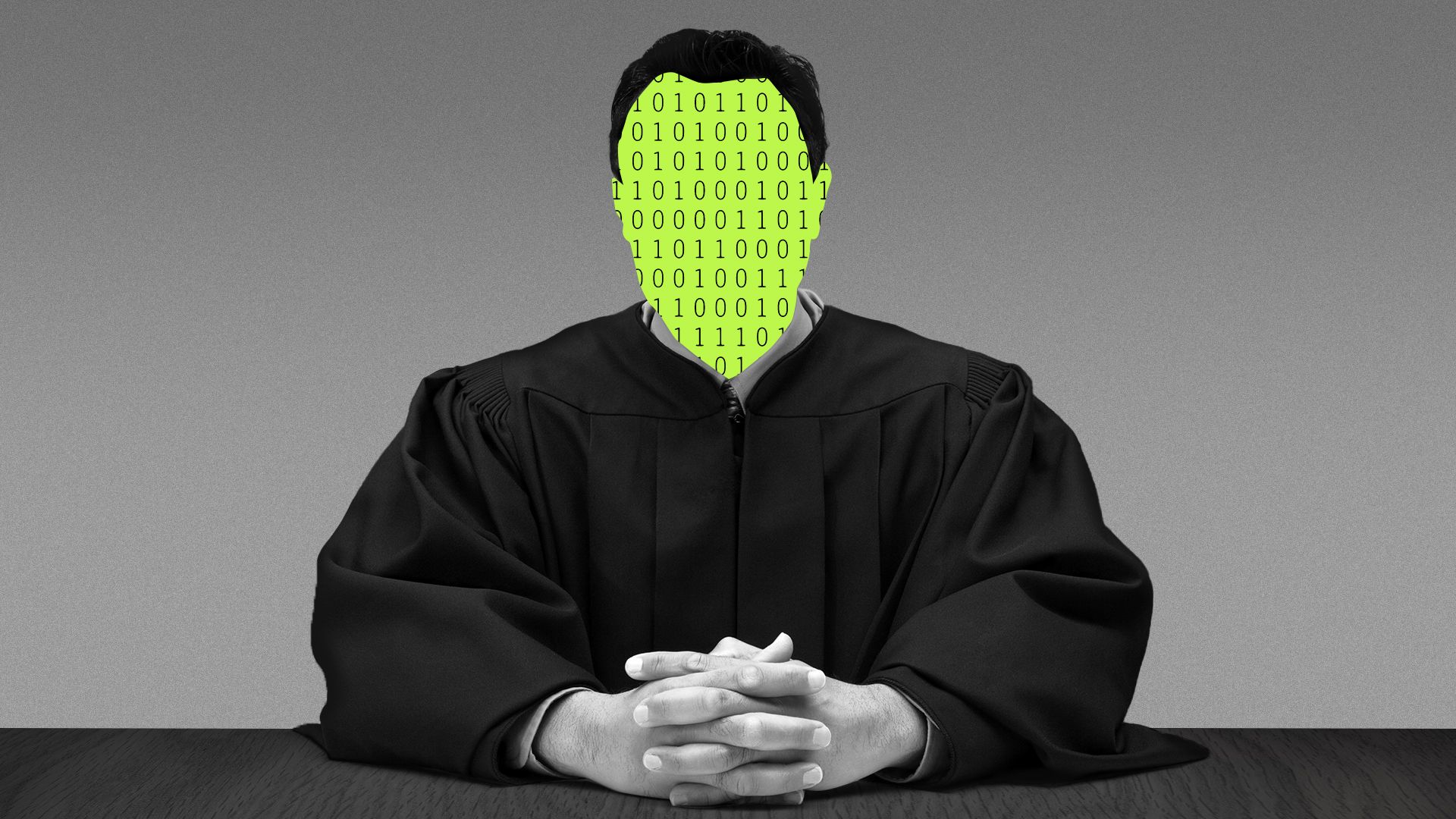
Illustration: Shoshana Gordon/Axios
AI judges like the one in "Mercy" are still a Hollywood hallucination, but Penn researchers are preparing real judges for a future when the technology becomes a fixture in their chambers.
Why it matters: Judges carrying crushing caseloads are warming to AI but remain wary of costly mistakes in cases where people's lives hang in the balance.
The big picture: AI is a double-edged sword, helping people navigate the legal system while turning just about everyone into an armchair lawyer.
- Judges are already the last line of defense in protecting litigants' rights, and now they're being thrust into another role: AI firewalls, policing attorneys who submit court filings that could cite fake AI-generated cases.
- The job is further complicated by people representing themselves turning to AI to write legal pleadings and navigate their cases.
State of play: A majority of judges surveyed by Northwestern researchers reported using at least one AI tool, though a much smaller percentage used them weekly or daily.
- Many judges used AI for time-consuming tasks, including legal research and summarizing witness testimony.
Yes, but: The biggest barriers to judges embracing AI included fears of eroding public trust in the judiciary, losing their own legal skills and a lack of training.
Driving the news: That's where Penn Carey Law's Judiciary Project — part of its broader AI initiative — comes in, giving judges across the country a controlled environment to experiment with the technology.
- The project launched in 2024 with a half-dozen federal judges from the Eastern District of Pennsylvania and has since expanded to nearly 25 judicial chambers, including courts in Delaware, New Jersey and Maryland, and the U.S. Court of Appeals for the Third Circuit.
Between the lines: Penn believes one of the nation's leading law schools has a responsibility to prepare the "next generation" of judges and lawyers for the legal profession's new frontier, Judiciary Project student leader Jacqueline Wang tells Axios.
How it works: Judges meet monthly with Penn researchers to share which AI tools are working and which could use some fine-tuning.
- The school also maintains an online portal and training guide for judges.
- Penn declined to share specifics of the feedback it's received or make participating judges available for interviews.
What they're saying: Some judges have banned staff from using AI, but Penn's safe testing environment could ease fears, Polk Wagner, co-director of Penn Carey Law's Center for Technology, Innovation and Competition, tells Axios.
- "Judges are going to have to make a lot of decisions about not only in deciding cases, but just on how AI is going to be integrated into the process of judging," he says.
Zoom in: Pennsylvania's judiciary allows judges and court employees to use approved AI tools for limited purposes.
- But a spokesperson didn't respond to Axios' request for comment on whether judicial staff receive AI training.
- A 2024 study found the commonwealth needed roughly 38 more full-time Common Pleas judges, including three in Philly, to effectively manage its caseload.
What we're watching: AI won't replace human judgment or take over judges' core responsibilities of presiding over cases and making courtroom decisions, legal experts tell Axios.
- Rather, retired Philly judge Benjamin Lerner tells Axios that, with proper guardrails, AI could serve as a virtual "super law clerk," helping busy judges juggle administrative tasks and crank out opinions that can take weeks to write.
The bottom line: AI could make the legal profession "more interesting and more fun," Wagner says, freeing up judges and lawyers to do what they do best: think for themselves.