The freeze is over. The fallout for Pennsylvania's apple farms isn't

Add Axios as your preferred source to
see more of our stories on Google.
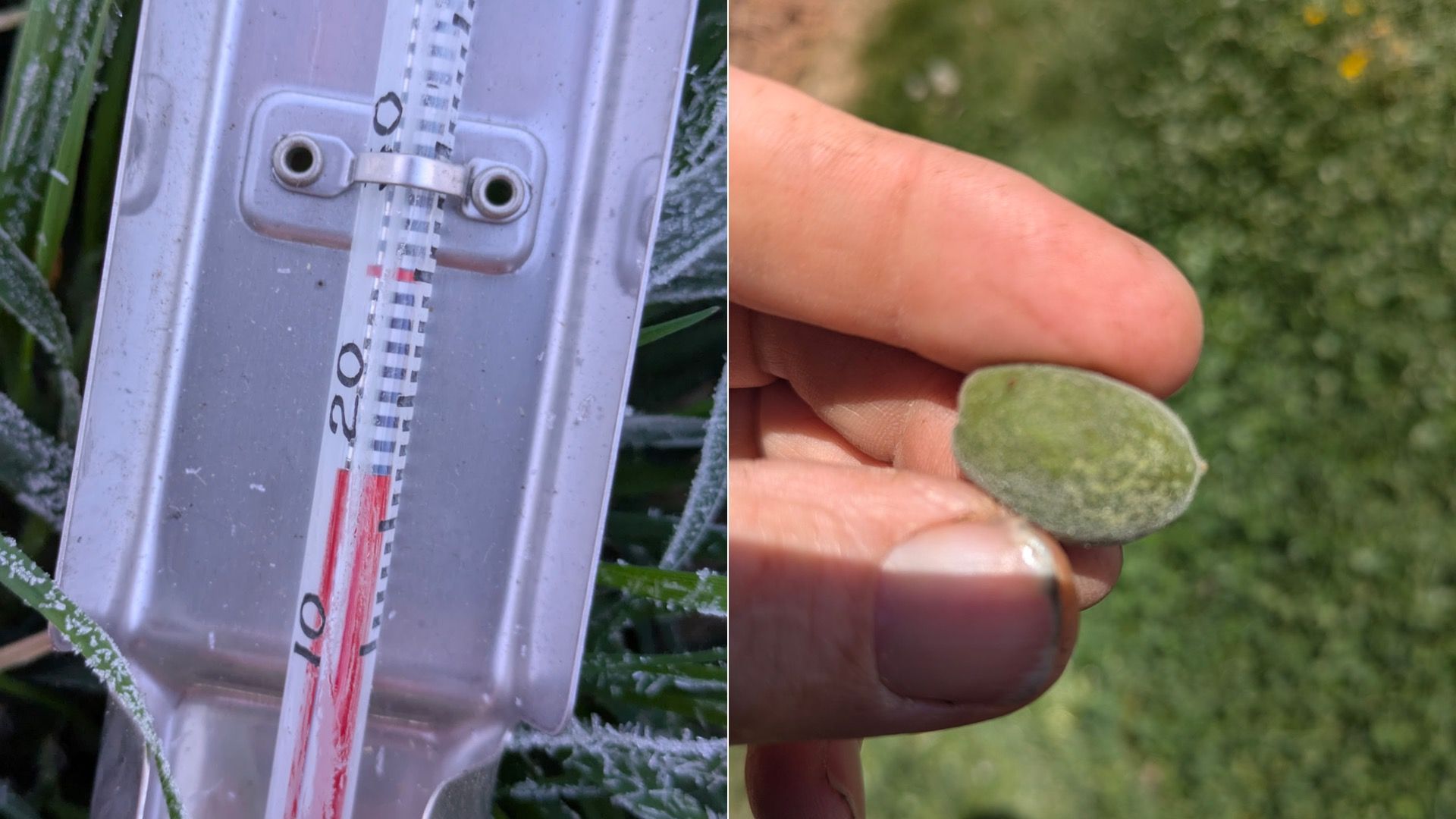
Photos: Courtesy of Norm Schultz
The night of the big April freeze, Norm Schultz couldn't sleep. He stared at the thermometer at Linvilla Orchards: 24 degrees — and dropping fast.
- As frost spread on the grounds, the orchard's lead farmer thought, "That's a lot of hours to go before the temperature goes up."
Why it matters: Pennsylvania is the nation's fourth-largest apple producer. As fall arrives, farmers are reeling from one of the most destructive freezes in generations, which devastated fruit crops and left apples in short supply.
Driving the news: Several Philly-area farms that rely on fall agritourism for a big chunk of their yearly revenue are now scrambling.
- Some have canceled their apple-picking seasons altogether, while others are warning festival-goers to expect fewer — and smaller — apples.
Zoom out: In May, the U.S. Department of Agriculture issued a disaster declaration that impacted 17 counties in the Commonwealth following a deep freeze April 19-21.
- The declaration provided farmers access to interest-free loans and other programs intended to help with recovery efforts.
- Then in August, the Shapiro administration announced $10 million in grants were available to impacted farmers — but when it's all divided up, Schultz says, most will likely only receive a small portion of those funds.
Zoom in: Linvilla Orchards in Delaware County anticipates $1 million in losses from its pick-your-own program after losing over 90% of its apple crop this year, Schultz tells Axios, plus large amounts of other fruits such as peaches and cherries.
- The freeze wiped out about 80% of the apples at New Jersey-based Johnson's Corner Farm, operations manager Frank Pellegrino tells Axios.
- One saving grace: Many farms plant several different types of crops every year to guard against a natural disaster that could ruin a whole growing season.
Yes, but: Apples are king in Pennsylvania.
- The multibillion industry is centered in what's known as the Adams County Fruitbelt, a fertile region near Gettysburg that has 20,000 of the state's 31,000 fruit-producing acres.
Flashback: A farmer for the last four decades, Schutlz knew right away the freeze was bad, even though some of her colleagues initially remained optimistic that it wouldn't have a lasting impact.
- "It was a lot slower of a demise on the flowers on the apples," Schultz says. "It kept hanging on, fruit started showing up. It was the the oddest thing."
- Weeks later, the devastation came into sharp focus when Secretary of Agriculture Russell Redding held a virtual meeting with hundreds of farmers across the state to talk about the long-term effects and recovery.
- Some surviving fruit was misshapen, not as sweet or had frost rings — not suitable to sell to customers that expect perfect-looking apples, Schultz says.
What they're saying: The few apples that survived from the roughly 1.2 million Linvilla Orchards typically yields each year — from Red Delicious to later-season GoldRush — will likely be picked clean within the next two weeks, Schultz says.
- He even bought some bushels from a Massachusetts orchard for any unsatisfied apple-picker who risks the $11 fee to go picking themselves.
The bottom line: Now more than ever, he's asking farm-goers for grace — the same type his father imparted on him years ago when Schultz was being too tough on his workers.
- "My dad said to me, 'Some day somebody's going to have to carry you,'" Schultz says. "I used to think I was acing everyone. If [the public] could carry me this year, I'll be there for you next."