Philadelphia's adult literacy crisis is leaving workers behind

Add Axios as your preferred source to
see more of our stories on Google.

Illustration: Shoshana Gordon/Axios
Dorrie Miller-Abdul-Rahim stared blankly at her ancestry results, not understanding what "maternal" and "paternal" meant. After improving her reading skills, the 57-year-old finally learned who her father was.
- "My mom kept telling me and my brother the same thing: 'He died overseas. He died overseas. He died overseas,'" she tells Axios.
Why it matters: Adult illiteracy is one of Philly's hidden crises, quietly shaping everything from residents' career prospects to their most meaningful moments.
The big picture: About 59 million adults in the U.S. have low literacy skills, struggling with tasks as simple as reading a job posting or determining whether a work shift is during the day or at night, advocates say.
- Children born to parents who struggle to read often inherit the same difficulties, perpetuating the cycle of illiteracy.
Zoom in: The need in Philadelphia far outpaces available resources. Per a city presentation earlier this year:
- About 140,000 Philadelphians lack a high school diploma.
- More than half of adults ages 18–64 read at a fifth-grade level or below.
- Many local adult education programs have waiting lists.
By the numbers: Philadelphia's adult education programs served nearly 3,000 residents last year, per the Philadelphia Coalition, which advocates for people struggling with substance use and intellectual disabilities.
- But more than 1,000 Philadelphians were on waitlists.
Follow the money: Pennsylvania directs about $17 million a year to adult education — a sliver of which goes to programs like Beyond Literacy, which Miller-Abdul-Rahim graduated from this year.
- That's a fraction of the state's nearly $12 billion yearly investment in K–12 public education.
- Advocates say that leaves adult education programs competing for scarce dollars.
- "We haven't been able to slay the dragon that is the system," Beyond Literacy's Dawn Hannah tells Axios.
Yes, but: Adult education pays off.
- Graduates of Pennsylvania's adult education programs collectively earned $182 million in 2023.
- Those with high school equivalencies make about $6,700 more a year.
Reality check: Many adults feel like they're "swimming against the tide" until they finally get help, says Cynthia Figueroa, CEO at Philly workforce development group JEVS Human Services.
- Poverty, unstable housing or struggling schools can leave students falling behind before anyone identifies the problem, says Molly Friedland, a former teacher and chief commercial officer at Penn Foster, which partners with JEVS.
- "What we see in Philadelphia is an opportunity gap, not an inability gap," she says.
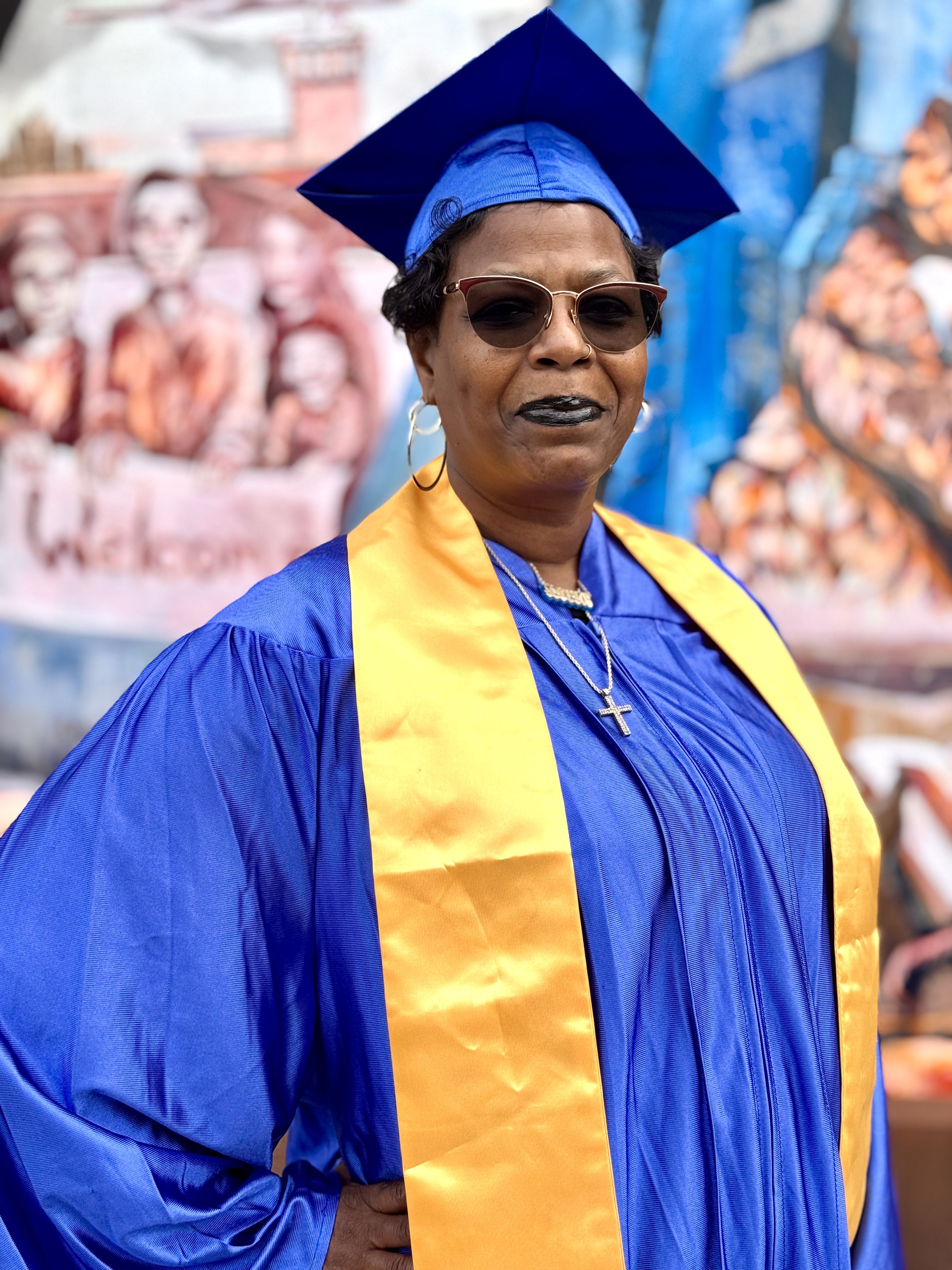
That's Miller-Abdul-Rahim's story.
- As a child, she dreaded being called on to read in class. Teased by classmates, she avoided reading altogether and fell further behind.
- Despite not meeting certain benchmarks, she was whisked from grade to grade in Philly's school system — until she dropped out in the 10th grade.
- "When I seen people with their cap and gowns, I would sit on my grandmother's steps and literally cry," she says.
As an adult, she couldn't help her own children with their homework. Then, after they graduated from high school, she decided to do something about it, enrolling in Beyond Literacy's program.
- Now she hopes to take college courses or find a part-time job.
- "I read books now. I can understand what's going on in the news. I'm holding conversations more now than I have ever."